General information & model overview
| Category | Specification Details |
|---|---|
| Model name | Mercedes-Benz Typ Stuttgart (including Stuttgart 200 and related W02 family designations) |
| Internal code | W02 family |
| Production years | Approximately 1926 – 1929/1930 (exact span depends on body and market designation within the W02 programme) |
| Body style | Mid-size passenger car offered with various open and closed coachbuilt or factory-associated bodies (tourers, saloons/limousines, cabriolets, and related styles) |
| Manufacturer | Daimler-Benz AG (post-1926 merger of Daimler-Motoren-Gesellschaft and Benz & Cie.) |
| Name origin | Named after Stuttgart, the German industrial city closely associated with Daimler and the merged firm’s identity |
| Market role | Accessible mid-size Mercedes-Benz of the late 1920s — not a supercharged sports car and not a flagship luxury limousine |
| Layout | Front-engine, rear-wheel drive |
| Key characteristics | Approximately 2.0-litre four-cylinder power; outputs commonly discussed in the roughly 38–50 PS class depending on version and period designation (including 8/38 PS and Stuttgart 200 themes); conventional chassis for varied bodywork |
| Historical context | One of the early passenger-car products of the merged Mercedes-Benz brand era, bridging pre-merger engineering traditions into a unified model programme |
Body & dimensions
| Specification | Details |
|---|---|
| Chassis concept | Separate frame with coachbuilt or catalogue bodies; dimensions vary significantly by body style and coachbuilder choices |
| Wheelbase | Period mid-size Mercedes class; exact figures vary by catalogue listing and body programme within the W02 family |
| Overall length | Dependent on body (open tourer vs closed limousine/saloon); not a single fixed figure across all Stuttgart variants |
| Seating | Typically four to five or more depending on body; closed cars for family use, open cars for touring and display |
| Body variety | Open touring bodies, cabriolets, and closed saloons/limousines formed the practical range of a mid-1920s accessible Mercedes |
| Construction | Steel and wood composite coachwork practices of the late 1920s; quality and longevity depend heavily on original body method and subsequent restoration |
| Doors | Two- or four-door layouts depending on body style |
| Lighting & fittings | Period electrical lighting and exterior fittings; modern restorations often upgrade wiring carefully while retaining visual authenticity |
Engine specifications
| Theme | Details |
|---|---|
| Configuration | Inline four-cylinder petrol engine, approximately 2.0 litres |
| Displacement class | ~2.0 litre (period designations and exact cc vary by listing; treat contemporary sales literature and chassis plates as primary for a given car) |
| Output range | Commonly discussed around roughly 38–50 PS depending on version and year (including the 8/38 PS theme and later Stuttgart 200 orientation) |
| Induction | Naturally aspirated — not a Kompressor sports engine in the Typ S / SS / SSK tradition |
| Character | Smooth enough for period touring when maintained; modest power by modern standards; designed for reliability and accessibility rather than racing glory |
| Fuelling | Period carburettor equipment; restoration quality of fuel system strongly affects drivability |
| Cooling | Liquid-cooled; radiator and water-jacket condition are critical ownership items on surviving cars |
Drivetrain & transmission
| Category | Details |
|---|---|
| Drive layout | Front-engine, rear-wheel drive — standard for Mercedes passenger cars of the era |
| Gearbox | Manual transmission of period design (typically multi-speed with crash or early synchronized elements depending on exact execution and later repairs) |
| Clutch | Mechanical clutch; technique and free play are central to enjoyable driving of restored examples |
| Final drive | Rear axle drive with period gearing suited to touring speeds rather than modern motorway cruise expectations |
| Supercharger | Not part of the Stuttgart’s core identity — contrast with the contemporary and slightly later W06 supercharged sports line (Typ S, SS, SSK) |
Chassis, brakes & structure (period construction)
| Category | Details |
|---|---|
| Frame | Ladder-type separate chassis typical of late-1920s Mercedes mid-size cars; body mounted to frame |
| Front suspension | Solid axle with leaf springs (period convention); damping by friction or early hydraulic dampers depending on car and restoration |
| Rear suspension | Live rear axle with leaf springs; ride comfort depends on spring condition and tyre pressures |
| Steering | Mechanical steering box; low gearing and substantial free play by modern standards if worn |
| Brakes | Period drum brakes — often mechanically actuated on cars of this class and era; stopping distances long by modern norms; linings, rods/cables, and adjustment critical |
| Wheels & tyres | Wire or artillery-style wheels depending on specification and later fitment; period tyre compounds and sizes limit wet grip and emergency braking |
| Safety context | No modern crash structure, airbags, or electronic aids; seatbelts usually later additions if present; period lighting and brakes define the practical safety envelope |
Performance (period context)
| Category | Details |
|---|---|
| Power-to-weight reality | With roughly 38–50 PS and substantial coachbuilt body mass, acceleration is leisurely by any post-war standard |
| Touring speeds | Comfortable period cruising on good roads rather than sustained high-speed Autobahn use as later understood |
| Top speed class | Modest period passenger-car territory; exact figures depend on gearing, body drag, and mechanical condition |
| Driving character | Upright seating, slow steering, deliberate gear changes, and the satisfaction of a solid mid-1920s Mercedes rather than sporting drama |
| Comparison | Worlds apart from the supercharged W06 sports cars; closer in spirit to accessible middle-class motoring with a prestigious badge |
Timeline & history
| Period | Development |
|---|---|
| 1926 | Daimler-Benz merger creates a unified Mercedes-Benz brand from Daimler and Benz lineages; model rationalisation becomes a strategic priority |
| ~1926 onward | W02 Typ Stuttgart programme appears as a mid-size, relatively accessible Mercedes passenger car named after Stuttgart |
| Late 1920s | Multiple body styles and the Stuttgart 200 / 8/38 PS family of power and naming themes serve private buyers who want Mercedes quality without flagship cost |
| Concurrent context | At the sporting end of the brand, Ferdinand Porsche’s engineering leadership helps shape the supercharged W06 line (Typ S from 1927), a very different product philosophy |
| ~1929–1930 | W02 Stuttgart-era production winds down as newer model programmes and market conditions reshape the mid-size range |
| Afterlife | Surviving cars become pre-war collector pieces valued for merger-era history more than for raw performance |
Variants & body themes
| Theme | Details |
|---|---|
| 8/38 PS orientation | Period tax/power style designation associated with the roughly 38 PS class four-cylinder theme in the family discussion |
| Stuttgart 200 | Later or alternative naming emphasis within the ~2.0-litre accessible Mercedes story; outputs discussed up toward the ~50 PS class depending on version |
| Open bodies | Tourers and open sporting-looking cars for fair-weather motoring and concours display today |
| Closed bodies | Saloons and limousine-style coachwork for family and professional use; often more practical survivors for all-weather classic touring |
| Coachbuilder influence | As with many 1920s chassis, final appearance can reflect catalogue factory bodies or specialist coachwork — identify body origin when valuing a car |
Safety & construction notes (classic-era context)
| Category | Details |
|---|---|
| Crash protection | Separate chassis and period body offer minimal modern crash energy management; low speeds and defensive driving are mandatory on public roads |
| Braking system | Drum brakes of the era require advance planning; wet roads and descents demand early application and mechanical sympathy |
| Lighting | Period headlamps are weak by modern standards; night driving on unlit roads is a specialist activity, not casual commuting |
| Tyres | Correct-size period-pattern or high-quality classic tyres transform safety more than any cosmetic restoration detail |
| Seatbelts | If retrofitted carefully by a specialist, they can improve occupant restraint without destroying historic integrity when done thoughtfully |
| Wood & corrosion | Wood-framed coachwork and steel panels both require expert inspection; rot can be structural as well as cosmetic |
The Mercedes-Benz Typ Stuttgart (W02): accessible mid-size Mercedes after the 1926 merger
The Mercedes-Benz Typ Stuttgart of the W02 family is easy to overlook in a brand history crowded with racing sports cars and later luxury flagships. That overlook is a mistake if the goal is understanding how Mercedes-Benz actually sold cars in the late 1920s. After the 1926 merger that joined Daimler-Motoren-Gesellschaft and Benz & Cie. into Daimler-Benz AG, the company needed products that carried the new brand into the middle of the market — not only into the portfolios of aristocrats and racing patrons. The Typ Stuttgart, named for the city closely tied to Daimler’s identity, was that kind of car: mid-size, four-cylinder, roughly two litres, and deliberately more approachable than the firm’s sporting extremes.
It was never meant to be a supercharged sports legend. While Ferdinand Porsche’s era of design leadership at Mercedes helped produce the long, supercharged sports cars of the W06 line — the Typ S, Typ SS, SSK, and later the lightened SSKL — the Stuttgart lived a quieter life. It offered open and closed bodies, modest power in the roughly 38–50 PS range depending on version, and the prestige of a Mercedes badge on a chassis successful professionals could contemplate. That relative ordinariness is precisely why it matters in a complete brand history.
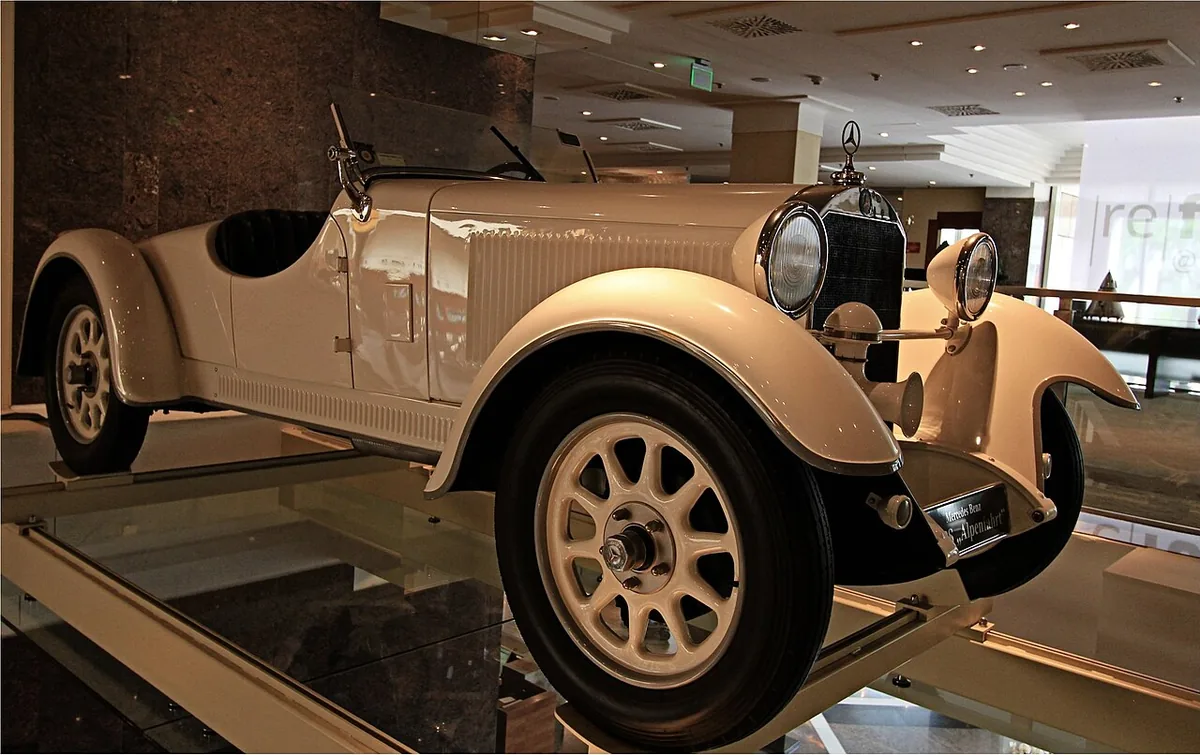
Image source: Wikimedia Commons
1926: merger, identity, and the need for a mid-size Mercedes
The Daimler-Benz merger was not merely a corporate footnote. It fused two major German automotive traditions under a single industrial roof and a brand that would soon be known worldwide as Mercedes-Benz. Rationalising overlapping model lines, factories, and dealer networks took years. In that climate, a car named Stuttgart did political and marketing work as well as mechanical work. It rooted the new firm in a place — the industrial heartland of Württemberg — and offered customers a story simpler than chassis codes and pre-merger rivalries.
Mid-size cars of the mid-to-late 1920s occupied a different social space than modern compact executives. Ownership still signalled prosperity. Yet within the Mercedes hierarchy, a two-litre four-cylinder was a step below the large multi-cylinder luxury cars and far below the supercharged sporting machines that filled newspaper sports pages. The Typ Stuttgart’s job was to be the respectable Mercedes: solid engineering, various body styles, and enough performance for the roads of its day without the expense and temperament of a racing-derived road car.
Why the name still resonates
Stuttgart remains synonymous with Mercedes-Benz. Naming a model after the city was both local pride and brand education. For export markets and domestic buyers alike, it fixed the car’s identity in geography rather than in abstract type numbers alone. Collectors today still use Typ Stuttgart and related Stuttgart 200 / 8/38 PS language when cataloguing W02-family cars, even when individual chassis plates and period literature require careful, car-by-car reading.
Design and body variety: one chassis idea, many faces
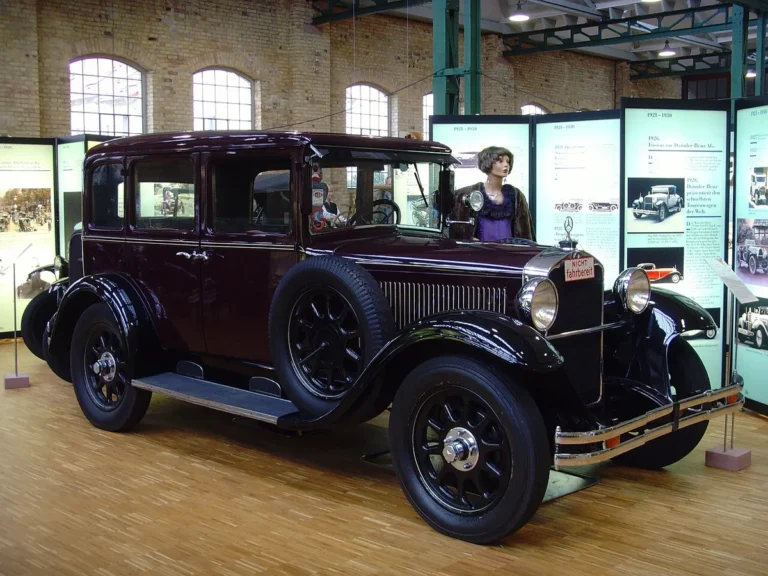
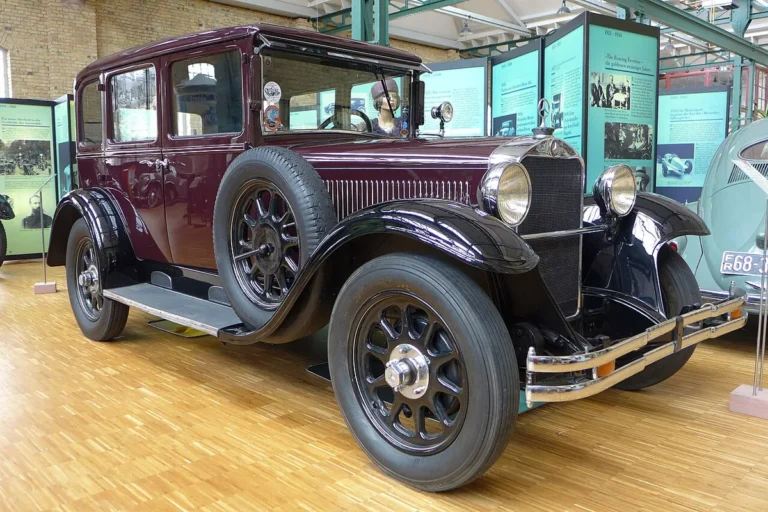
Like most serious cars of its decade, the Stuttgart was a chassis first and a body second. Customers could encounter open tourers that look distinctive in period photographs, closed saloons that better suit wet German winters, and cabriolet forms that split the difference. That variety means there is no single correct Stuttgart silhouette. A restored open car at a concours and a closed family body on a club tour may share mechanical DNA while presenting completely different ownership experiences.
Coachwork quality of the late 1920s combined metal panels with wooden framing in ways modern monocoque owners rarely consider. Surviving cars must be inspected as composite structures: timber can rot invisibly; steel can rust at joints; previous restorations may have replaced wood with shortcuts that look fine until the first hard season of moisture. A serious surveyor looks at sills, door bottoms, floor structures, and the relationship between body and frame mounts. The exterior photograph is never enough.
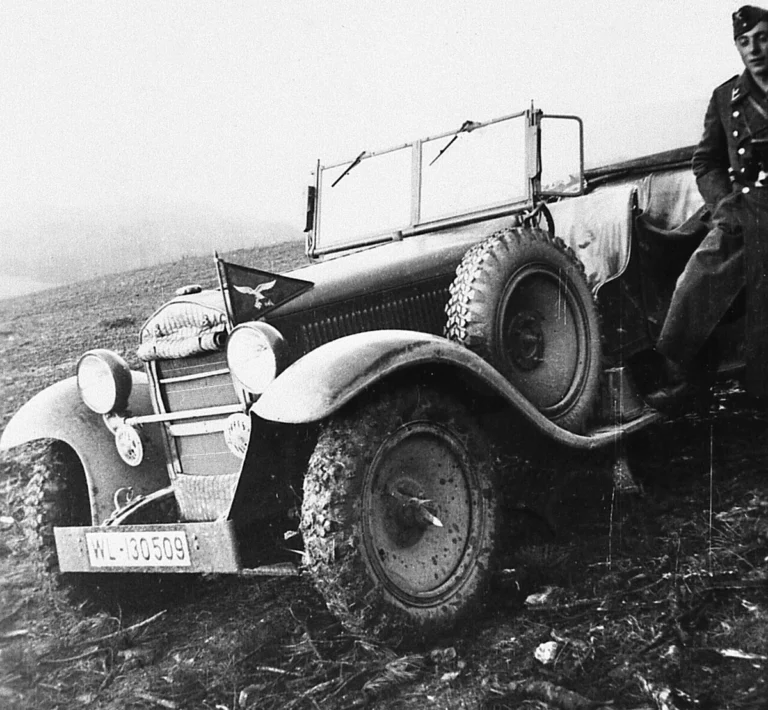
Visually, the Stuttgart is of its time: upright radiator shell with the Mercedes star, separate wings, running boards, and a cabin that sits high by modern standards. It does not share the long-bonnet drama of the W06 sports cars. That is not a failure of design ambition. It is a different brief. Where the Typ S was a large, expensive supercharged sporting machine — later nicknamed the White Elephant in period and collector lore — the Stuttgart was meant to be used regularly, not only admired from a paddock rope.
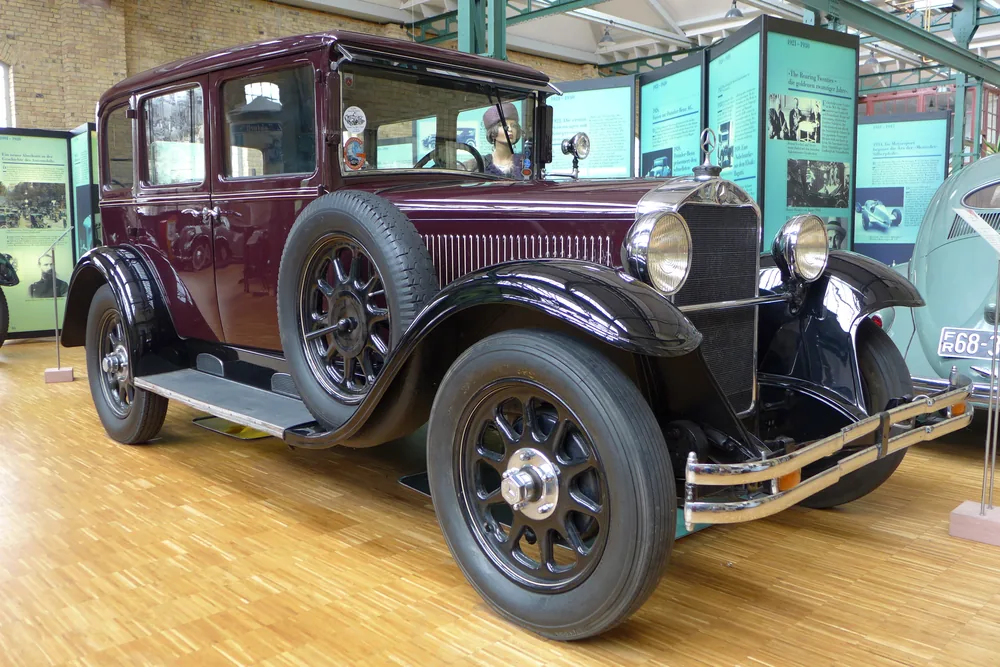
Image source: Wikimedia Commons
The two-litre four: modest power, clear intent
Discussions of Stuttgart power usually settle in a band from about 38 PS to about 50 PS depending on the exact version and how period literature is read. The 8/38 PS style designation and the Stuttgart 200 theme sit inside that broader story of an approximately two-litre four-cylinder programme. What matters more than chasing a single horsepower number is understanding the design intent: natural aspiration, everyday usability, and cost control relative to multi-cylinder flagships.
These engines do not thrash to high revolutions like a modern sports four. They deliver their work through displacement and gearing appropriate to 1920s roads. When rebuilt with correct clearances, ignition timing, and carburettor setup, they can be remarkably sweet. When neglected — sticky valve guides, weak spark, incorrect fuel mixture, or cooling system silt — they feel agricultural and unreliable. The difference is almost entirely maintenance culture.
There is no factory supercharger narrative to sell here. That absence is a feature of the model’s identity. Buyers who want Roots-blown sports cars should look to the W06 family. Buyers who want a pre-war Mercedes they might actually tour in, without the financial and mechanical intensity of an SSK, find the Stuttgart conceptually more approachable — though approachable in pre-war collecting is always relative.
Driving a late-1920s mid-size Mercedes
Modern drivers need a mental reset before the first kilometre. Steering is slow and heavy at parking speeds. Brakes require early, progressive application and do not forgive modern following distances. Gear changes reward patience and double-declutching technique on many unrestored or traditionally restored transmissions. The seating position is upright; the view over the bonnet and wings is part of the skill, because wings are vulnerable and expensive to repair correctly.
On a dry secondary road at moderate pace, a well-sorted Stuttgart can be deeply satisfying. The car communicates through the wheel and the seat. It rewards smooth inputs. It punishes late braking and rushed shifts. That is not nostalgia; it is the physics of leaf springs, drum brakes, and narrow tyres. Wet cobblestones or polished tram lines in old city centres demand respect that no amount of Mercedes prestige will replace.
Compare that experience, even briefly, with the supercharged sports cars of the same broad era. An SSK is a different species: shorter wheelbase, much higher blown power for its day, and racing provenance. A Stuttgart is a passenger car that happens to wear a star. Enjoying it means accepting that hierarchy rather than fighting it. Acceleration is leisurely by any post-war standard; touring speeds on good roads define the useful envelope more than absolute top speed.
Market then, collecting now
In period, the Stuttgart competed for the wallets of buyers who wanted a quality German car without stepping fully into luxury-limousine pricing. Export sales and domestic professional ownership both mattered. Surviving production numbers and registration patterns are a specialist research topic; what general collectors need to know is that these cars were not built in the tiny quantities of pure racing SSKs or SSKLs, nor were they throwaway mass transport. They sat in a middle band that leaves enough survivors to study, but few enough that each good example still matters.
On today’s market, values depend ruthlessly on body style, originality, documentation, and quality of restoration. An open car with elegant proportions and known history will usually outprice a compromised closed body with mixed parts and thin paperwork. That said, a correctly restored closed car can be the better tourer: weather protection, often better luggage practicality, and less pressure to keep the car as a static showpiece.
Parts support is not the same as for a 1960s W111 or a modern classic. Specialists, marque clubs, and patient networking matter more than a same-day dealer counter. Anyone buying a Stuttgart without a pre-purchase inspection by someone who understands 1920s Mercedes chassis and coachwork is gambling, not collecting.
Ownership: strengths and things to watch
Strengths
- Historical importance — a tangible product of the post-1926 Mercedes-Benz merger era.
- Accessible performance envelope — easier to manage than supercharged W06 sports cars for many private owners.
- Body variety — open and closed cars suit different tastes and climates.
- Club and concours interest — strong storytelling value at events focused on pre-war Mercedes.
- Mechanical honesty — four-cylinder simplicity relative to large multi-cylinder or supercharged siblings.
Things to watch
- Coachwork integrity — wood rot, previous poor restorations, and mismatched body-to-chassis histories.
- Brake and steering condition — safety-critical systems that must be correct before any road use.
- Cooling and fuel systems — common causes of roadside misery on neglected pre-war cars.
- Documentation — engine and chassis identity, period registrations, and restoration invoices.
- Tyres and wheels — correct fitment and age of rubber; old tyres are a genuine hazard.
- Electrical system — period wiring can be a fire risk if degraded; professional rewiring may be wise.
- Parts lead times — budget time as well as money for mechanical refurbishment.
How the Stuttgart fits a late-1920s garage map
Imagine a prosperous German household or export buyer in 1928 scanning Mercedes offerings. At one end sits accessible mid-size transport such as the Typ Stuttgart — roughly two litres, four cylinders, open or closed bodies, prestige without racing bills. At the other end sit the supercharged sports cars that would become lore: the long Typ S, the grand Typ SS, the short SSK. Between those poles lay other passenger types and commercial vehicles that filled out a full industrial catalogue. The Stuttgart’s job was to keep the middle of that map populated with a car that felt like a proper Mercedes when parked outside a professional office or a provincial hotel.
Roads of the period amplify the model’s logic. Surfaces were uneven, speeds were lower, and mechanical simplicity still counted as a virtue even under a prestige badge. A two-litre four that started reliably, cooled adequately, and could be maintained by skilled local labour was more valuable day to day than a seven-litre Kompressor that needed specialist attention after every hard run. That does not make the Stuttgart better than an SSK. It makes it correctly engineered for a different brief — the brief most customers actually needed.
Today’s historic-vehicle culture sometimes reverses those priorities. Events and media celebrate extremes. Club runs and careful touring, however, still need cars that can cover distance without drama. A well-prepared Stuttgart can be that car for owners who want merger-era history under their hands without the intensity of a blown sports chassis. The experience is upright, deliberate, and deeply of its decade. It rewards people who enjoy process — warming the engine, planning stops, feeling through the steering — more than people who want modern GT speed in vintage clothes.
Documentation culture also differs from later mass-production classics. Chassis plates, engine numbers, body tags, and period registration papers may be incomplete. Matching numbers matter, but so does coherent provenance: photographs, bills of sale, club records, and restoration logs. A Stuttgart with a modest body and excellent history can be a wiser acquisition than a flashy open car with gaps that no specialist can close. Patience in research is part of the ownership craft.
Safety and road-use context for classic owners
Separate chassis and period body offer minimal modern crash energy management. Low speeds and defensive driving are mandatory on public roads. Drum brakes of the era require advance planning; wet roads and descents demand early application. Period headlamps are weak by modern standards; night driving on unlit roads is a specialist activity, not casual commuting. Correct-size period-pattern or high-quality classic tyres transform safety more than any cosmetic restoration detail. If seatbelts are retrofitted carefully by a specialist, they can improve occupant restraint without destroying historic integrity when done thoughtfully.
These points are not criticisms of 1920s engineering. They are operating rules for a century-old passenger car that was never designed around modern traffic density, modern lighting, or modern expectation of electronic safety nets. Owners who internalise those rules enjoy the car; owners who ignore them risk the car and themselves.
Legacy: the other half of the late-1920s story
Brand mythology loves extremes. The late 1920s Mercedes story is often told through the long-bonnet W06 sports cars and the drivers who raced them. Yet a healthy industry needs volume and breadth. The Typ Stuttgart represents the other half of that truth: cars for customers who wanted the star on a usable mid-size chassis after the great merger.
Place the Stuttgart beside the Typ S and the contrast becomes educational rather than dismissive. One is a supercharged sporting statement. The other is a named, accessible Mercedes of roughly two litres and modest horsepower. Together they show a company that, even in the 1920s, understood it had to speak to more than one kind of buyer. For modern enthusiasts building a mental map of Mercedes history, the W02 Stuttgart is a quiet essential — not a short-wheelbase racer, but a solid chapter in how Mercedes-Benz became a full-range brand after 1926.
Related Motor Wiki entries include the sporting W06 family beginning with the 1927 Typ S, the grand-touring Typ SS, the short-chassis SSK, and the ultra-rare lightened SSKL. The present model’s internal reference page is Mercedes-Benz Typ Stuttgart. For a jump forward nearly a century in large Mercedes people-moving, see the modern V-Class (W447).
Leave a Reply
You must be logged in to post a comment.