General information & model overview
| Category | Specification Details |
|---|---|
| Model name | 1926 Mercedes-Benz 8/38 (W02) — launch-year identity of the Typ 8/38 / two-litre mid-size programme |
| Internal codes | W 6506 in early DMG-style documentation; W02 under Daimler-Benz works numbering |
| Launch | Unveiled October 1926 at the Berlin Motor Show; first series chassis late 1926; volume deliveries into 1927 |
| Production span of family | Two-litre passenger cars continue to 1933 under evolving names (8/38, 8/38 hp 200, Stuttgart 200) |
| Manufacturer | Daimler-Benz AG (merged brand Mercedes-Benz) |
| Historical role | Among the first passenger cars presented under the unified Mercedes-Benz name after the June 1926 formal merger |
| Layout | Front-engine, rear-wheel drive |
| Engine | Inline six-cylinder side-valve M 02, approximately 1,988 cc, about 38 PS at roughly 3,400 rpm |
| Related entries | Typ 8/38 hub; Stuttgart 200 facelift phase; Typ Stuttgart overview; later Stuttgart 260 |
Body & dimensions (launch catalogue)
| Specification | Details |
|---|---|
| Initial bodies | Open Tourenwagen; two-door and four-door limousine/saloon; bare chassis for coachbuilders |
| Early expansions (1927) | Special convertibles (2/3- and 4/5-seater themes); later landaulet and special saloon options in the growing catalogue |
| Wheelbase | Approximately 2,810 mm |
| Length | Roughly 4,060 – 4,375 mm by body |
| Width / height | About 1,680 mm width class early; height about 1,800 mm class |
| Construction | Separate frame; period wood-and-steel coachwork; factory or independent bodies |
Engine specifications (launch)
| Theme | Details |
|---|---|
| Configuration | Inline six-cylinder side-valve petrol (M 02) |
| Displacement | 1,988 cc |
| Output | About 38 PS (28 kW; ~37 hp) at approximately 3,400 rpm |
| Compression (early) | About 5:1 class in early literature |
| Carburettor (early) | Zenith 30 HKG theme commonly cited for early cars |
| Induction | Naturally aspirated — deliberately not the expensive supercharged small-car concept debated earlier in the community of interest |
Drivetrain & chassis (launch)
| Category | Details |
|---|---|
| Gearbox | Three-speed manual (four-speed arrives later in Stuttgart 200 era) |
| Drive | Rear-wheel drive |
| Suspension | Rigid axles, semi-elliptic leaf springs front and rear |
| Brakes | Four-wheel mechanical drum brakes with rod linkages |
| Steering | Period mechanical steering, low-geared by modern standards |
Performance (early figures)
| Measure | Details |
|---|---|
| Top speed | About 75 km/h (47 mph) class for early cars — body and condition dependent |
| Character | Accessible multi-cylinder mid-size touring; modest by later standards |
| Commercial aim | Price and volume targets far below earlier supercharged two-litre concepts debated in 1924–1925 |
1926–1928 development notes
| Period | Notes |
|---|---|
| Pre-merger debates | DMG and Benz argued cost, plant loading, four- vs six-cylinder, and whether a small supercharged car made commercial sense |
| Cost target shift | Open-tourer price ambitions fell sharply toward a more realistic mid-size product by early 1926 |
| October 1926 | Berlin show launch with other new Mercedes-Benz passenger models as the merged brand’s first show appearance |
| Late 1926 production | First series chassis; December production still small; spring 1927 ramp toward hundreds of units per month |
| 1927 success | Two-litre sales dominate early Mercedes-Benz volume; convertibles and specials expand the catalogue |
| 1928 pressure | Price cuts, body expansion, 8/38 hp 200 coding; board conflict and technical leadership change set up the Stuttgart 200 facelift |
1926 Mercedes-Benz 8/38: launch of the mid-size two-litre
The 1926 Mercedes-Benz 8/38 is the launch identity of the two-litre mid-size programme that later became better known under W02 and Stuttgart 200 labels. It matters because it was not a side experiment. It was one of the first passenger cars the newly merged Daimler-Benz AG showed under the Mercedes-Benz brand, and it became the volume foundation of the company’s passenger business in the late 1920s.
This page concentrates on the launch moment: merger-era product strategy, Berlin Motor Show introduction, early mechanical specification, initial body catalogue, and the commercial conditions of 1926–1928 before the Stuttgart place-name facelift. Full family naming and production mapping live on the Typ 8/38 hub. The cultivated later phase is covered under 8/38 Typ Stuttgart 200.
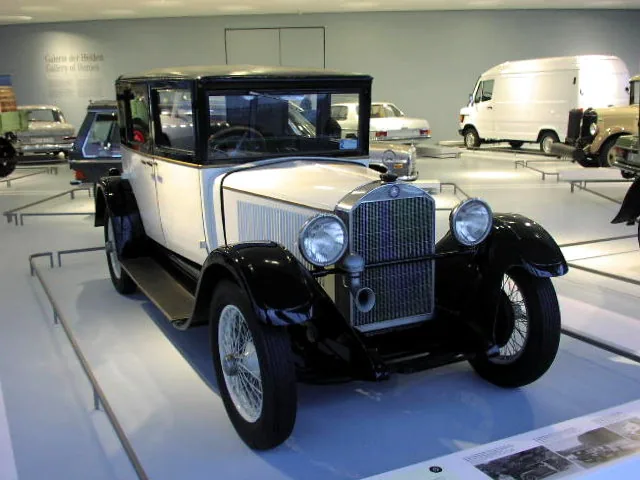
Image source: Wikimedia Commons
Merger context and why a simple two-litre car won
Formal creation of Daimler-Benz AG in June 1926 followed years of community-of-interest cooperation between DMG and Benz. Product strategy was contested. One strand favoured sophisticated, expensive small cars, including supercharged concepts. Another strand, stronger at Mannheim/Benz thinking, favoured lower prices and higher volumes. Board minutes and manufacturer archive narratives show price targets for the two-litre car falling dramatically as managers accepted that a high-priced sophisticated model would not deliver the needed sales.
The car that reached the 1926 Berlin show was therefore deliberately conventional: side-valve six, rigid axles, leaf springs, three-speed gearbox, mechanical brakes. It broke little new technical ground. Its importance was commercial and organisational. It gave the merged brand a credible mid-size product it could actually build and sell in quantity from Untertürkheim.
Ferdinand Porsche’s technical directorship is part of the early story, including parallel work on other new codes. Early quality and pricing disputes contributed to a tense climate that ended with leadership change by the end of 1928. Those management facts belong to the launch era even though the car continued successfully afterward under Nibel’s cultivation as Stuttgart 200.
Berlin 1926 and the first production months
October 1926 presented the two-litre 8/38 alongside other new Mercedes-Benz passenger models as the merged company’s motor-show debut. The first series chassis were built in October and November 1926. December output was still a trickle; by March 1927 monthly production was in the hundreds, timed for the delivery season. Manufacturer history records that 1927 two-litre sales alone exceeded twice the combined 1926 output of the predecessor brands’ passenger cars. That single fact explains why the 8/38 is central to early Mercedes-Benz industrial history.
At the start of sales the catalogue was simple: open tourer, two-door saloon, four-door saloon, and chassis for coachbuilders. April 1927 added special convertibles. Later in 1927 the list grew further—partition saloons, doctor/hospital specials, landaulets—showing how quickly a successful mid-size chassis attracts body variety. Commercial L 3/4 delivery themes followed, extending the mechanical idea beyond private cars.
Launch design and mechanical character
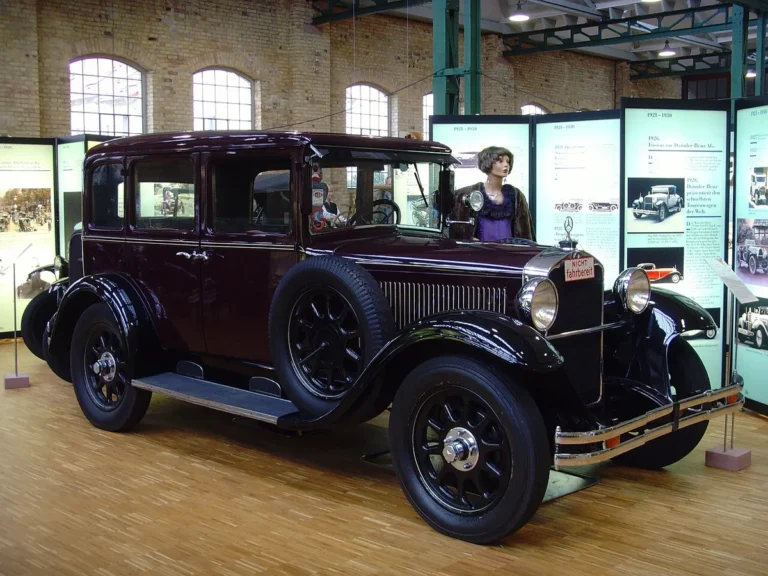
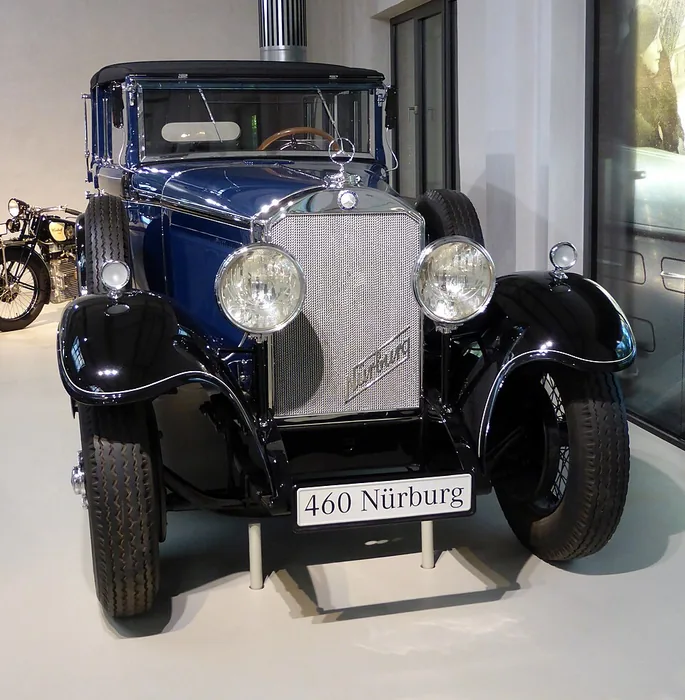
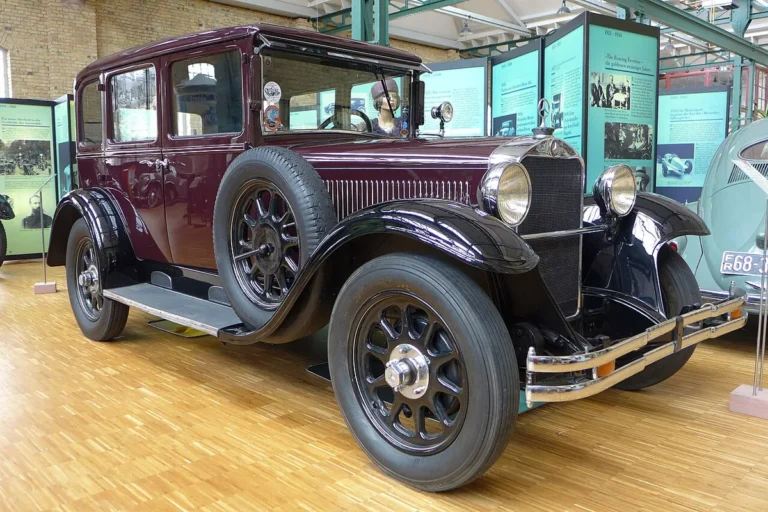
Visually the 1926 car is upright and formal by later standards: tall radiator shell, separate wings, running boards, and a cabin that prioritises seating height over fashion. Early width figures around 1.68 m and wheelbase near 2.81 m place it firmly in mid-size rather than large luxury classes such as the later Typ Nurburg.
The M 02 1,988 cc six with about 38 PS at roughly 3,400 rpm and early compression near 5:1 is the powertrain identity of the launch. A Zenith carburettor theme is commonly cited for early cars. Three speeds and mechanical drums define the control layout. Listed top speed around 75 km/h is an envelope for period roads, not a modern performance claim.
Driving a well-sorted early car is an exercise in patience and placement. Steering is slow. Gears reward timing. Brakes need early application. The six-cylinder engine’s value is smoothness relative to a comparable four of the day, not outright speed. Owners who treat the car as a 1926 mid-size tourer are aligned with its design; owners who expect sports response will be disappointed.
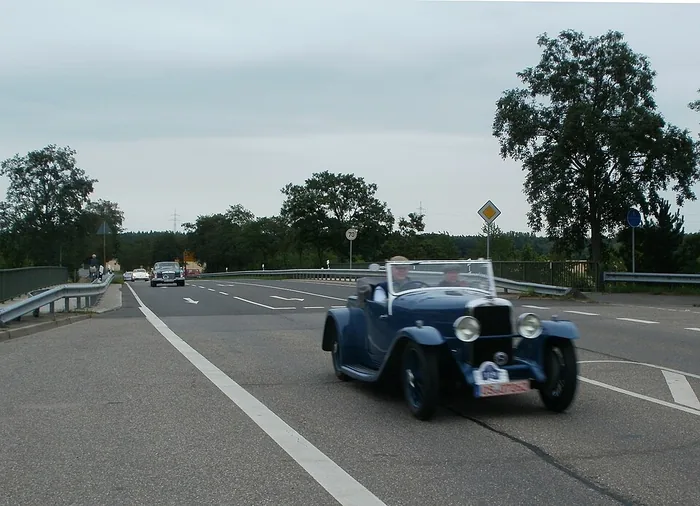
Image source: Wikimedia Commons
Pricing, politics, and the road to the facelift
Early pricing strategy was imperfect. Initial prices sat too high for the intended volume mission; subsequent cuts of several hundred to a thousand marks fuelled rumours of run-out discounts and unsettled buyers. Those commercial problems, together with early quality complaints, fed boardroom conflict around technical leadership. Understanding that background prevents a simplistic “instant perfect classic” narrative. The 8/38 succeeded as a product line, but the first years were industrially and politically difficult.
By February 1928 the firm added the 200 displacement cue to the sales name, expanded body variety, and continued price pressure. The deeper technical and marketing refresh arrived in November 1928 as the Stuttgart 200—covered in detail on its own page. Launch-year cars and very early production therefore form a distinct collecting and research slice: three-speed, early compression and carburettor themes, pre-place-name badging, and the purest expression of the merger’s first mid-size bet.
Ownership notes for early cars
Strengths of a coherent early 8/38 include historical proximity to the brand’s founding passenger programme, relatively simple three-speed mechanicals, and clear documentation pathways via chassis and engine numbers into W02 literature. Watch points include wood structure, mechanical brake condition, cooling system integrity, and the temptation to “upgrade” an early car with later four-speed or Stuttgart-package parts without disclosure.
Parts and coachwork skills are specialist. Club knowledge helps separate early 8/38 features from 1929–1933 Stuttgart 200 equipment. Storage must be dry. Tyres and drums are safety-critical before any public-road use. Compare asking prices against condition and paperwork, not against supercharged sports-car glamour.
Ownership: strengths and things to watch
Strengths
- Launch-year significance — first-wave Mercedes-Benz mid-size car after the 1926 merger.
- Simple mechanical story — three-speed, early M 02 specification when original.
- Volume history — explains how the new brand achieved passenger-car scale in 1927.
- Research links — clear path into 8/38 hub and later Stuttgart 200.
- Honest period character — no need to invent sports mythology for the car to matter.
Things to watch
- Early production teething — quality and pricing history warn against assuming perfection.
- Hidden wood rot — closed and open bodies both suffer from damp storage.
- Brake and tyre limits — 1926 safety technology requires defensive modern driving.
- Non-original updates — later gearboxes or package parts can blur launch identity.
- Commercial derivatives — L 3/4 and related chassis are related but not identical passenger cars.
- Category error — not a Typ S and not a large Nurburg.
Sibling comparisons
Use this 1926 page when the subject is launch specification, merger product strategy, or early three-speed cars. Use the Typ 8/38 hub for the full 1926–1933 designation map. Use the Stuttgart 200 page for facelift, four-speed, and equipment packages. Use the Stuttgart 260 for the larger mid-size six that followed. Use sports and luxury entries only as range context.
Legacy
The 1926 Mercedes-Benz 8/38 is the practical founding mid-size car of the merged brand. It shows that Mercedes-Benz’s early survival and growth depended as much on a rugged two-litre six sold in volume as on the supercharged and multi-litre specials that later filled poster history. Its launch also freezes a moment in German industrial organisation: two former rivals completing a merger, arguing over cost and complexity, and settling on a conventional car that dealers could actually move.
For research, start here for 1926–1927, continue through the 8/38 hub for naming and production, then read the Stuttgart 200 page for the cultivated later years. For ownership, keep early cars dry, braked, and documented, and resist silent modernisation that erases launch identity. Treated with that discipline, a 1926-specification 8/38 remains one of the clearest ways to understand what Mercedes-Benz first meant as a unified passenger-car maker.
The correct success metric is not racing pedigree. It is whether the car still communicates mid-size multi-cylinder composure at period speeds—the job it was given when the three-pointed star became a single brand in 1926.
Leave a Reply
You must be logged in to post a comment.