General information & model overview
| Category | Specification Details |
|---|---|
| Model name | Mercedes-Benz Typ 260 Cabriolet D (Stuttgart 260 / W11 family) |
| Internal code | W11 (Cabriolet D body style on the Stuttgart 260 chassis programme) |
| Title focus year | 1929 introduction context within approximately 1929 – 1933/1934 production window |
| Parent model | Mercedes-Benz Typ Stuttgart 260 (W11) |
| Predecessor context | Accessible mid-size idea continued from the earlier Typ Stuttgart (W02) |
| Body style | Cabriolet D — typically more formal four-seat open car with full weather-equipment character for social and family touring |
| Manufacturer | Daimler-Benz AG (Mercedes-Benz) |
| Engineering context | Hans Nibel era Mercedes passenger-car engineering climate |
| Market role | Open-air social Mercedes on a mid-size six-cylinder chassis — prestige touring for more than two occupants |
| Layout | Front-engine, rear-wheel drive |
| Key characteristics | c. 2581 cc inline-six, about 50 PS at ~3400 rpm (period class); 4-speed manual; four-seat open coachwork with substantial folding-top equipment relative to two-seat sporting cabriolets |
Body & dimensions
| Specification | Details |
|---|---|
| Body concept | Formal four-seat cabriolet: open-air capability without abandoning multi-passenger social use |
| Seating | Typically four seats with more usable rear accommodation than Cabriolet A layouts |
| Wheelbase context | Mid-size W11 chassis programme; exact figures depend on catalogue body execution |
| Overall length & mass | Generally longer passenger cell and higher mass than two-seat Cabriolet A or light Sportwagen bodies |
| Top & weather gear | Fuller folding-top and weather-equipment character than minimal open sports bodies; designed to serve as a genuine dual-mode social car |
| Doors | Often four-door or multi-door formal open layouts depending on exact coachwork; verify on the individual car |
| Construction | Period steel-and-wood composite practices; rear body structure, top irons, and rear seat framing need careful inspection |
| Contrast within family | More formal and social than Cabriolet A; more weather-complete and multi-seat than Sportwagen |
Engine specifications
| Theme | Details |
|---|---|
| Configuration | Inline six-cylinder petrol, naturally aspirated (shared W11 theme) |
| Displacement | Approximately 2581 cc |
| Output (period class) | About 50 PS at roughly 3400 rpm |
| Induction | Naturally aspirated — not a Kompressor engine; contrast Typ S / W06 |
| Character in this body | Same power as other 260s; higher body mass means a more leisurely, formal road pace than lighter open siblings |
| Fuelling & cooling | Period carburettor and liquid cooling; four-up summer touring with top raised can stress cooling if systems are marginal |
Drivetrain & transmission
| Category | Details |
|---|---|
| Drive layout | Front-engine, rear-wheel drive |
| Gearbox | 4-speed manual of period design |
| Clutch | Mechanical clutch; smooth operation important for social driving with passengers |
| Final drive | Period gearing for touring rather than modern high-speed cruise |
| Driver impression | Progress feels dignified and unhurried — matching the formal open-body mission |
Chassis, brakes & structure (period construction)
| Category | Details |
|---|---|
| Frame | Separate ladder chassis of the W11 programme |
| Suspension | Solid front axle, live rear axle, leaf springs; load with four passengers changes ride and pitch behaviour |
| Steering | Mechanical steering box; heavier feel when fully loaded and at parking speeds |
| Brakes | Period drum brakes; four-up mass increases stopping distances further — plan earlier than with a two-seat open car |
| Open formal structure | Longer open body with rear seats places demands on rear framing, top irons, and door alignment across a larger aperture set |
| Wheels & tyres | Correct load-capable classic tyres matter when the car is used as a true four-seat tourer |
Performance (period context)
| Category | Details |
|---|---|
| Power-to-weight | Less favourable than Cabriolet A or Sportwagen due to larger formal open body mass |
| Top speed class | Aligns with the roughly ~90 km/h closed/formal car conversation depending on gearing, load, and condition |
| Character | Social open touring: dignified pace, four-seat conversation when the top is down, formal presence when raised |
| Comparison | More multi-passenger practicality than Cabriolet A; less stripped sporting focus than Sportwagen |
Timeline & history
| Period | Development |
|---|---|
| Pre-1929 | W02 Typ Stuttgart accessible mid-size programme precedes the six-cylinder 260 |
| 1929 | Stuttgart 260 / W11 era opens; Cabriolet D appears as the formal four-seat open option in the body conversation |
| 1929–early 1930s | Formal open cars serve professional and social households wanting Mercedes prestige with flexible weather use |
| Sibling bodies | Cabriolet A and Sportwagen cover more personal and sporting open niches |
| Concurrent extreme | Supercharged W06 Typ S family remains a different performance world |
| ~1933–1934 | W11 window closes; surviving Cabriolet D cars remain valuable as social open expressions of the 260 |
Body & variants notes
| Theme | Details |
|---|---|
| Cabriolet D identity | Formal four-seat open touring with full weather-equipment character |
| Sibling: Cabriolet A | Two-seat sporting elegance — Cabriolet A entry |
| Sibling: Sportwagen | Lightest sporting open cut — Sportwagen entry |
| Sibling: limousine | Closed practical core — Stuttgart 260 overview |
| Coachbuilt variation | Door count, top details, and rear seat layout can vary; document the individual body |
Safety & construction notes (classic-era context)
| Category | Details |
|---|---|
| Multi-passenger open risk | Four occupants increase responsibility; period restraints absent; soft top is not a safety cell |
| Braking with load | Drums plus passengers and luggage demand very early planning on hills and in traffic |
| Lighting | Weak period lamps; night social returns from events need special caution |
| Top structure | Larger formal tops have more irons, more fabric, more places for rot and misalignment |
| Tyres | Load rating and condition are non-negotiable for four-seat touring use |
| Wood & corrosion | Rear floor, wheel arches, and door bottoms are frequent problem areas on formal open bodies |
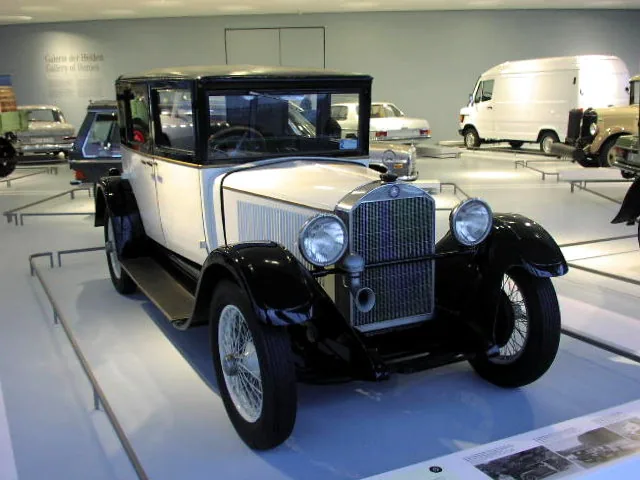
Typ 260 Cabriolet D: formal four-seat open body on the Stuttgart 260 chassis
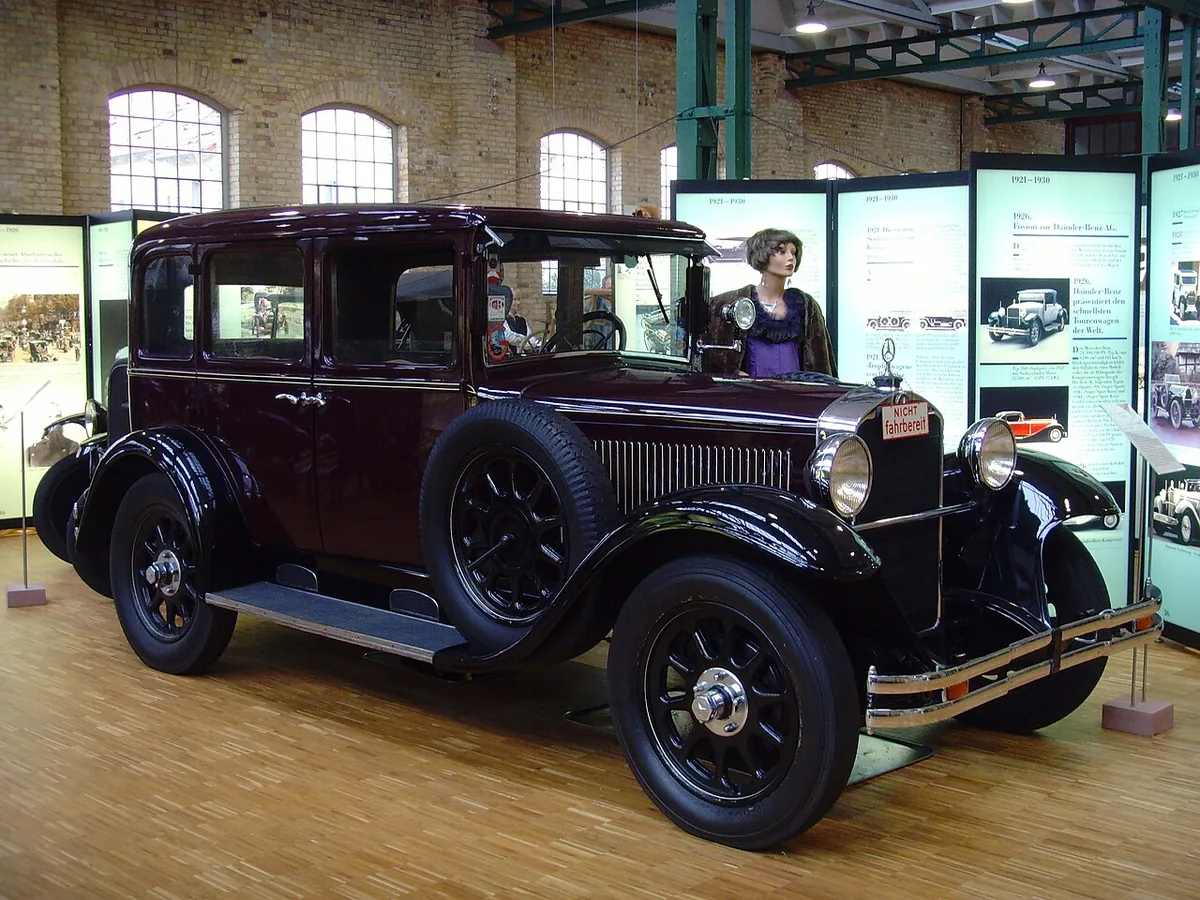
Image source: Wikimedia Commons
The Mercedes-Benz Typ 260 Cabriolet D is a formal open body style on the Stuttgart 260 (W11) six-cylinder chassis. In period catalogue language, Cabriolet D generally indicates a more formal multi-seat open arrangement—typically with greater emphasis on passenger accommodation and weather equipment—than the more intimate Cabriolet A.
Parent mechanical context is the Typ Stuttgart 260 (W11): approximately 2.6-litre inline-six, about 50 PS class, rear-wheel drive, separate chassis, period manual gearbox. The D body does not create a separate engine family; it applies formal open coachwork to that touring chassis. Approximate association with the parent production window is 1929–1934, with individual catalogue years and coachbuilt details requiring case-by-case verification.
Related open styles: Cabriolet A, Sportwagen. Earlier Stuttgart name: W02. Supercharged sports contrast: Typ S. Upper luxury contrast: Typ Nurburg.
Body programme and social use
Formal open bodies of this type were intended for social touring: multiple adult passengers, luggage where packaging allows, and the option to raise a top for weather. They sit between closed limousines (maximum weather protection) and sporting two-seat open cuts (minimum formal capacity).
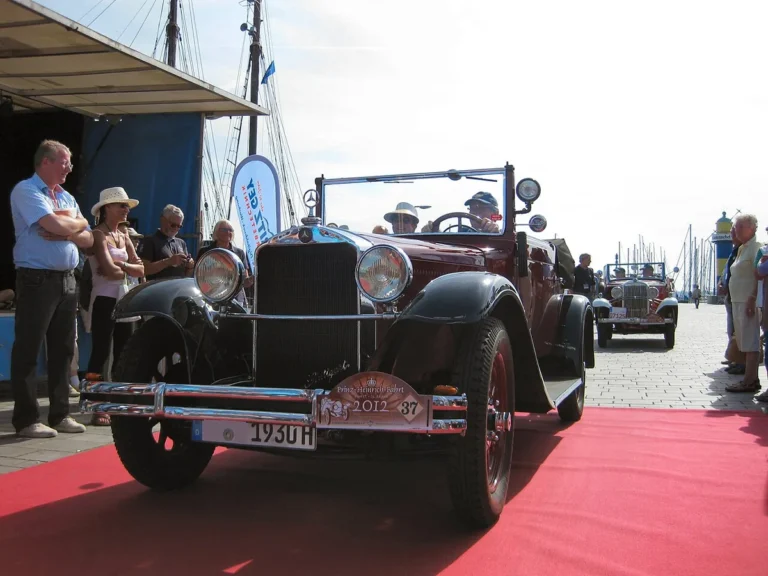
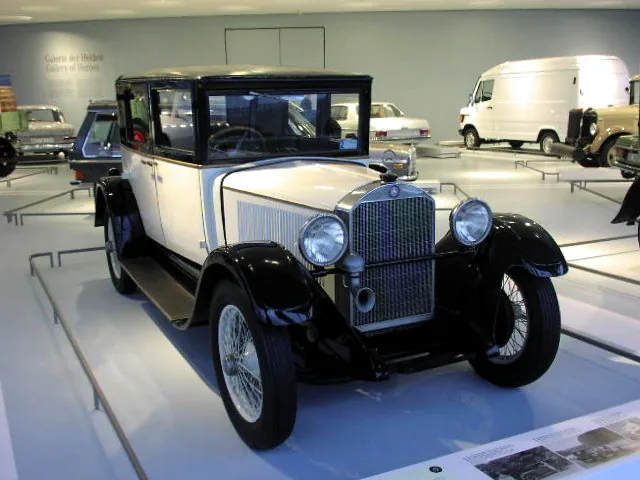
Door count, seat arrangement, and top design vary by year and coachbuilder. Some examples present a four-door open layout; details must be confirmed on the car. Brightwork, interior trim, and weather equipment quality differ between original catalogue bodies and later restorations. Compared with Cabriolet A, the D body typically carries more formal passenger space and often more mass. Compared with closed limousines on the same chassis, it trades fixed-roof simplicity for open-air use and higher coachwork complexity.
The social meaning of the car is multi-seat open dignity rather than two-seat sporting elegance. Households that ordered a Cabriolet D were buying the ability to travel with guests in open air without abandoning Mercedes formality. That is a different brief from a pure owner-driver two-seater and a different cost structure when weather gear and multi-door coachwork age.
Interior materials, rear seating quality, and partition or occasional-seat arrangements (where present) determine whether a given example was a professional tool or a private social tourer. Over-restoration into modern show finish can erase period formality; neglect turns multi-door wood and fabric into expensive structural repair.
Mechanical basis
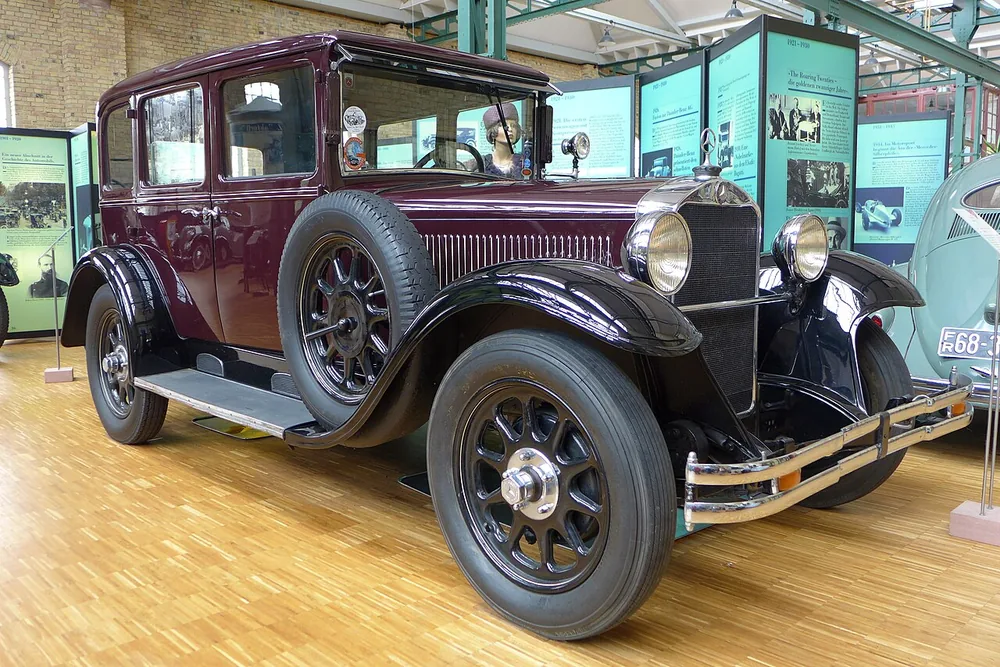
Image source: Wikimedia Commons
Specification tables list the shared W11 six-cylinder mechanicals. Power remains modest by modern standards; the car is a mid-size touring open Mercedes, not a sports special. Drive, gearbox, brakes, and suspension follow period separate-chassis practice: ladder frame, solid axles with leaf springs, mechanical steering, drum brakes.
Higher passenger and luggage load increases demand on drum brakes and tyres. Load rating and rubber age are safety items, not cosmetics. Steering play and spring condition should be checked carefully before road use. Cooling under multi-passenger load and summer traffic is a harder thermal test than light two-seat running.
There is no factory Kompressor programme of W06 type on this body. Any freer feel versus a closed limousine comes mainly from open coachwork character and sometimes reduced bulk relative to a heavy fixed roof, not from a different engine family. Expectation control remains part of correct ownership.
Driving character
On the road the Cabriolet D feels upright and deliberate. With the top down, wind and engine voice are part of normal operation. With the top up, noise and formality increase and visibility can change with screen and side equipment design.
Progress is touring-paced. Overtakes on modern roads require planning. Period lighting is weak; night driving is specialist activity. Wet cobbles and polished surfaces reduce grip on period-pattern tyres. A full rear cabin and luggage change how the car brakes and steers compared with a solitary test drive; evaluation with only a driver aboard understates real multi-seat behaviour.
Fair-weather orientation remains realistic even with full weather equipment. Soft-top seals and side screens of the early 1930s are not modern convertible systems. Owners who treat the raised top as occasional protection rather than all-season armour keep both fabric and structure in better condition.
Ownership and inspection
Strengths include formal open multi-seat use on a documented mid-size six chassis; clear links to the W11 family for research; and a calmer performance envelope than supercharged sports cars of the same era. Watch points: top structure and fabric; door wood and sills; brake condition under multi-passenger mass; cooling under load; electrical condition; chassis/engine/body identity; evidence of rebody or mixed parts.
Restoration of formal open coachwork is expensive when wood and weather gear are poor. Multi-door open bodies multiply hinge, seal, and alignment problems. Storage must be dry. Long inactivity creates fuel, brake, and seal problems that appear on the first careful return to the road. Specialist coachwork and mechanical support are practical requirements.
Parts commonality with other W11 cars helps for mechanicals; body-specific weather equipment and interior fittings may be harder. Club and marque literature improve identification of correct catalogue features for a given year.
Collecting context
Formal open cars can be valued highly when original and well documented, but multi-seat open bodies are also more complex to keep correct than simple two-seaters. Buyers should compare total ownership cost, not only purchase price.
Read this page with the W11 overview for engines and closed-body context, and with Cabriolet A / Sportwagen pages for other open expressions of the same chassis. Against the earlier Typ Stuttgart (W02), the Cabriolet D shows how six-cylinder mid-size open formality evolved. Against the Typ Nurburg open bodies, it remains mid-size rather than large luxury-eight ceremony.
Fashion sometimes favours intimate two-seat open cars. A coherent Cabriolet D can still be the more useful open tourer for multi-passenger use, provided the buyer accepts higher weather-equipment and multi-door maintenance complexity.
Ownership: strengths and things to watch
Strengths
- Formal multi-seat open use — social touring identity on the Stuttgart 260 chassis.
- Shared W11 mechanicals — documented six-cylinder mid-size base with clear family pages.
- Weather equipment character — more formal open protection story than a pure two-seater.
- Calmer envelope — touring brief free of supercharged sports temperament.
- Research links — pairs cleanly with Cabriolet A and Sportwagen.
Things to watch
- Multi-door coachwork cost — wood, seals, and alignment multiply on formal open bodies.
- Top and weather gear — fabric and irons dominate long-term open-car bills.
- Brakes under load — multi-passenger mass stresses period drums.
- Cooling in traffic — summer formal use is a hard thermal test.
- Identity and rebody history — mixed open parts are not uncommon after long lives.
- Expectation mismatch — not a two-seat sports special and not a Typ S.
Sibling comparisons
Choose the Cabriolet D if formal multi-seat open touring is the priority. Choose the Cabriolet A for intimate open elegance. Choose the Sportwagen for the lightest open emphasis. Choose a closed W11 if year-round simplicity matters more than open-air presentation. Use the parent overview for engines, timeline, and market placement.
Legacy
The Cabriolet D represents formal open social touring within the Stuttgart 260 programme. It is historically useful as evidence that mid-size Mercedes sixes of the early 1930s supported several body roles—closed family use, intimate open elegance, and formal multi-seat open touring—without requiring flagship eight-cylinder or supercharged sports machinery.
Maintain accordingly: brakes and tyres first, then coachwork and top, then powertrain detail, with documentation kept complete for later research or sale. For historical mapping, pair this page with the W11 hub and at least one contrasting open style. That set teaches the full mid-size open lesson: one six-cylinder chassis, several social roles, and a clear separation from both closed practicality and pure two-seat sporting presentation.
Keep a sound Cabriolet D dry, carefully stored, and driven on conservative itineraries. Treated as a formal open tourer rather than a modern convertible, it continues to show how Mercedes-Benz sold multi-seat open prestige in the early 1930s on mid-size terms.
Leave a Reply
You must be logged in to post a comment.