General information & model overview
| Category | Specification Details |
|---|---|
| Model name | Mercedes-Benz 8/38 Typ Stuttgart 200 (also Stuttgart 200 / 8/38 hp 200) |
| Internal code | W02 (two-litre passenger programme continuing the earlier 8/38) |
| Production window | Facelift unveiled November 1928; principal sales phase approximately 1929 – 1933 (two-litre Stuttgart 200) |
| Predecessor naming | Mercedes-Benz Typ 8/38 / 8/38 hp — see Typ 8/38 hub and 1926 launch entry |
| Manufacturer | Daimler-Benz AG, Stuttgart-Untertürkheim production |
| Name origin | Stuttgart production city; “200” ≈ 2.0-litre class (three-digit sales code ×10 ≈ cc) |
| Market role | Modernised mid-size two-litre Mercedes for late-1920s / early-1930s buyers; volume companion to the more powerful Stuttgart 260 (W11) |
| Layout | Front-engine, rear-wheel drive |
| Engineering leadership | Facelift and cultivation associated with Hans Nibel after Ferdinand Porsche’s departure from technical directorship |
| Approximate production | About 6,452 Stuttgart 200 passenger units in manufacturer archive tallies (two-litre W02 family totals higher when early 8/38 phases are included) |
Body & dimensions
| Specification | Details |
|---|---|
| Typical bodies | Four-door limousine/saloon (mainstay); open tourer; Convertibles A/B/C (later catalogue language); sports two-seater in earlier Stuttgart lists; landaulet themes in broader family history |
| Wheelbase | Approximately 2,810 mm |
| Length / width / height | Length roughly 4.0–4.4 m class by body; width about 1.71 m in later period figures; height about 1.8 m class |
| Equipment packages | Standard/normal and special (later nomenclature shifts); differences in radiator type, brightwork, instruments, and luggage fittings |
| Construction | Separate chassis; catalogue factory bodies and equipment lines; wood-and-steel coachwork practices |
Engine specifications
| Theme | Details |
|---|---|
| Engine | M 02 inline six-cylinder side-valve petrol, approximately 1,988 cc |
| Output | About 38 PS (28 kW) — listed at roughly 3,200 rpm in Stuttgart 200 literature (slightly lower rpm than some early 8/38 figures) |
| Compression | Raised to about 6.2:1 in the facelift era (from roughly 5:1 on earlier cars) |
| Carburettor | Literature notes change from Zenith 30 HKG theme to Solex 30 MOHLT theme — verify on the individual car |
| Induction | Naturally aspirated — not a Kompressor sports engine |
| Sibling engine | Larger M 11 ~2.6-litre six on Stuttgart 260 / W11 (bore increase on related architecture) |
Drivetrain & transmission
| Category | Details |
|---|---|
| Drive | Rear-wheel drive |
| Three-speed gearbox | Continued availability from earlier 8/38 practice |
| Four-speed option | Optional four-speed manual; fourth ratio approximately 0.76:1 overdrive-style relative to direct third (1:1) |
| Later overdrive | Optional Mercedes-Benz/Maybach overdrive from about August 1930 on Stuttgart family cars (extra-cost item in period lists) |
| Suspension | Rigid axles, semi-elliptic leaf springs |
| Brakes | Four-wheel mechanical drums |
Performance (approximate)
| Measure | Details |
|---|---|
| Claimed top speed | About 80 km/h (50 mph) class after engine/gearbox updates — body and condition dependent |
| Character | Cultivated mid-size touring relative to early 8/38 cars; still leisurely by modern standards |
| Use | Period roads and conservative modern secondary-road itineraries |
Facelift, packages & model-year notes
| Theme | Details |
|---|---|
| November 1928 show | Stuttgart 200 name and cultivated presentation introduced at Berlin International Motor and Motorcycle Show |
| Standard vs special | Standard packages could use finned-tube radiator and simpler instruments; special packages retained richer brightwork and fittings themes |
| 1929–1930 range edits | Body lists refined; sports two-seater eventually dropped; Convertible letter codes evolve; price pressure continues in depression market |
| 1932–1933 | Stylistic updates to saloon/convertible lines; two-litre production ends 1933 as newer mid-size models take over |
| Place in ladder | Below Stuttgart 260 and far below Nurburg eights / W06 sports |
Mercedes-Benz 8/38 Typ Stuttgart 200: the cultivated two-litre mid-size
The Mercedes-Benz 8/38 Typ Stuttgart 200 is the facelifted and rebranded phase of the two-litre W02 mid-size car. Mechanically it continues the earlier Typ 8/38 idea—about 1,988 cc, about 38 PS, rear-wheel drive—but the November 1928 relaunch under Hans Nibel’s technical leadership refined compression, carburation, gearbox options, and equipment presentation. The place-name “Stuttgart” and the three-digit “200” made the car easier to sell than the dry tax-and-power figure alone.
This entry focuses on that Stuttgart 200 identity: what changed after the early 8/38 years, how standard and special packages worked, and how the two-litre car shared a showroom with the more powerful Stuttgart 260. For the full designation map and merger-era production story, use the Typ 8/38 hub. For launch-year detail, use the 1926 8/38 entry. For place-name framing across early W02 marketing, see also the Typ Stuttgart overview.
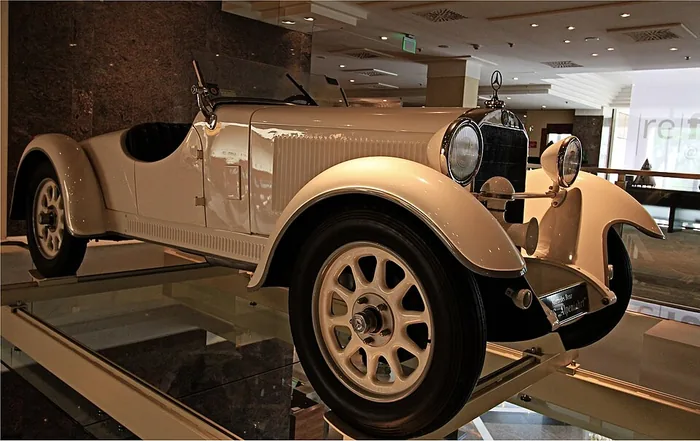
Image source: Wikimedia Commons
From 8/38 to Stuttgart 200
By early 1928 Mercedes-Benz had already begun attaching three-digit displacement cues to sales names (8/38 hp 200). The deeper change came with the November 1928 facelift. Place-name marketing—already used for the Nürburg eight—gave the mid-size car a civic identity tied to production in Stuttgart. Internally the works code remained W02. Externally the car could be discussed as Stuttgart 200, 8/38 Typ Stuttgart 200, or simply Stuttgart in period conversation.
Hans Nibel’s role matters historically. After Porsche left the technical directorship, Nibel modernised and cultivated the existing mid-size package rather than inventing an unrelated sports car. Higher compression, carburettor change, optional four-speed gearbox, and cleaner equipment stories are the practical content of that cultivation. Buyers still received a conventional rigid-axle side-valve six; they did not receive independent suspension miracles or Kompressor power.
Pricing remained a sensitive subject. The late 1920s and early 1930s German market was difficult. Mid-size Mercedes volume mattered to factory employment and brand presence. The Stuttgart 200 and the parallel Stuttgart 260 together carried a large share of passenger production in several years before smaller new models altered the mix after 1931–1932.
Design and equipment packages
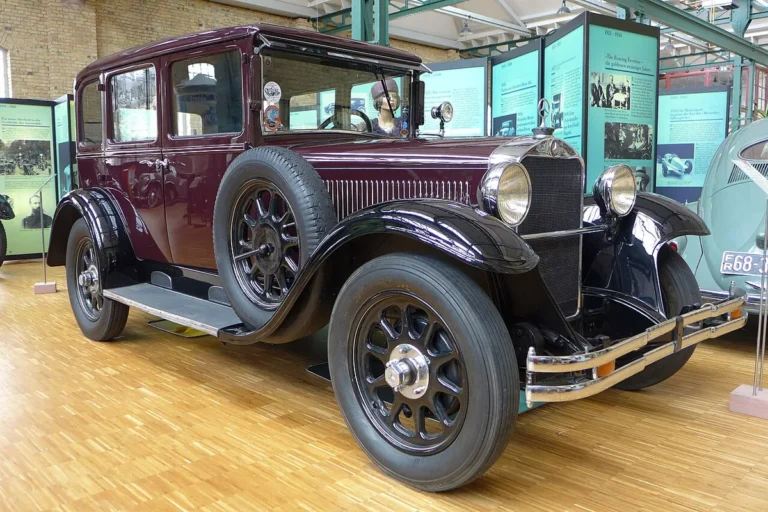
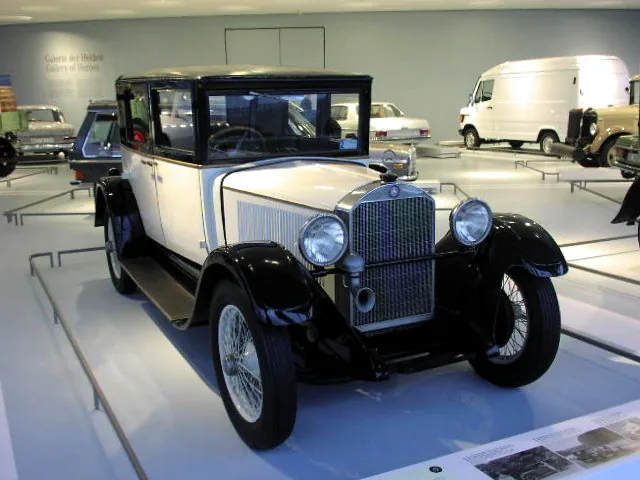
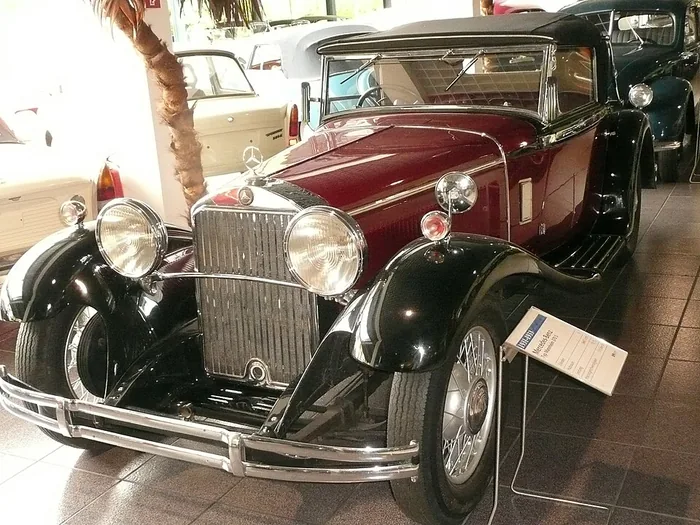
The Stuttgart 200 still reads as a late-1920s / early-1930s mid-size Mercedes: upright radiator, separate wings, formal cabin height, and catalogue variety from tourer to four-door saloon and lettered convertibles. What the facelift era emphasises is equipment differentiation.
Period “standard” or “normal” packages could use a finned-tube radiator, black-enamelled window frames, simpler instruments (including scrolling speedometer themes without a clock on some cars), and limited paint/trim choices at a lower price. Special packages retained richer presentation: honeycomb radiator themes, brighter metal details on higher lines, more complete instruments, and better luggage arrangements. Exact brightwork and interior fabrics should be verified on the car; restorations often mix package cues.
Body lists evolved. Early Stuttgart catalogues still mentioned sports two-seaters and multiple convertible cuts; later lists simplified as the stronger 260 took some of the more luxurious and sporting demand. Convertible letter codes (A, B, C, later D and NC themes in the wider Stuttgart family) describe open arrangements more than modern trim badges. Always identify doors, seats, and top structure from documents, not from a single photograph.
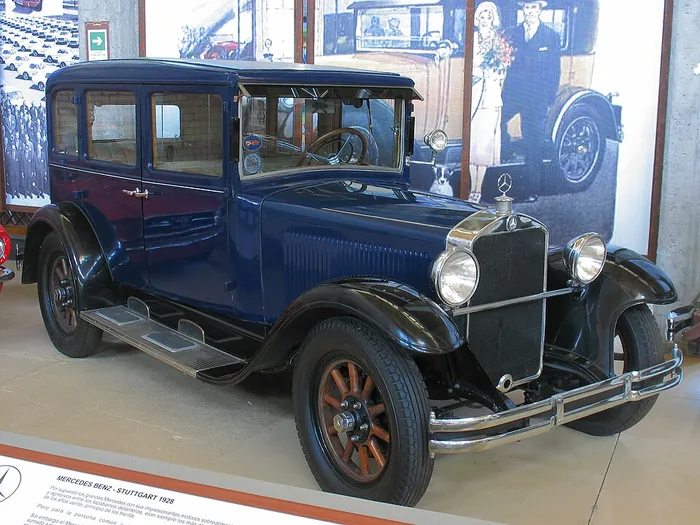
Image source: Wikimedia Commons
Engine and gearbox updates that define the phase
Displacement and peak power stayed in the same two-litre / 38 PS class as the earlier 8/38. The meaningful updates are how that power was produced and used. Compression toward about 6.2:1 and a Solex carburettor theme in literature aim at cleaner, more modern running. Peak power listed at a slightly lower engine speed than some early figures suggests a cultivated torque character rather than a chase for higher revs.
The optional four-speed gearbox is a buyer-facing difference. Third gear remains the direct 1:1 ratio familiar from the three-speed car; fourth is an overdrive-style ratio that eases cruising rpm. That arrangement helps explain the modest claimed rise in top-speed class to about 80 km/h. Later optional Maybach/Mercedes overdrive units on Stuttgart-family cars further illustrate the period’s interest in reducing engine speed on longer runs—without inventing a modern multi-speed automatic.
Cooling, ignition, and fuel cleanliness remain decisive. A facelifted instrument panel does not protect a neglected radiator. Seasonal open-car storage still produces varnish in fuel systems and tired seals. Service culture decides whether a Stuttgart 200 feels like a composed tourer or a fragile display piece.
Driving character
A correctly prepared Stuttgart 200 is upright, multi-cylinder smooth, and deliberately geared. Steering is slow by modern standards. Mechanical drums demand early, progressive braking. Leaf springs transmit road texture. With the four-speed option, longer gears reduce fuss on gentle routes; they do not create dual-carriageway authority.
Compared with an early three-speed 8/38, the later car can feel more finished when compression, carburettor, and gearbox are in original-type order. Compared with a Stuttgart 260, the 200 is the lighter-powered sibling—adequate for mid-size touring, less flexible when fully loaded on hills. Compared with a Typ S, it remains a different product class entirely.
Open bodies add wind and weather as normal conditions. Closed saloons remain the practical year-round expression. Period lighting is weak; night driving is specialist activity. Tyre age and load rating are safety items, not cosmetics.
Market position beside the Stuttgart 260
From 1929 the two-litre Stuttgart 200 shared the mid-size ladder with the 2.6-litre Stuttgart 260. Manufacturer history notes that in launch years the stronger 260 could outsell the two-litre car when buyers who wanted luxury or sporting open bodies preferred the larger engine. That commercial pattern explains why special two-litre variants were rationalised while the standard 200 remained a price-sensitive core offer.
Understanding both cars together is essential for collectors. A restored open 200 should not be priced as if it were a 260 without paperwork. A closed 200 can still be the more historically honest volume car of the place-name programme. Cross-link both entries with the 8/38 hub when researching chassis plates that still use older fiscal designations.
Ownership: strengths and things to watch
Strengths
- Clear facelift identity — Nibel-era Stuttgart 200 naming and equipment story.
- Four-speed option — more modern gearing story than early three-speed-only 8/38 cars.
- Package documentation — standard vs special differences aid correct restoration targets.
- Family context — direct links to 8/38, 1926 launch, and Stuttgart 260.
- Volume-history value — represents the cultivated mid-size Mercedes of the early 1930s depression market.
Things to watch
- Mixed package restorations — brightwork and instruments often hybridised.
- Gearbox identity — three-speed vs four-speed vs later overdrive must match claims and invoices.
- Wood structure and sills — damp storage remains the primary enemy.
- Brakes and tyres — mechanical drums and period rubber set real limits.
- Confusion with 260 — larger-engine siblings look similar in poor photographs.
- Expectation mismatch — still ~38 PS touring, not sports or luxury-eight performance.
Sibling comparisons
Choose the Stuttgart 200 entry when the car’s paperwork or catalogue year sits in the facelift era and equipment packages matter. Choose the Typ 8/38 hub for designation-wide production and naming. Choose the 1926 page for launch-year merger context. Choose the Stuttgart 260 for the larger six. Use Nurburg and Typ S only as upper and sports contrasts.
Legacy
The 8/38 Typ Stuttgart 200 shows how Mercedes-Benz refreshed a successful mid-size chassis with better breathing, gearing options, and place-name marketing rather than inventing an entirely new car for every sales season. It also shows the commercial reality of the early 1930s: the two-litre car remained important, but the 2.6-litre sibling took a growing share of desire for stronger mid-size performance.
For research, pair this page with the 8/38 hub and the 1926 launch entry, then read the Stuttgart 260 as the parallel upper mid-size story. For ownership, prioritise dry storage, correct package-accurate restoration choices, excellent brakes, and honest cooling. Kept on those terms, a Stuttgart 200 remains a legible document of cultivated mid-size Mercedes engineering at the turn of the 1930s—neither a sports myth nor a forgotten footnote.
Maintain documentation of gearbox type, equipment package, and body identity. Those three facts, more than paint colour alone, decide whether a surviving car can be discussed accurately as a Stuttgart 200 rather than as a generic “old Mercedes six.”
Leave a Reply
You must be logged in to post a comment.