General information & model overview
| Category | Specification Details |
|---|---|
| Model name | Mercedes-Benz Typ Stuttgart 260 (W11) |
| Internal code | W11 |
| Production years | Approximately 1929 – 1933/1934 (catalogue and registration dates vary by body and market; main-line discussion often uses 1929–1934) |
| Predecessor | Earlier Mercedes-Benz Typ Stuttgart (W02) mid-size programme |
| Body style | Mid-size passenger chassis offered with limousine/saloon, open tourer, cabriolet, and sporting open bodies (catalogue and coachbuilt variety) |
| Manufacturer | Daimler-Benz AG (Mercedes-Benz) |
| Engineering context | Hans Nibel era of Mercedes passenger-car engineering influence in the late 1920s and early 1930s |
| Market role | Accessible mid-size six-cylinder Mercedes — prestige without the cost, temperament, or power of contemporary supercharged sports cars |
| Layout | Front-engine, rear-wheel drive |
| Key characteristics | Approximately 2.6-litre (c. 2581 cc) inline-six petrol; about 50 PS at roughly 3400 rpm (period rating class); 4-speed manual; various open and closed bodies on a conventional separate chassis |
| Not to be confused with | Supercharged W06 sports line (Typ S, SS, SSK) — different brief, different performance class |
Body & dimensions
| Specification | Details |
|---|---|
| Chassis concept | Separate frame with factory-associated catalogue bodies and coachbuilt variations; dimensions and mass vary strongly by body style |
| Wheelbase | Period mid-size Mercedes class; exact catalogue figures depend on body programme and market listing within the W11 Stuttgart 260 family |
| Overall length | Dependent on body (limousine vs open two-seater vs four-seat cabriolet); not a single fixed figure across all W11 bodies |
| Width & height | Upright period proportions; closed limousines sit taller and heavier in character than light open sports bodies |
| Seating | Typically four to five or more in limousines and formal cabriolets; two seats (or 2+ occasional) on sporting open styles such as Cabriolet A and Sportwagen themes |
| Body variety | Closed limousines/saloons; formal open Cabriolet D; sporting Cabriolet A; light Sportwagen expressions; other tourer and special coachwork |
| Construction | Late-1920s/early-1930s steel-and-wood composite coachwork practices; quality and longevity depend on original method and subsequent restoration |
| Doors | Two- or four-door layouts depending on body style |
| Weather equipment | Closed cars for all-weather use; cabriolets with folding tops and side screens/equipment of period design; open sports bodies more fair-weather oriented |
Engine specifications
| Theme | Details |
|---|---|
| Configuration | Inline six-cylinder petrol engine, naturally aspirated |
| Displacement | Approximately 2581 cc (about 2.6 litres) — the “260” in the model name |
| Output (period class) | About 50 PS at roughly 3400 rpm (period rating; treat individual chassis literature and plates as primary for a given car) |
| Induction | Naturally aspirated — not a Kompressor engine in the Typ S / SS / SSK tradition |
| Character | Smooth mid-size six intended for touring and everyday prestige use rather than racing or high-speed sports work |
| Fuelling | Period carburettor equipment; restoration quality of fuel system strongly affects drivability and reliability |
| Cooling | Liquid-cooled; radiator condition, water jackets, and correct thermostat behaviour are critical ownership items |
| Contrast with W02 | Step up from the earlier roughly two-litre four-cylinder Typ Stuttgart (W02) programme into six-cylinder mid-size territory |
Drivetrain & transmission
| Category | Details |
|---|---|
| Drive layout | Front-engine, rear-wheel drive — standard Mercedes passenger layout of the era |
| Gearbox | 4-speed manual transmission of period design (crash or early synchromesh elements depending on exact execution, later repairs, and market specification) |
| Clutch | Mechanical clutch; free play, friction material, and driver technique are central to enjoyable road use |
| Final drive | Rear axle drive with period gearing suited to 1920s/1930s touring speeds rather than modern motorway cruise expectations |
| Supercharger | Not part of the Stuttgart 260 identity — contrast with the W06 supercharged sports line beginning with the Typ S (W06) |
Chassis, brakes & structure (period construction)
| Category | Details |
|---|---|
| Frame | Ladder-type separate chassis typical of late-1920s/early-1930s Mercedes mid-size cars; body mounted to frame |
| Front suspension | Solid axle with leaf springs (period convention); damping by friction or early hydraulic dampers depending on car and restoration |
| Rear suspension | Live rear axle with leaf springs; ride comfort depends on spring condition, damper state, and tyre pressures |
| Steering | Mechanical steering box; low gearing and free play by modern standards if worn |
| Brakes | Period drum brakes; stopping distances long by modern norms; linings, rods/cables or period actuation hardware, and adjustment are critical |
| Wheels & tyres | Wire or artillery-style wheels depending on specification and later fitment; period tyre compounds and sizes limit wet grip and emergency braking |
| Safety context | No modern crash structure, airbags, or electronic aids; seatbelts usually later additions if present; period lighting and brakes define the practical safety envelope |
Performance (period context)
| Category | Details |
|---|---|
| Power-to-weight reality | With about 50 PS and substantial coachbuilt body mass on closed cars, acceleration is leisurely by any post-war standard; open light bodies feel more lively |
| Touring speeds | Comfortable period cruising on good roads rather than sustained high-speed Autobahn use as later understood |
| Top speed class | Roughly ~90 km/h class for typical closed cars depending on gearing, body drag, and mechanical condition; open sports bodies can feel livelier within a similar overall envelope |
| Driving character | Smooth six-cylinder touring, upright seating on most bodies, deliberate gear changes, and solid mid-size Mercedes dignity rather than Kompressor drama |
| Comparison | Worlds apart from supercharged W06 sports cars; natural successor spirit to the accessible W02 Stuttgart idea with more cylinders and displacement |
Timeline & history
| Period | Development |
|---|---|
| 1926 | Daimler-Benz merger creates a unified Mercedes-Benz brand; mid-size passenger programmes remain strategically important |
| ~1926–1929/30 | Earlier Typ Stuttgart (W02) four-cylinder mid-size cars establish the “Stuttgart” naming theme |
| ~1928/1929 | W11 Typ Stuttgart 260 six-cylinder programme appears as the natural next step in accessible mid-size Mercedes passenger cars |
| 1929–early 1930s | Limousine, cabriolet, and sporting open bodies populate catalogues; Hans Nibel–era engineering context frames passenger-car development |
| ~1930 | Sporting open expressions such as the Sportwagen theme underline the chassis’s versatility without claiming W06 power |
| Concurrent context | At the sporting extreme, the supercharged Typ S / W06 family occupies a completely different performance and price band |
| ~1933–1934 | Stuttgart 260 production window closes as newer model programmes and market conditions reshape the mid-size range |
| Afterlife | Surviving cars become pre-war collector pieces valued for accessible six-cylinder Mercedes history and body-style variety |
Body styles & variants (family notes)
| Theme | Details |
|---|---|
| Limousine / closed bodies | Core practical face of the W11: family and professional use, all-weather touring, formal proportions |
| Cabriolet A | Sportier two-seat (or 2+ occasional) open elegance — see dedicated entry Stuttgart 260 Cabriolet A |
| Cabriolet D | More formal four-seat open car with full weather-equipment character — see Typ 260 Cabriolet D |
| Sportwagen | Lightest sporting open body expression on the W11 theme — see Stuttgart 260 Sportwagen (1930) |
| Coachbuilder influence | As with many chassis of the era, final appearance can reflect catalogue factory bodies or specialist coachwork — identify body origin when valuing a car |
Safety & construction notes (classic-era context)
| Category | Details |
|---|---|
| Crash protection | Separate chassis and period body offer minimal modern crash energy management; low speeds and defensive driving are mandatory on public roads |
| Braking system | Drum brakes of the era require advance planning; wet roads and descents demand early application and mechanical sympathy |
| Lighting | Period headlamps are weak by modern standards; night driving on unlit roads is a specialist activity |
| Tyres | Correct-size period-pattern or high-quality classic tyres transform safety more than cosmetic restoration detail |
| Seatbelts | If retrofitted carefully by a specialist, they can improve occupant restraint without destroying historic integrity when done thoughtfully |
| Wood & corrosion | Wood-framed coachwork and steel panels both require expert inspection; rot can be structural as well as cosmetic |
| Open vs closed risk profile | Open cars add weather and rollover considerations; closed limousines add mass and different egress patterns — neither is “safe” by modern metrics |
Typ Stuttgart 260 (W11): six-cylinder mid-size continuation of the Stuttgart name
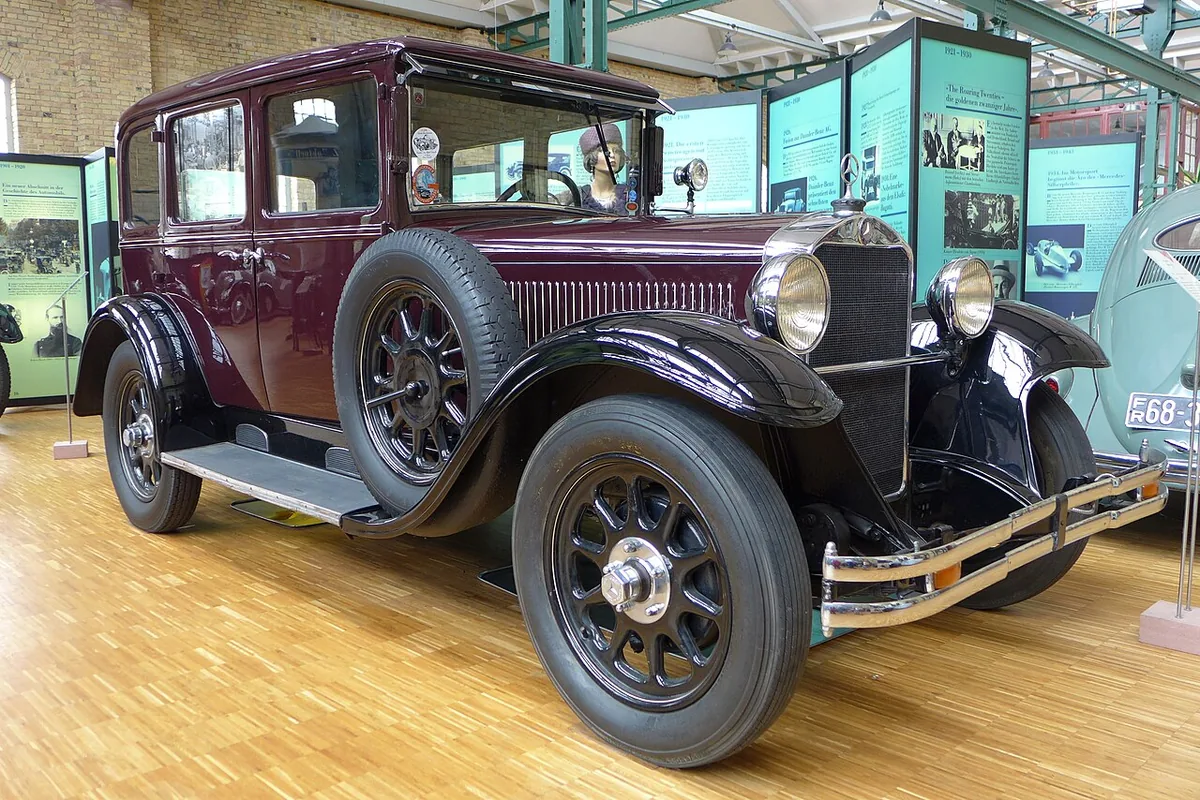
Image source: Wikimedia Commons
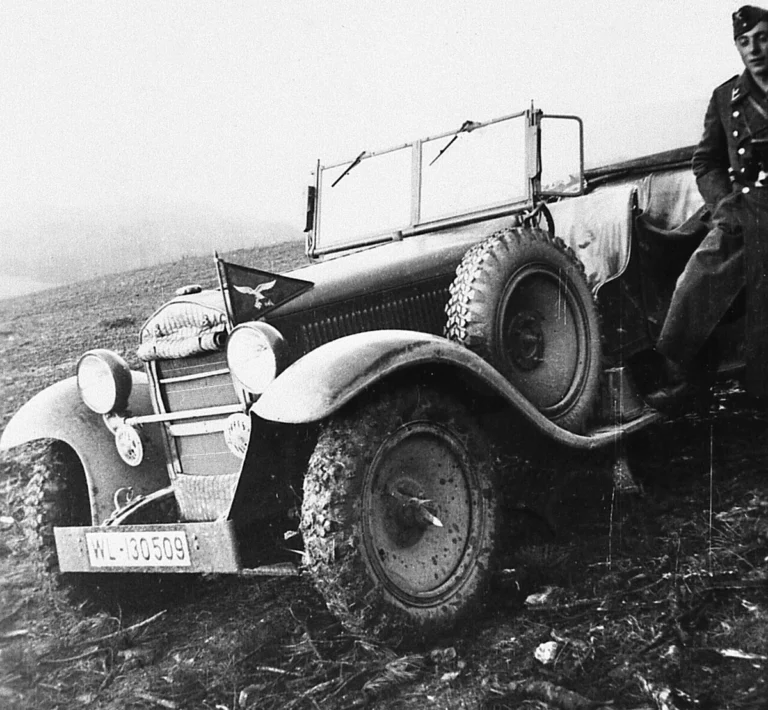
The Mercedes-Benz Typ Stuttgart 260, internal code W11, is the car that takes the Stuttgart idea from the earlier four-cylinder Typ Stuttgart (W02) and steps it into six-cylinder mid-size territory. Approximate production sits in the window 1929–1933/1934, with catalogue and registration dates varying by body and market. Roughly 2.6 litres, about fifty horsepower in period rating language, a multi-speed manual gearbox, and rear-wheel drive on a conventional separate chassis define the mechanical core.
The model was a touring and family product, not a supercharged sports special. Body styles included closed limousines and open cars such as the Cabriolet A, the more formal Cabriolet D, and the lighter Sportwagen. This page is the family overview: mechanical character, market position, and how those body entries branch from the same root.
In the early-1930s Mercedes ladder the W11 sat above accessible mid-size fours and well below the eight-cylinder Typ Nurburg and the supercharged W06 sports series. That placement explains both its commercial purpose and how it should be evaluated today.
Development and engineering context
After the 1926 Daimler-Benz merger, Mercedes-Benz needed a coherent mid-size offer under the unified brand. The W02 Stuttgart had established the city name as a signal of approachable prestige. The W11 Stuttgart 260 was the natural next step: more cylinders, more smoothness, and a broader body catalogue for private and professional buyers who wanted a six without flagship cost.
Engineering context is the Hans Nibel era of passenger-car development: conventional layouts executed carefully, engines prioritising smoothness and reliability over headline power, and chassis that could carry many body styles. The W11 fits that climate. It is commercial product engineering rather than sporting manifesto.
Continuation does not mean clone. The jump from roughly two litres and four cylinders to about 2,581 cc and six cylinders changes noise, vibration, and the social signal of the car when the bonnet is opened. Owners who had known the W02 would have felt the 260 as a step up rather than a sideways redesign of the whole brand. Collectors today should keep the same mental model: the earlier Stuttgart is the ancestor chapter; the W11 is the six-cylinder chapter that follows it, not a supercharged cousin of the W06 line.
Exact production tallies and market introductions vary by body and literature. The tables summarise the mechanical and timeline framework; individual cars should be identified from chassis and body documents.
Position in the range
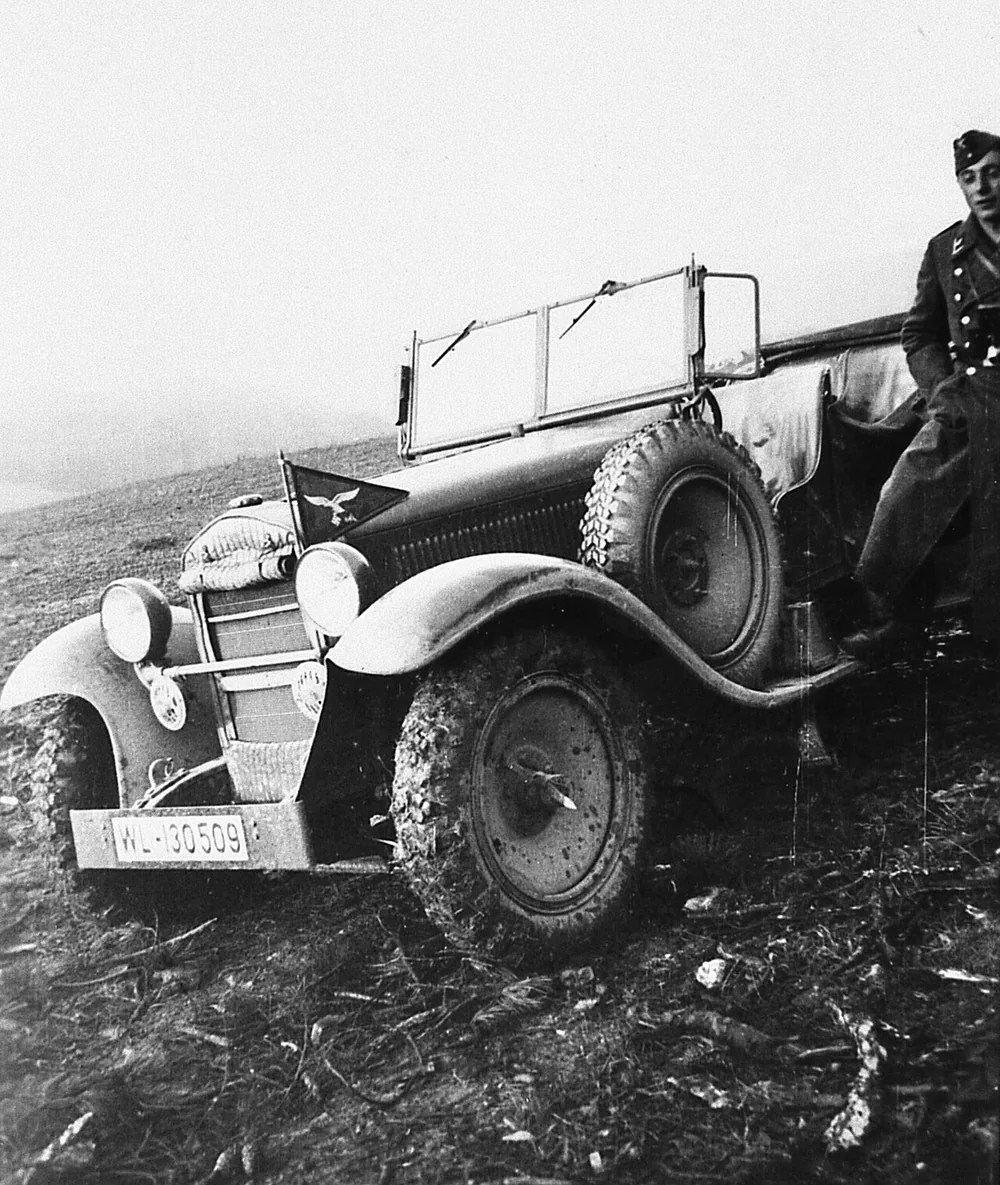
Image source: Wikimedia Commons
Relative to the earlier Typ Stuttgart (W02), the 260 is smoother, larger in engine presence, and more multi-cylinder in social meaning. Relative to upper sixes and the Typ Mannheim, it remains a mid-size product rather than a large formal limousine. Relative to the Typ Nurburg, it is smaller, less multi-cylinder, and less ceremonial. Relative to the Typ S / W06, it occupies a completely different brief: usable mid-size prestige versus Kompressor sports theatre.
That distinction protects buyers from category error. Comparing a Stuttgart 260 limousine unfavourably to a Typ S because it will not match blown six-cylinder thrust confuses two separate Mercedes strategies of the late 1920s and early 1930s. Within its brief, the 260 delivered what period buyers sought: a Mercedes six they could live with.
Design and body programme
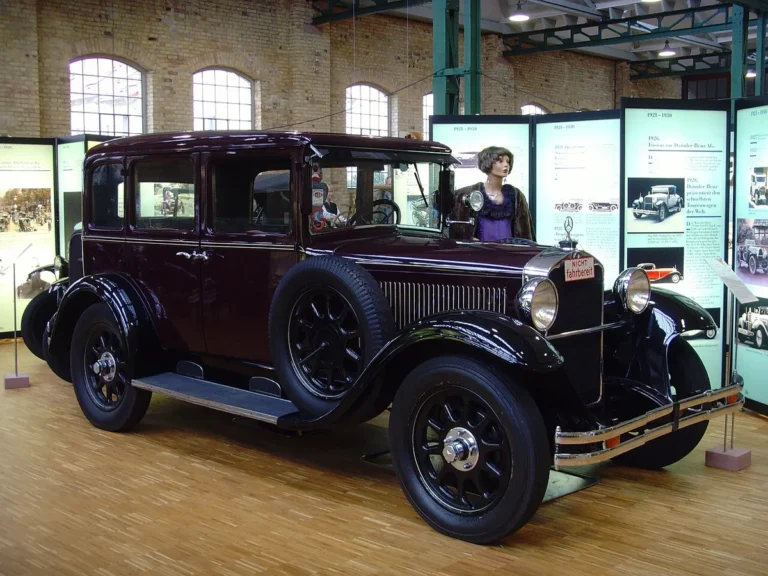
Exterior language is of its time: upright radiator shell with three-pointed star, separate wings, running boards on most bodies, and a cabin height that reads as late-1920s / early-1930s formality. What changes dramatically is the coachwork on the frame.
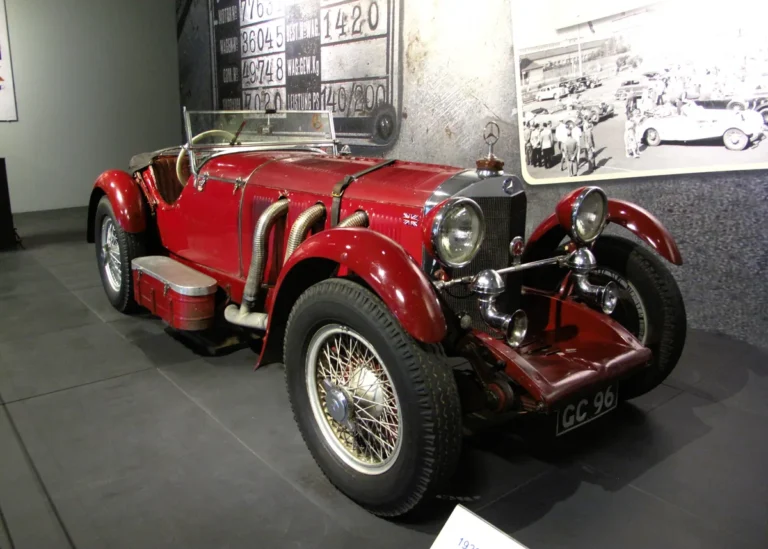
Closed limousines present formal glass and multi-seat capacity. The Cabriolet A leans toward sporting two-seat (or 2+ occasional) open elegance. The Cabriolet D is a more formal multi-seat open arrangement. The Sportwagen is the lightest open emphasis on the same mechanical idea. Tourer and special coachbuilt bodies complete the spectrum in period practice.
Body mass and drag rewrite how the same ~50 PS feels. A heavy closed car is deliberate; a light open body feels freer without becoming a sports car. Always identify the body on the car under inspection, including coachbuilder origin where applicable.
Interior materials, seating layout, and hardware quality vary with original specification and restoration ethics. Over-restoration into modern gloss can erase period formality; neglect turns wood and fabric into moisture traps. Brightwork, lamps, and wings complete period grammar and should match the body identity claimed.
Engine and mechanical character
The core power unit is an approximately 2,581 cc inline-six, naturally aspirated, with period ratings around 50 PS at roughly 3,400 rpm. That figure is modest by modern standards. On period roads, with leaf-spring suspension and drum brakes, it is appropriate for mid-size multi-seat touring when the car is in good order.
Drive is rear-wheel drive with a period multi-speed manual gearbox, typically four speeds in this class. Gearing suits early-1930s touring, not modern dual-carriageway cruise. There is no factory Kompressor story of the W06 type. Cooling and fuel systems are decisive for reliability. A six that idles well in a cool garage can still overheat or run poorly if the radiator, water jackets, carburettor, or ignition are neglected.
Chassis practice is conventional: separate ladder frame, solid axles with leaf springs, mechanical steering, drum brakes. Service culture matters more than brochure claims. Grease points, brake adjustment, and tyre condition decide whether the car remains a usable tourer or a fragile display object.
Driving character
A correctly prepared Stuttgart 260 is upright, deliberate, and tour-oriented. Steering is slow by modern standards and becomes vague if worn. Gears reward patience. Brakes need early, progressive application. Visibility over bonnet and wings requires careful placement of the car.
Top-speed discussion for typical closed cars sits in roughly the 90 km/h class depending on gearing, body, and condition. That figure is an envelope, not a target for modern roads. Period tyres and drum brakes set stricter limits than any catalogue line. Open bodies add wind and weather as normal operating conditions; fair-weather use is the realistic pattern for soft-tops.
Empty or lightly loaded open cars feel freer than fully occupied limousines. The mechanical envelope remains mid-size six touring. Supercharged W06 cars are a different noise, gearing, and maintenance culture.
Market role and competitors
The W11 competed for buyers who wanted a quality German six-cylinder car without stepping into flagship luxury pricing or supercharged sports bills. It was neither mass throwaway transport nor a tiny-production racing special. That middle band leaves enough survivors to study, but few enough that coherent examples still matter.
Imagine a prosperous household around 1930 scanning Mercedes offerings. At one end sits accessible mid-size transport — first the four-cylinder Stuttgart, then the six-cylinder Stuttgart 260 with its limousine and open variants. At the sporting extreme sit the supercharged cars that would become lore. Between those poles lay other passenger types that filled a full industrial catalogue. The W11’s job was to keep the middle of that map populated with a six-cylinder Mercedes that felt solid outside a professional office, a provincial hotel, or a family home.
On today’s market, values depend on body style, originality, documentation, and restoration quality. Elegant open cars often price above compromised closed bodies with thin paperwork. A correctly restored limousine can still be the better tourer for weather and luggage. Matching the car to intended use is smarter than chasing the most glamorous photograph.
Ownership and inspection
Strengths include clear historical placement as the six-cylinder Stuttgart continuation, smooth mid-size six character when well maintained, and a useful body variety for different uses. Priority checks: coachwork wood and sills; drum brakes and steering play; cooling and fuel systems; tyre age and size; electrical wiring; chassis and engine identity; body originality. Damp storage is a common enemy of wood-framed coachwork.
Parts support is thinner than for post-war volume classics. Specialist and club knowledge are practical requirements, not optional extras. Running costs scale with body complexity: open tops and extensive brightwork raise both restoration and long-term maintenance bills relative to a simple closed car.
Ownership: strengths and things to watch
Strengths
- Six-cylinder Stuttgart identity — clear continuation of the W02 name into multi-cylinder mid-size prestige.
- Touring usability — appropriate power and gearing for period roads when correctly maintained.
- Body variety — closed, formal open, and sporting open expressions on one mechanical idea.
- Intralinked family — dedicated pages for Cabriolet A, Cabriolet D, and Sportwagen.
- Expectation control — honest mid-size brief, free of sports-car mythology.
Things to watch
- Wood and sills — damp storage ruins coachwork structure.
- Drum brakes and tyres — safety limits are period, not modern.
- Cooling and fuel — neglected systems undo a good engine.
- Steering play — worn boxes and joints destroy precision.
- Identity and rebody history — mixed parts and thin paperwork are common risks.
- Category mismatch — not a Typ S substitute and not a flagship eight.
Sibling comparisons
Choose a closed Stuttgart 260 if the priority is weather protection and practical multi-seat use. Choose the Cabriolet A for intimate open elegance. Choose the Cabriolet D for formal multi-seat open touring. Choose the Sportwagen for the lightest open emphasis on the W11 idea. For the four-cylinder ancestor, read the Typ Stuttgart (W02). For upper luxury and sports poles, use the Typ Nurburg and Typ S as contrasts, not competitors.
Legacy
The Stuttgart 260 is a quiet but necessary chapter: six-cylinder mid-size prestige after the four-cylinder Stuttgart, before later ladder changes of the mid-1930s. It is best studied as touring product, not as a footnote to racing history. Survivors should be maintained with the same priorities that protect other pre-war Mercedes: dry storage, correct tyres, excellent brakes, honest cooling, careful wood and electrical work, and clear documentation of identity and body history.
Place the W11 beside the Typ S and the contrast becomes educational rather than dismissive. One is a supercharged sporting statement. The other is a named, accessible Mercedes of roughly 2.6 litres and about fifty horsepower. Place it beside the earlier Typ Stuttgart (W02) and the progression becomes clear: same city name, more cylinders, a later production window, and a broader open-body conversation that includes dedicated Cabriolet A, Cabriolet D, and Sportwagen identities.
For modern enthusiasts building a mental map of Mercedes history, the W11 is a solid chapter in how Mercedes-Benz remained a full-range brand into the early 1930s. Explore the body specialisations next: the elegant Cabriolet A, the formal open Cabriolet D, and the light Sportwagen of 1930. Together they complete the Stuttgart 260 story that this overview begins.
Keep a W11 healthy with dry storage, load-rated tyres, excellent drums, honest cooling, and specialist attention to wood and wiring. Maintained on those terms, the Stuttgart 260 continues to perform the role it was designed for: carrying mid-size six-cylinder Mercedes prestige on period terms without pretence of sports mythology.
Leave a Reply
You must be logged in to post a comment.