General information & model overview
| Category | Specification Details |
|---|---|
| Model name | Mercedes-Benz Typ SSKL (Super Sport Kurz Leicht) |
| Internal code | W06 RS (racing / lightened short-chassis designation in the W06 family) |
| Production years | Approximately 1931 – 1932 |
| Name meaning | Super Sport Kurz Leicht — short and light; the extreme racing derivative of the SSK |
| Body style | Stripped open racing / ultra-sporting bodies; minimalist coachwork focused on weight and cooling |
| Layout | Front-engine, rear-wheel drive |
| Key characteristics | Lightened, drilled chassis; roughly 300 PS with compressor in racing trim; very few built (often said under ~10 pure factory racers; sources vary); top speeds in the 230+ km/h class in period racing form; rarest extreme of the W06 line |
| Racing associations | Rudolf Caracciola and other works-linked efforts; high-speed venues including AVUS among the legendary stages |
| Family position | Ultimate lightened short development beyond SSK; not a volume road model like longer SS cars |
| Manufacturer | Daimler-Benz AG (Mercedes-Benz) |
Body & dimensions
| Specification | Details |
|---|---|
| Chassis character | Short wheelbase W06 racing frame extensively lightened; drilled side members are the visual and structural signature of the “Leicht” idea |
| Weight philosophy | Remove every non-essential kilogram; bodywork reduced to racing necessities |
| Body styles | Open racing two-seaters / cycle-winged competition forms; appearance follows function more ruthlessly than road SSKs |
| Seating | Driver-focused racing accommodation; passenger seat secondary or minimal depending on event rules and body |
| Cooling & induction packaging | Large radiator and supercharged engine bay dominate the silhouette even more than on road cars |
| Contrast | Far more extreme than road SSK; opposite philosophy from long grand-touring Typ SS |
Engine specifications
| Category | Details |
|---|---|
| Configuration | Supercharged inline-six in the late W06 competition tradition |
| Displacement class | Approximately 7.1-litre family capacity as developed through SS/SSK evolution |
| Output (racing trim) | Approximately 300 PS with compressor in serious racing states of tune |
| Supercharger | Roots-type Kompressor; competition duty cycles far more aggressive than private road use |
| Character | Peak expression of Mercedes pre-war supercharged sports power-to-weight thinking within the W06 short-car line |
| Fuel & preparation | Racing fuels and meticulous preparation in period; modern historic-racing operation requires specialist knowledge |
| Reliability context | Built to win events, not to idle in traffic; mechanical stress levels define ownership culture |
Drivetrain & transmission
| Category | Details |
|---|---|
| Drive layout | Front-engine, rear-wheel drive |
| Gearbox | Period competition manual transmission; ratios selected for venue (circuit, AVUS-style high-speed, hill-climb) |
| Clutch | Heavy-duty racing unit; brutal torque delivery when the blower is in |
| Final drive | Event-specific gearing common in works-level preparation |
| Traction | ~300 PS through period tyres on a lightened short chassis — throttle is a weapon and a hazard |
Chassis, brakes & structure
| Category | Details |
|---|---|
| Frame | Drilled and lightened short chassis — the defining SSKL engineering gesture |
| Weight reduction | Holes in frame members, stripped bodywork, and deletion of road comfort equipment |
| Suspension | Solid axles and leaf springs in racing setup; geometry and damping tuned for competition surfaces |
| Steering | Direct, heavy, unforgiving at the limit; built for drivers of Caracciola’s calibre |
| Brakes | Racing drum brakes of the early 1930s — heroic for their day, still the critical limit at 230+ km/h class speeds |
| Wheels & tyres | Wire wheels; tyre technology is the other half of the performance equation |
| Structural honesty | Lightening always trades margin; these frames must be inspected and understood by experts, never casually modified |
Performance (period racing context)
| Category | Details |
|---|---|
| Power class | ~300 PS with compressor in racing trim |
| Top speed class | 230+ km/h class in period racing form on suitable venues and gearing (AVUS-type high-speed contexts loom large in the legend) |
| Power-to-weight | The entire point of “Leicht” — more speed and response than a heavier SSK at similar power |
| Acceleration character | Violent by any early-1930s standard; limited by traction as much as by engine output |
| Comparison | Rarest and most extreme of the W06 line versus road SSK, long SS, and foundational Typ S |
Timeline & history
| Period | Development |
|---|---|
| 1927–1928 | Typ S and then SSK / SS establish long and short Super Sport branches |
| 1931 | SSKL programme crystallises the lightened short-car racing extreme (W06 RS thinking) |
| 1931–1932 | Tiny production / works racing fleet life; Caracciola and high-speed successes embed the legend |
| AVUS and speed venues | High-speed banked and long-straight contexts showcase 230+ km/h class capability in period form |
| Afterlife | SSKL becomes the unicorn of the W06 family — museum, collector, and historic-racing holy grail with intense authentication debates around any car claiming the name |
Rarity & related cars
| Theme | Details |
|---|---|
| Factory racing tally | Often described as under ~10 pure factory racers; exact counts and definitions vary among historians |
| SSK relationship | SSKL is an evolution and lightening of the short Super Sport idea, not merely an SSK options package |
| Later modifications | Some SSK cars may have been lightened or altered later; factory SSKL identity is a research question, not a badge assumption |
| Replicas / recreations | Exist in the wider culture of W06 specials; market and historical status differ totally from documented originals |
| Survivors | Each genuine or seriously documented car is effectively a museum-level object |
Safety & construction notes (racing-era extreme)
| Category | Details |
|---|---|
| Structure | Drilled lightened frame is purposeful but less forgiving of corrosion, cracks, or amateur welding than a heavy road chassis |
| Brakes | Even excellent early-1930s drums are working near the edge at 230+ km/h class speeds; historic racing safety standards must govern any track use |
| No modern safety net | No ABS, no airbags, no crush zones as understood today; period racing risk was accepted by professionals |
| Driver protection | Modern historic-racing series may require helmets, suits, and other equipment never imagined in 1931 — follow sanctioning rules |
| Mechanical failure modes | Supercharger, tyres, and brakes fail more spectacularly when power and speed are maximised; inspection intervals must be racing-grade |
| Public road use | Conceptually possible for some historic cars under local law, but the SSKL’s nature is competition; treat road use as exceptional and highly skilled |
Mercedes-Benz Typ SSKL (W06 RS): short, light racing extreme
The Mercedes-Benz SSKL — Super Sport Kurz Leicht, short and light — is the extreme racing derivative of the already rare SSK, built around 1931–1932 under W06 RS thinking. The programme combined a short Super Sport chassis with aggressive weight reduction, including the drilled frame members that remain the structural signature of the type. In serious racing trim, with the compressor working as intended, power on the order of about 300 PS was the competitive baseline. On suitable venues and gearing, speeds in the 230 km/h and beyond class entered period discussion. Very few were built; tallies of pure factory racers are often placed under about ten, though historians disagree on exact definitions and boundaries.
Scarcity, association with drivers such as Rudolf Caracciola, and high-speed venues such as AVUS placed the SSKL at the sharp end of the W06 line. It is not a grand tourer in the sense of the long Typ SS. It is not a road-biased short sports car in the sense of many private SSKs. It is a factory racing instrument that shares DNA with some of the most significant sporting road cars Mercedes built in the late 1920s, while pursuing a different set of priorities: mass, cooling, tyre loads, and stopwatch results.
This entry explains the lightening philosophy, the performance context, and why authentication matters more here than almost anywhere else in pre-war Mercedes collecting.
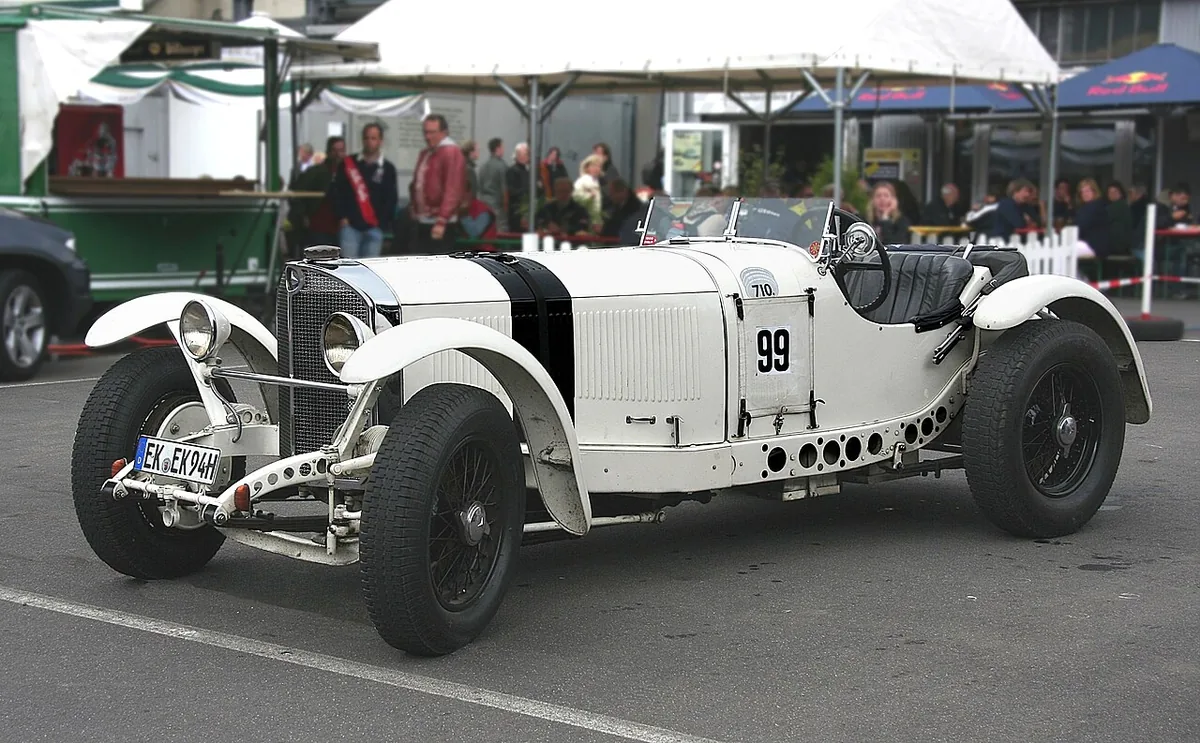
Image source: Wikimedia Commons
From SSK to SSKL
The SSK had already answered the first question of the Super Sport programme: what if the chassis were shortened? The SSKL answered the second: what if weight were reduced with equal seriousness? In racing, power is only half of power-to-weight. Drilling frame members, stripping bodywork to racing necessities, and deleting equipment that did not make the car faster or obligatory under the rules produced a machine that looked skeletal beside a fully equipped road Mercedes of the same era.
Comfort, weather protection, and luggage space were irrelevant. Cooling, driver vision, tyre behaviour, and the ability to survive full-throttle work on long straights were central. The W06 RS thinking behind the SSKL sits in line with the 1927 Typ S only as the end of a development path. Supercharged six, short sporting chassis, and open body remain; the priorities have been rewritten for competition.
Power, grip, and high-speed venues
Approximately 300 PS with the compressor in racing trim remains a large figure even by later standards; in the early 1930s it was exceptional. Delivering that power through period tyres on a lightened short chassis made throttle control a primary skill. The blower’s surge, useful in short bursts on a road SSK, became a continuous tactical variable on high-speed courses where momentum both rewarded and punished the driver.
Top speeds in the 230+ km/h class belong to that same context. AVUS, with long straights and a speed-focused character, features prominently in SSKL history because it rewarded power and minimal bodywork more than tight hairpin circuits. Other venues demanded different gearing and different preparation. What unites the record is that Mercedes had pushed the short W06 car as far as factory sports-racing logic would go before newer Grand Prix regulations and designs moved the competitive frontier elsewhere.
Design as function
The SSKL is coherent as a racing tool. Holes in the chassis rails are structural lightening, not decoration, even though they photograph clearly. Cycle wings, minimal body sides, and a large radiator and bonnet create a silhouette later designers would quote whenever they needed a pre-war racing reference. Compared with a long Typ SS cabriolet, the SSKL looks incomplete by touring standards — which is the point. Anything omitted is mass not carried.
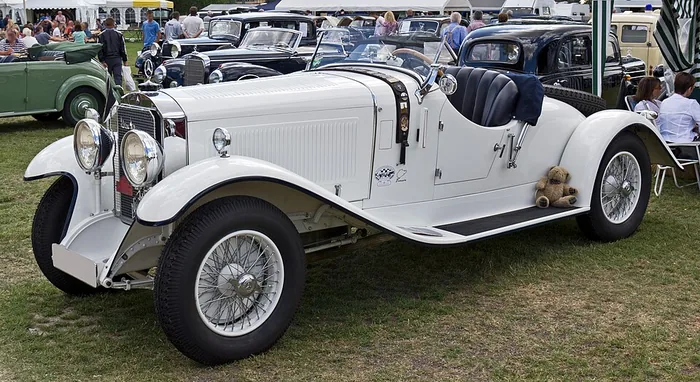
That functional look creates a collecting hazard. Because the silhouette is iconic, recreations and specials exist in historic motorsport and show culture. A drilled chassis alone does not make an SSKL. Factory identity, period racing history, and expert consensus do. Rarity makes wishful attribution financially attractive and historically damaging. Anyone evaluating a claimed SSKL without independent specialist research is not making an ordinary classic purchase; they are entering one of the most contested nameplate debates in Mercedes history.
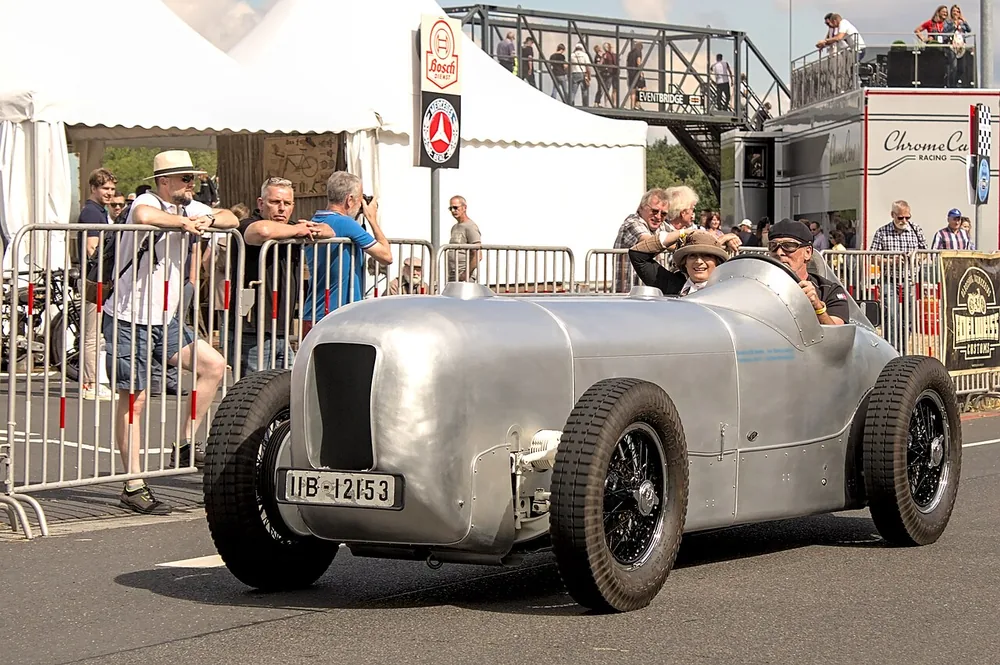
Image source: Wikimedia Commons
Racing context and works association
Rudolf Caracciola’s association with Mercedes supercharged sports and racing cars is a central human strand of the era, and the SSKL sits near the sharp end of that association. Works-linked preparation, careful engineering, and drivers capable of managing roughly 300 PS on period rubber produced results that period media amplified. The results are historically real; they are incomplete without the mechanics, strategists, and factory infrastructure that made such cars possible.
For modern readers, the useful distinction is between a works racing SSKL and the wider field of short, supercharged Mercedes specials that raced in private hands. The factory extreme was tiny in number and specific in purpose. Privateers could be historically important without being SSKLs. Encyclopaedic clarity depends on keeping those categories separate even when photographs look similar at a glance.
Rarity and definitions
Historians often describe pure factory SSKL racers as numbering under about ten. Other counts shift when rebuilt cars, converted SSKs, incomplete records, or later lightening programmes enter the discussion. The honest position is twofold: first, the SSKL is the rarest extreme of the W06 line by intent and by survival; second, any specific total should be stated with methodology. What matters for culture is the order of magnitude — single digits to low double digits at most for true factory racing cars — not a false precision that collapses under archival scrutiny.
That order of magnitude explains market and museum behaviour. When a genuine or seriously documented SSKL-related car appears, the conversation concerns historical attribution as much as mechanical condition. Museums, major collectors, and brand heritage programmes all have reasons to care about definitions.
Chassis integrity and operating environment
A drilled, lightened frame improves power-to-weight if the lightening is engineered with understanding; it can also create stress concentrations that demand careful inspection over a long life. Amateur welding, corrosion, or casual modification of lightened members is inappropriate. Non-destructive inspection cultures and specialists who understand pre-war racing frames are mandatory for serious stewardship.
Even excellent early-1930s drum brakes work near their practical edge at 230+ km/h class speeds. Historic-racing safety standards, not casual public-road habits, should govern any track use. Supercharger, tyre, and brake failure modes become more severe when power and speed are maximised. Inspection intervals must be competition-grade. Public road use may be legally possible for some historic cars in some jurisdictions, but the SSKL’s nature is competition; road use should be exceptional and highly skilled.
Ownership as custodianship
Strengths
- Peak short-car status in the W06 line — the lightened extreme beyond the SSK.
- Documented performance class — about 300 PS racing trim and 230+ km/h class capability in period form on suitable venues.
- Historical density — Caracciola, AVUS, and works racing narratives.
- Functional design clarity — lightening and stripped bodywork as primary engineering statements.
- Educational value — a case study in early power-to-weight thinking and its risks.
Things to watch
- Authentication first — chassis history, factory records, period photographs, expert consensus.
- Frame integrity — drilled lightened structures require expert inspection, not casual repair.
- Replica and conversion risk — highest in the W06 family.
- Operating environment — historic racing sanctions for serious use; not casual public roads.
- Parts and knowledge scarcity — every consumable and rebuild is a project.
- Insurance and security — values and irreplaceability demand institutional thinking.
- Driver qualification — these cars were raced by professionals; skill is not optional.
Engineering and historical significance
Beyond collecting romance, the SSKL is a study in early performance trade-offs. Removing mass improves response and top speed potential; it also reduces structural and protective margin. Stripping bodywork improves airflow and reduces drag while reducing weather capability and driver protection. Raising output toward 300 PS multiplies thermal, lubrication, and tyre loads. Factory teams of the early 1930s accepted those purchases because winning justified them. Modern custodians re-evaluate the same purchases under preservation ethics, historic-racing safety rules, and the knowledge that original fabric is not truly replaceable.
Historians value the SSKL as a boundary marker. After this brief window, Grand Prix and sports-racing development continued under changing formulae, new aerodynamic thinking, and eventually the mid-1930s silver-arrow grand prix cars that redefined state-backed motorsport spectacle. The SSKL is not those later cars. It is a concentrated late expression of the late-1920s W06 sports philosophy — large supercharged six, short chassis, open body — pushed until little else could be removed without abandoning the concept.
Museums and major collections must decide whether a given car is primarily a static teaching object or a running demonstration machine. Static display teaches proportion and lightening clearly. Running consumes fatigue life. Neither choice is universally correct; both require public clarity about what “original,” “restored,” and “runnable” mean for a drilled-chassis racing car from 1931–1932.
Private stewardship, where it exists for cars meeting strict definitions, carries a public-facing responsibility. Photographs circulate; claims multiply. Quiet, expert-led care protects asset value and the integrity of the historical record.
Legacy
If the Typ S is the opening chapter, the Typ SS the long grand-touring middle, and the SSK the short-chassis road and race star, the SSKL is the lightened coda. It is the moment Mercedes decided that Super Sport Kurz could still be improved by removing weight until the car became almost pure competition idea. Later eras invented new categories and new myths. Few matched the concentrated rarity of the SSKL’s brief early-1930s existence.
Core reference points: Super Sport Kurz Leicht; W06 RS; 1931–1932; lightened drilled chassis; about 300 PS with compressor in racing trim; very few built (often under about 10 pure factory racers; sources vary); extreme racing derivative of SSK; Caracciola; AVUS and high-speed legend; top speeds 230+ km/h class in period racing form; rarest of the W06 line.
Related Motor Wiki entries: Typ S (1927), Typ SS (1928–1933), SSK (1928), and Typ Stuttgart. This model’s path is Mercedes-Benz SSKL (W06, 1931–1932).
Leave a Reply
You must be logged in to post a comment.