General information & model overview
| Category | Specification Details |
|---|---|
| Model name | Mercedes-Benz Typ Nürburg / Nurburg Sport Roadster (W08) |
| Internal code | W08 (Sport Roadster body style on the Typ Nürburg luxury chassis programme) |
| Production years | Approximately 1928 – 1939 (open sporting expression within the wider W08 family window) |
| Parent model | Mercedes-Benz Typ Nürburg / Nurburg (W08) family overview |
| Body style | Sport Roadster — typically two-seat open sporting coachwork on a large luxury eight-cylinder chassis |
| Manufacturer | Daimler-Benz AG (Mercedes-Benz) |
| Engineering context | W08 luxury-eight programme (Porsche-period foundations; later Nibel-era chassis modernisation) applied to a light open sporting body cut |
| Market role | Sporting open expression of large-car prestige — drama and personal driving pleasure without becoming a supercharged W06 sports special |
| Layout | Front-engine, rear-wheel drive |
| Key characteristics | Inline-eight luxury power (~4622 cc 460 / 18/80 PS class early; ~4918 cc 500 theme later; ~80 PS class core ratings); lightest open mass in the family set; two-seat sporting silhouette |
Body & dimensions
| Specification | Details |
|---|---|
| Body concept | Two-seat sporting open roadster cut on the Nürburg luxury chassis idea — visual drama with reduced passenger capacity |
| Seating | Typically two seats; occasional rear provision varies by coachwork and should be verified |
| Length & mass | Long bonnet still signals the inline eight, but overall mass is lower than Pullman closed or multi-seat formal open bodies |
| Top equipment | Lighter weather gear than formal Cabriolet D/F tops; still requires correct fabric and irons for dual-mode use |
| Doors | Usually two-door open layout; cut-down doors and sporting sides form part of the roadster aesthetic |
| Construction | Period composite coachwork; cowl, door bottoms, and rear deck structures need careful inspection |
| Contrast within family | Opposite extreme from Cabriolet F and closed sedan; more sporting than Cabriolet C or Cabriolet D |
Engine specifications
| Theme | Details |
|---|---|
| Configuration | Inline eight-cylinder petrol (shared W08 / M08 luxury theme) |
| Early displacement | Approximately 4622 cc (Typ Nürburg 460 / 18/80 PS class) |
| Later displacement | Approximately 4918 cc (Typ Nürburg 500 / Typ 500 theme) |
| Output (period class) | Roughly 80 PS class for core luxury ratings; verify any late supercharged claims on the individual car |
| Character in roadster body | Same power as heavier siblings, but lower mass yields the liveliest subjective pace in the Nürburg open set |
| Induction identity | Primarily naturally aspirated luxury eight — not the supercharged sports recipe of the Typ S / W06 |
| Sound & theatre | Eight-cylinder note and long bonnet drama are central pleasures of the roadster cut |
Drivetrain & transmission
| Category | Details |
|---|---|
| Drive layout | Front-engine, rear-wheel drive |
| Gearbox | Manual multi-speed of period design; more personal, owner-driver oriented use than Pullman limousines |
| Clutch | Mechanical clutch; still requires progressive technique despite lower body mass than formal cars |
| Final drive | Period touring gearing; roadster liveliness comes more from mass reduction than from sports ratios alone |
| Driving implication | Invites more enthusiastic use than multi-seat formal open cars — still within luxury-eight, not Kompressor, limits |
Chassis, brakes & structure
| Category | Details |
|---|---|
| Chassis base | W08 luxury ladder frame; early tall and later lower presentations both possible depending on year |
| Suspension | Solid axles with leaf springs; lighter body can feel more responsive over the same hardware |
| Steering | Mechanical box; still low-geared by modern standards but less parking-lot brutal than the longest Pullmans |
| Brakes | Period drums; better power-to-weight than formal bodies still does not create modern stopping power |
| Structure priorities | Cowl rigidity, door fit, rear deck, and top irons; open sporting bodies can rattle if wood joints fail |
| Tyres | Correct period sizes and condition critical for open two-seat driving pleasure and safety |
Performance (period context)
| Category | Details |
|---|---|
| Power-to-weight | Best subjective ratio among Nürburg bodies in this Motor Wiki set due to reduced coachwork mass |
| Character | Personal open touring with sporting silhouette; still a luxury eight, not a short-chassis race special |
| Comparison within family | Livelier than sedan, Cabriolet D, or Cabriolet F |
| Comparison outside family | Must not be confused with supercharged Typ S / SSK-family performance culture |
| Success metric | Does the luxury eight feel involving in open two-seat form? That is the roadster’s brief |
Timeline & history
| Period | Development |
|---|---|
| 1928 | W08 Typ Nürburg programme begins; closed sedan establishes the luxury-eight core while sporting open cuts appear in the body conversation |
| Late 1920s – 1930s | Sport Roadster theme coexists with formal open letters C and D |
| Chassis evolution | Tall early cars and later lower presentations both host open sporting bodies across the long production window |
| 500-era years | ~4.9-litre evolutionary power continues the luxury-eight idea under lighter open coachwork |
| Later 1930s | Cabriolet F occupies the opposite multi-seat formal open pole while roadsters keep the personal sporting pole |
| Through ~1939 | Overall family production ~3,800 units class; roadsters form a glamorous minority within that total |
| Afterlife | High collector fashion value as the most sporting open face of a non-sports luxury chassis |
Body & variants notes
| Theme | Details |
|---|---|
| Sport Roadster identity | Two-seat sporting open expression of the W08 luxury eight |
| Sibling: Sedan | Closed formal core — Nurburg Sedan |
| Sibling: Cabriolet C | More intimate formal open — Cabriolet C |
| Sibling: Cabriolet D | Four-door social open — Cabriolet D |
| Sibling: Cabriolet F | Pullman-scale open ceremony — Cabriolet F |
| Family hub | Typ Nürburg W08 overview |
| Coachbuilt caution | Roadster shapes attract rebody and identity issues; documentation is essential |
Safety & construction notes (classic-era context)
| Category | Details |
|---|---|
| Open two-seat risk | Soft top is not a safety cell; period restraints absent; wind and weather expose occupants |
| Temptation to overdrive | Livelier feel can encourage speeds the brakes and tyres cannot support — discipline required |
| Lighting | Weak period lamps; night open driving is especially hazardous |
| Structure | Cowl cracks, door sag, and rear deck rot are common open-body themes |
| Tyres | Age and correct size matter for both grip and authenticity |
| Identity fraud risk | Glamorous roadsters are higher targets for creative history — demand paperwork |
Sport Roadster: two-seat open expression of the W08 luxury eight
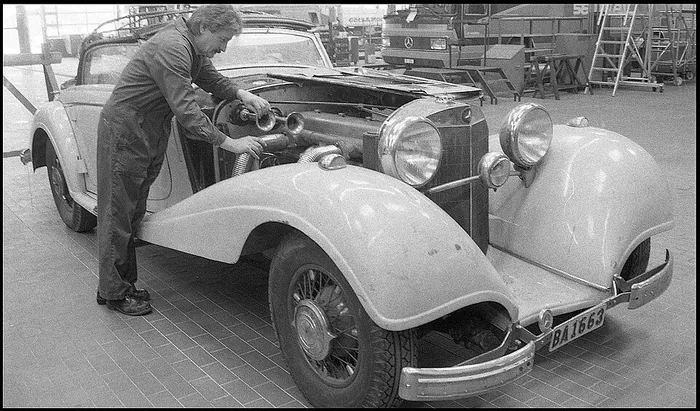
The Mercedes-Benz Typ Nürburg Sport Roadster is the two-seat sporting open body style within the W08 family. It retains the defining mechanical facts of Mercedes-Benz’s first eight-cylinder passenger car — inline eight, roughly eighty-horsepower class luxury ratings, rear-wheel drive, large-car chassis architecture — and applies them to open coachwork designed for personal rather than multi-seat formal use. It is not a short-chassis supercharged sports special. That distinction is essential to accurate history and realistic ownership expectations.
On the family overview, the Nürburg is documented as a Horch-class luxury programme spanning roughly 1928–1939, with overall production in the roughly 3,800-unit class. Most of that story is formal: Pullman sedans, multi-seat cabriolets, and social open cars. The Sport Roadster is the body that acknowledges a buyer who wanted open-air two-seat presentation and the sound of eight cylinders without carrying a full social party in the rear compartment.
Collectors who confuse this car with the Typ S / W06 lineage will find absolute performance lower and the product character different. The roadster’s role is to make the luxury eight feel lighter and more personal. The S-series role is supercharged sports performance. Both wear a three-pointed star; they do not share a brief.
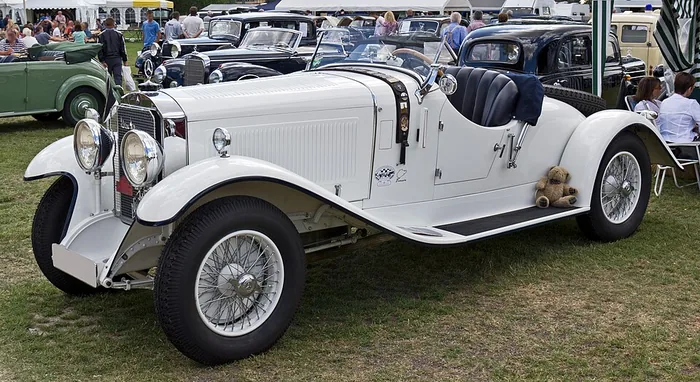
Image source: Wikimedia Commons
Why a luxury chassis carried roadster coachwork
In the late 1920s and 1930s, European prestige catalogues routinely offered sporting open cuts on large chassis. The market understood that not every open car was a racer and not every luxury buyer wanted a closed limousine. A Sport Roadster on the Nürburg idea sold a defined lifestyle: couple-focused touring, spa-town and hotel arrivals, and the visual effect of a long eight-cylinder bonnet without the multi-seat formal apparatus of a Cabriolet D or later Cabriolet F.
Early cars live near the 460 / 18/80 PS identity — about 4622 cc. Later cars can sit in the 500 conversation near 4918 cc. Power stays in a similar class; the roadster’s advantage is reduced coachwork mass and frontal bulk relative to closed Pullmans. That change alters subjective pace without creating a second sports programme inside Mercedes-Benz.
Chassis height still matters. Early tall Hochbett frames and later lower presentations both can wear roadster bodies. A lower later car may look more modern; a tall early car may look more formal. Identification should always include year, chassis details, and body documentation rather than silhouette alone.
Naming and geography
Nürburg / Nurburg naming points to the Eifel and the prestige associations of the Nürburgring region. On a roadster that association is marketing geography rather than racing specification. Name romance and mechanical reality should be kept separate when writing history or assessing a purchase.
Design: long bonnet, two seats, open silhouette
A convincing Nürburg Sport Roadster balances a long engine bay with a compact open passenger cell. The radiator and star announce Mercedes luxury. Wings, running boards, and brightwork remain period formal, but cut-down doors and a tighter rear deck signal that this is not a Pullman cabriolet. Top down, the car should look purposeful. Top up, it should still look finished, even if weather equipment is lighter than on formal multi-seat open cars.
Interior space is intimate by design. Luggage is secondary. Touring for two with careful packing is the realistic plan. Anyone who needs four seats should look to the Cabriolet C or Cabriolet D rather than force the roadster into a role it does not support.
Coachbuilt variation is real. Door height, windscreen design, rear deck shape, and spare-wheel mounting can differ. Because roadsters are fashionable in the collector market, creative histories and rebody work appear more often than on plain closed cars. Originality research is practical risk management, not pedantry.
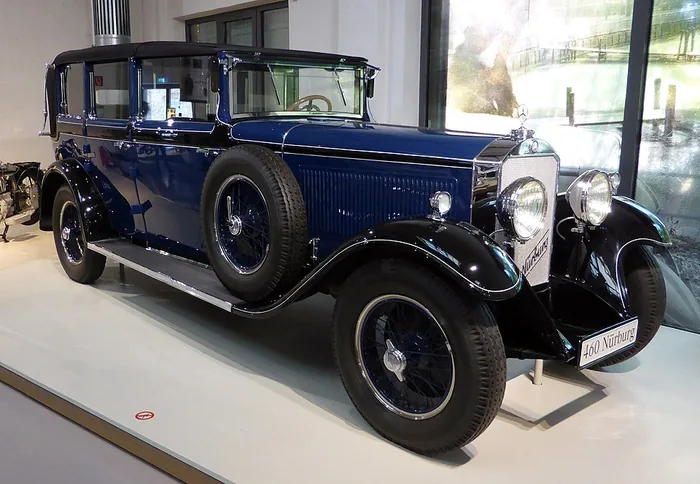
Image source: Wikimedia Commons
The same eight, a freer feel
Shared W08 engine facts apply. What changes is subjective feel. Under a heavy sedan, roughly eighty horsepower class power is pure formal progress. Under a roadster, the same power can feel more responsive — until hills, heat, or enthusiasm remind the driver that this is still a large luxury chassis with period brakes and tyres.
That dual truth is the ownership education of the model. Enjoy the relative liveliness; do not invent performance that was never part of the car’s specification. Cooling remains important on warm open runs. Fuel-system cleanliness still decides whether a scenic route ends in pleasure or roadside delay. Long crankshaft eights reward oil discipline and specialist knowledge.
Any supercharged late claim needs documents. Most roadsters in the family’s practical centre are naturally aspirated luxury eights in sporting open coachwork.
Drivetrain: owner-driver use
Unlike Pullman limousines that often lived with chauffeurs, roadsters invite owner-drivers. Gear changes become part of personal use rather than a service performed for rear passengers. That does not excuse sloppy technique. Crash boxes and early synchronisation features still demand skill. Smoothness protects the driveline and preserves the car’s character at club gatherings.
Rear-wheel drive on period tyres with a lighter open body can feel lively on wet surfaces. Reduced mass helps acceleration; it does not create modern traction control. Gentle throttle and correct tyres remain necessary for safety.
Chassis manners: lightest of the heavy
Calling a Nürburg roadster light is relative. It is light compared with a Cabriolet F, not light compared with a small sports car. Solid axles and leaf springs still define the ride. Steering is still mechanical and low-geared. Brakes are still drums that need early planning.
The practical risk is psychological. Because the car feels freer than a limousine, drivers may carry more speed into corners and descents than the hardware supports. Ownership maturity means enjoying the relative liveliness while driving within the absolute limits of 1930s luxury technology, which are modest by modern standards.
Structure inspection should focus on cowl integrity, door fit, rear deck wood, and top hardware. Open sporting bodies can flex into rattles that signal failing joints. Attractive paint over soft wood is a common expensive surprise.
Performance: honest numbers and honest feel
Subjectively, this is the quickest-feeling Nürburg in the Motor Wiki family set. Objectively, it remains a roughly eighty-horsepower class luxury eight on period chassis technology. It will not match supercharged W06 performance narratives. It should not be forced into that comparison except as a useful contrast: same era, same brand mark, different product.
Against the Cabriolet C, the roadster is usually more overtly sporting and less multi-seat social. Against the sedan, it is pure open-air presentation. Against mid-size programmes such as the Typ Stuttgart, it remains a large-car prestige object with eight-cylinder presence.
Driving culture: couple touring and display
The Sport Roadster suits two-person itineraries: scenic secondary roads, lakeside hotels, concours lawns, and club events that reward presentation as much as distance. Passengers need briefing on open-air practicalities. Weather equipment must actually work if rain is possible. Luggage storage is a design constraint, not an afterthought to ignore until departure.
Because the car is visually strong, it also attracts display use — static shows, short parade runs, photography. Those uses are legitimate, but mechanical health still matters. A roadster that only looks correct and cannot stop correctly is a public hazard, not a successful exhibit.
Collecting: fashion premium and identity risk
Roadsters often command stronger fashion premiums than closed siblings. That market energy raises both values and risks. Rebodies, mixed identities, and optimistic “sport” labels appear more often where glamour pays. Buyers should demand chassis documentation, body history, and specialist inspection. Read the family overview so mechanical expectations stay accurate.
Running costs include open-body wood, weather equipment, and the general expense of large pre-war Mercedes systems. Storage must be dry. Theft and transport logistics for glamorous open cars deserve planning. Insurance valuations should reflect documented reality, not catalogue fantasy.
Ownership: strengths and things to watch
Strengths
- Most sporting open Nürburg expression — two-seat presentation on the luxury-eight idea.
- Best subjective performance in the family set — mass reduction makes the same power feel freer.
- Owner-driver culture — personal use rather than pure chauffeur formality.
- Visual clarity — long bonnet and open silhouette display and photograph strongly.
- Clear family links — pairs with the overview and formal siblings for contrast.
Things to watch
- Identity and rebody risk — glamour invites creative histories.
- Overdriving temptation — freer feel can exceed period brake capability if discipline fails.
- Open-structure rot — cowl, doors, and decks hide expensive repairs.
- Weather equipment quality — lighter tops still must work.
- Expectation mismatch — not a W06 Kompressor sports car.
- Limited passenger practicality — two-seat mission only.
Sibling comparisons
Choose the Sport Roadster if the intended use is two-seat open luxury with the liveliest W08 feel. Choose the Cabriolet C if open air should combine with a more intimate formal cut and slightly more social flexibility. Choose the Cabriolet D or Cabriolet F if multi-seat open hospitality matters. Choose the sedan if weather security and closed formality outweigh open presentation. Choose a true Typ S only if supercharged sports performance is the actual goal — and budget for a different model universe.
Legacy
The Typ Nürburg Sport Roadster should be remembered as the two-seat sporting open expression of Mercedes-Benz’s first eight-cylinder passenger-car family. It shows that the W08 idea could serve personal open use as well as formal closed and multi-seat open roles: long bonnet, open air, owner-driver pleasure, and roughly eighty-horsepower class multi-cylinder smoothness without abandoning luxury-chassis honesty. The overview holds engines, production, and naming; formal siblings hold multi-seat and closed stories; the roadster holds the personal sporting chapter.
Understood on those terms, it is not a failed SSK. It is a luxury roadster on the correct mechanical foundation — a subtler achievement than popular sports mythology usually admits.
For collectors building a W08 set, the Sport Roadster is the counterweight to the closed sedan and the multi-seat open cars. Parked beside a Cabriolet D or Cabriolet F, it shows that the same luxury eight could serve ceremony or personal pleasure. Parked beside a true Typ S, it shows the difference between sporting coachwork on a luxury chassis and a purpose-built supercharged sports programme. Both lessons matter for accurate Mercedes history.
On the road, the best Sport Roadster experiences are unhurried scenic loops, concours weekends with gentle transit miles, and club events that reward style and mechanical sympathy. The worst experiences come from treating the car as a modern convertible grand tourer: long high-speed dual-carriageway days, marginal brakes, aged tyres, and optimistic packing. Plan within 1930s averages and modern traffic awareness, and the roadster still delivers the long-bonnet open touring that made the body style desirable.
Keep documentation careful. Because roadsters carry fashion premiums, identity disputes are costly when they go wrong. Chassis plates, body history, engine theme (460 versus 500), and evidence of originality should be archived with the car. Link every mechanical claim back to the family overview so expectations stay aligned with the first Mercedes eight-cylinder passenger programme rather than with racing mythology that belongs to other model codes.
Leave a Reply
You must be logged in to post a comment.