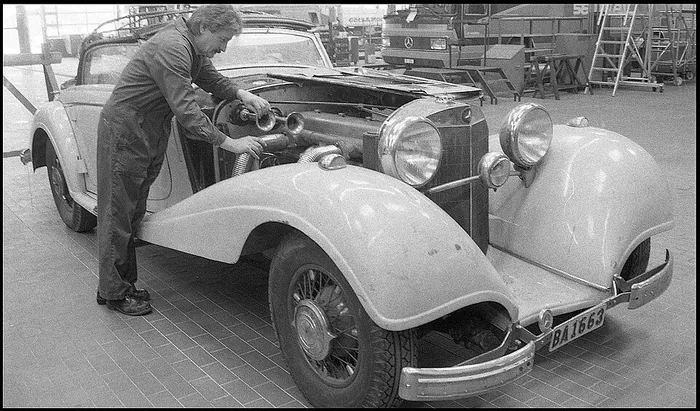
General information & model overview
| Category | Specification Details |
|---|---|
| Model name | Mercedes-Benz Typ 500 K Cabriolet B (W29) (1934–1936) |
| Internal code | W29 |
| Series | Mercedes-Benz Typ 500 K |
| Production years | Approximately 1934 – 1936 within Typ 500 K production |
| Manufacturer | Daimler-Benz AG (Untertürkheim chassis; Sindelfingen special coachwork for many catalogue bodies) |
| Body focus of this entry | Cabriolet B — multi-seat formal open convertible; the most common open style of the W29 programme |
| Layout | Front-engine, rear-wheel drive |
| Programme context | About 342 Typ 500 K cars of all bodies were built 1934–1936 within the W29 line that later continues as 540 K |
| Related W29 bodies | 500 K Cabriolet C, 540 K Cabriolet B, 500 K Spezial-Roadster, 540 K Cabriolet A |
| Notes | Cabriolet B was the commercial backbone of open W29 bodies across 500 K and later 540 K; still exclusive by absolute numbers |
Body & dimensions
| Specification | Details |
|---|---|
| Wheelbase class | Longer multi-seat packaging often associated with ~3,290 mm class literature for B/C multi-seat bodies — approximate; verify on car |
| Construction | Separate chassis with long-bonnet W29 proportions; exact length and mass depend on coachwork |
| Family equipment themes | Hydraulic brakes; independent front suspension lineage shared with related mid-1930s Mercedes sports/GT cars; 12-volt electrical system on the W29 generation |
| Coachwork source | Sindelfingen special body department for many catalogue and special styles; individual fittings vary by order |
Engine specifications (500 K)
| Theme | Details |
|---|---|
| Configuration | Inline eight-cylinder petrol with Roots-type supercharger (Kompressor) engagement under high load |
| Displacement | Approximately 5,018 cc (about 5.0 litres) |
| Output (approximate) | About 100 PS without blower; about 160 PS with supercharger engaged (period class figures — verify on the car) |
| Character | Grand-touring supercharged eight: multi-cylinder smoothness with blower reserve for open roads of the mid-1930s |
| Induction | Naturally aspirated cruise; blower engagement typically associated with decisive throttle demand rather than permanent boost |
Drivetrain, chassis & performance (approximate)
| Category | Details |
|---|---|
| Gearbox | Manual multi-speed (four-speed common; higher-count options appear in period literature for some cars) |
| Brakes | Hydraulic drums — advanced for large supercharged Mercedes of the era when maintained |
| Suspension | Independent front suspension theme of the W29 line; period rear axle practice |
| Electrical system | 12-volt generation standard on W29 family cars |
| Top speed class | Body- and gearing-dependent; treat published figures as approximate envelopes, not modern cruise targets |
500 K Cabriolet B: multi-seat open backbone of the W29 line
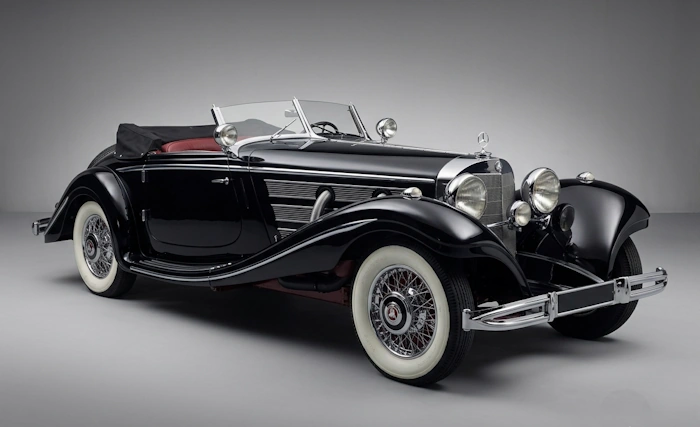
The Mercedes-Benz Typ 500 K Cabriolet B is the multi-seat formal open convertible most often ordered among W29 open styles. On the five-litre supercharged chassis — about 100 PS unblown and about 160 PS blown in period class language — it offers rear seating and social capacity that A-type and pure roadster cuts do not prioritise. “Most common” here is relative: within roughly 342 five-litre cars, Cab B still represents a tiny absolute production by modern standards.
Later multi-seat open continuity appears on the 1936 540 K Cabriolet B. Compare with Cabriolet C, rare roadsters such as the Spezial-Roadster, and intimate later Cabriolet A.
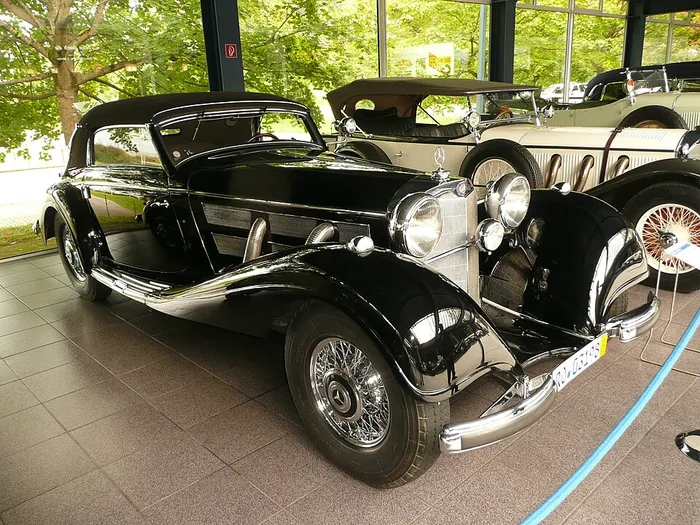
Image source: Wikimedia Commons
Letter B in Mercedes open practice
Cabriolet letter codes organise seating and formality, not engine tunes. B typically denotes a multi-seat open arrangement with a substantial folding top and social rear capacity. That made it the practical open car for clients who wanted Kompressor prestige without sacrificing passengers.
1. Commercial role 1934–1936
As 500 K production ran from 1934 to 1936, Cab B absorbed much of the open-body demand. Roadsters and Autobahnkurier-type extremes remained rare commissions. Understanding Cab B is therefore essential to understanding how the programme actually sold, not only how it is photographed today.
2. Packaging class
Multi-seat B and C bodies often associate with the longer packaging class near ~3,290 mm in secondary literature. Confirm on the car. Sports-package roadster figures should not be copied onto Cab B captions without measurement.
3. Relationship to 540 K Cab B
When the engine grew to roughly 5.4 litres, multi-seat open demand continued. The later 540 K Cabriolet B page covers that displacement step; five-litre Cab B remains a distinct mechanical generation.
Design of the multi-seat open convertible
Long bonnet, four-seat-oriented cabin, and a large fabric top define the silhouette. With the top raised, the car reads as a formal open touring machine; with it lowered, the eight-cylinder bay and wing sweep dominate. Rear seat access, door count, and top-iron geometry should match B-letter practice rather than A-type intimacy or roadster drama.
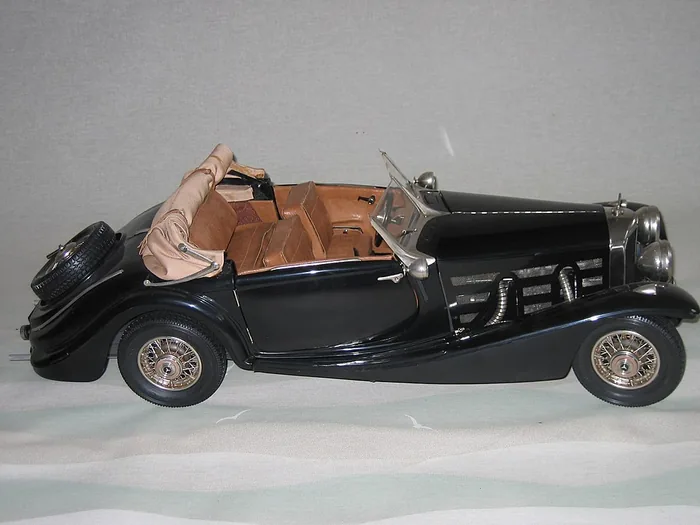
Image source: Wikimedia Commons
1. Top stack scale
Multi-seat tops are large. Irons, fabric, and rear-window arrangements are expensive to restore correctly. Inspect every hinge and landau bar relationship before paint work hides problems.
2. Rear compartment reality
Verify actual rear seating comfort and leg room. Some cars were ordered with luggage priority; others with full social rear seats. Generic “four-seat cabriolet” language is not enough.
3. Brightwork and formality
Cab B often carries formal open presence suitable for social arrival. Restoration should not force pure sports-roadster chrome drama onto a multi-seat formal cut.
Driving multi-seat open on five litres
With passengers, mass rises. Blower engagement still delivers period urgency; hydraulic brakes and tyres must be ready for that mass. Open air with rear passengers changes wind patterns and conversation more than a two-seat roadster cabin does. Independent front suspension helps low-speed control when healthy.
1. Load-aware braking
Hydraulic drums need correct fluid and linings. Four-up demonstration runs demand earlier braking than empty photoshoots imply.
2. Cooling under social use
Slow urban traffic with a full cabin is hard on cooling. Radiator and thermostat condition are ownership basics, not optional concours extras.
3. Top-up versus top-down manners
Raised-top cruising reduces wind but can increase cabin heat. Lowered-top use maximises open-air appeal but exposes interior materials to weather. Plan storage accordingly.
4. Gearbox and blower timing
Smooth multi-speed shifts and disciplined blower use matter more with passengers than with empty glamour runs. The five-litre eight is strong for its era; it is not invulnerable to abuse.
Ownership of a 500 K Cabriolet B
Because Cab B is the best-known multi-seat open style, it also attracts incomplete restorations and letter mis-selling. Some cars are described as roadsters; some A-type cars are sold as B for seating claims. Inspect doors, seats, and top geometry as a package.
- Most representative open W29 social car — core of how clients actually ordered open Kompressor prestige.
- Five-litre supercharged eight — foundational W29 powertrain.
- Multi-seat practicality — real rear capacity when correctly specified.
- Large top costs — multi-seat fabric and irons dominate many restoration budgets.
- Letter confusion — confirm B against A and C with hard points, not only seller captions.
- Mass and brake duty — four-up use exposes weak hydraulics quickly.
A realistic ownership plan includes humidity-controlled storage, a specialist top shop, and a mechanical shop comfortable with Roots blowers and hydraulic drum systems. Treat “most common open style” as relative rarity, not as an easy classic.
Sibling comparisons
Choose Cabriolet B for multi-seat open social use on five litres. Choose Cabriolet C for related multi-seat open formality with different cut details. Choose 540 K Cabriolet B when the larger 5.4-litre engine is the priority. Choose roadsters such as the Spezial-Roadster for sporting open extremes with less rear social capacity.
Running a multi-seat open 500 K in practice
Practical ownership of a 500 K Cabriolet B revolves around top health, rear-seat reality, and load-aware mechanical service. Because Cab B is the best-known multi-seat open style, parts of the market treat it as ordinary. It is not ordinary. Absolute production remains tiny, and multi-seat tops remain among the costliest soft systems in the pre-war Mercedes world.
1. Four-up operating rules
Set tyre pressures for real load, confirm brake feel after a careful bed-in of linings, and avoid repeated full-load blower engagements in traffic with a full cabin. Plan fuel and cooling stops on longer tours. The five-litre eight will do the work if systems are ready; it will not compensate for ignored hydraulics or aged tyres under social occupancy.
2. Top as primary machinery
Schedule iron lubrication, fabric inspection, and seal checks like any other major system. A Cab B with a failed top is effectively half a car for social use. Budget reserves for coachwork should sit beside engine reserves from day one of ownership, not as an afterthought when an event invitation arrives.
3. Letter integrity in public records
When insuring, exhibiting, or selling, keep B-letter language precise. Do not upgrade the car to roadster claims for attention or downgrade it to vague cabriolet language that erases seating. Accurate records help the next custodian and the historical map of open W29 volume across the five-litre years.
Owners who treat Cab B as the multi-seat open reference it is — neither rarest special nor casual classic — tend to build sustainable maintenance plans and clearer documentation trails for cars that actually defined how many clients ordered open Kompressor prestige before the 540 K step.
Legacy
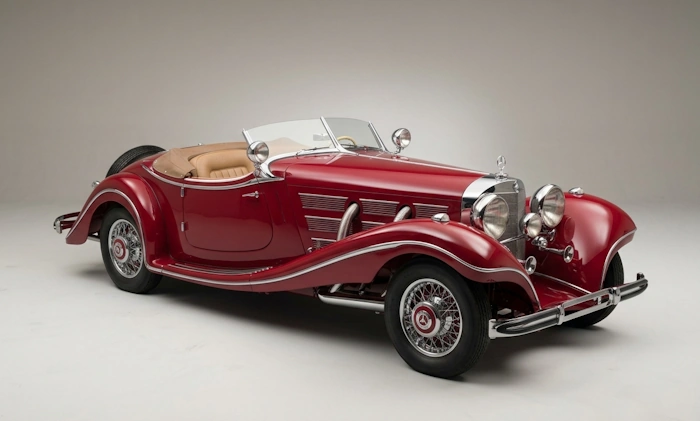
The 500 K Cabriolet B is the open body that made the W29 programme commercially coherent. Without it, the line would be remembered only as a gallery of rare specials. With accurate B-letter records, it remains the multi-seat open reference against which A-type intimacy, C-type variants, and roadster extremes are measured across the combined roughly 760-chassis family.
Leave a Reply
You must be logged in to post a comment.