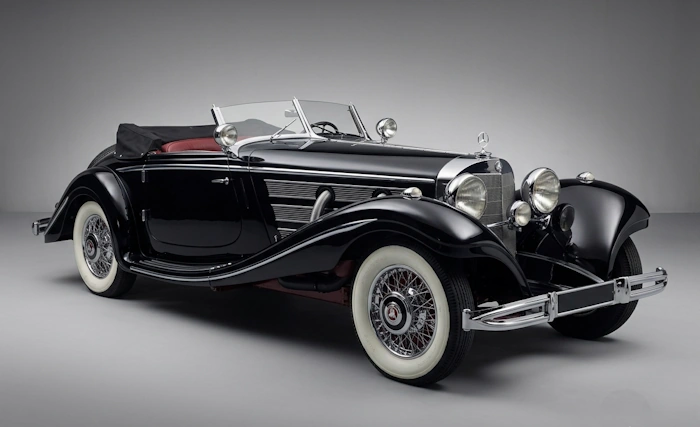
General information & model overview
| Category | Specification Details |
|---|---|
| Model name | Mercedes-Benz Typ 500 K Luxus-Roadster (W29) (1935) |
| Internal code | W29 |
| Series | Mercedes-Benz Typ 500 K |
| Production years | Within Typ 500 K production 1934–1936; 1935 representative year for luxury-oriented roadster commissions |
| Manufacturer | Daimler-Benz AG (Untertürkheim chassis; Sindelfingen special coachwork for many catalogue bodies) |
| Body focus of this entry | Luxus-Roadster — luxury-leaning open roadster style on the five-litre 500 K (distinct from stripped Spezial-Roadster emphasis) |
| Layout | Front-engine, rear-wheel drive |
| Programme context | About 342 Typ 500 K cars of all bodies were built 1934–1936 within the W29 line that later continues as 540 K |
| Related W29 bodies | 500 K Spezial-Roadster, 540 K Spezial Roadster, 500 K Cabriolet B, 540 K Cabriolet A |
| Notes | Luxus-Roadster wording marks a more luxury-oriented open brief than pure Spezial sports drama; exact fittings vary by order and must not be collapsed into generic “roadster” language |
Body & dimensions
| Specification | Details |
|---|---|
| Wheelbase class | Open roadster packaging; sports-package associations appear for many roadster types — confirm layout and wheelbase class on the car (~2,980 mm class often cited for sports-leaning open types is approximate) |
| Construction | Separate chassis with long-bonnet W29 proportions; exact length and mass depend on coachwork |
| Family equipment themes | Hydraulic brakes; independent front suspension lineage shared with related mid-1930s Mercedes sports/GT cars; 12-volt electrical system on the W29 generation |
| Coachwork source | Sindelfingen special body department for many catalogue and special styles; individual fittings vary by order |
Engine specifications (500 K)
| Theme | Details |
|---|---|
| Configuration | Inline eight-cylinder petrol with Roots-type supercharger (Kompressor) engagement under high load |
| Displacement | Approximately 5,018 cc (about 5.0 litres) |
| Output (approximate) | About 100 PS without blower; about 160 PS with supercharger engaged (period class figures — verify on the car) |
| Character | Grand-touring supercharged eight: multi-cylinder smoothness with blower reserve for open roads of the mid-1930s |
| Induction | Naturally aspirated cruise; blower engagement typically associated with decisive throttle demand rather than permanent boost |
Drivetrain, chassis & performance (approximate)
| Category | Details |
|---|---|
| Gearbox | Manual multi-speed (four-speed common; higher-count options appear in period literature for some cars) |
| Brakes | Hydraulic drums — advanced for large supercharged Mercedes of the era when maintained |
| Suspension | Independent front suspension theme of the W29 line; period rear axle practice |
| Electrical system | 12-volt generation standard on W29 family cars |
| Top speed class | Body- and gearing-dependent; treat published figures as approximate envelopes, not modern cruise targets |
500 K Luxus-Roadster: open style with luxury emphasis
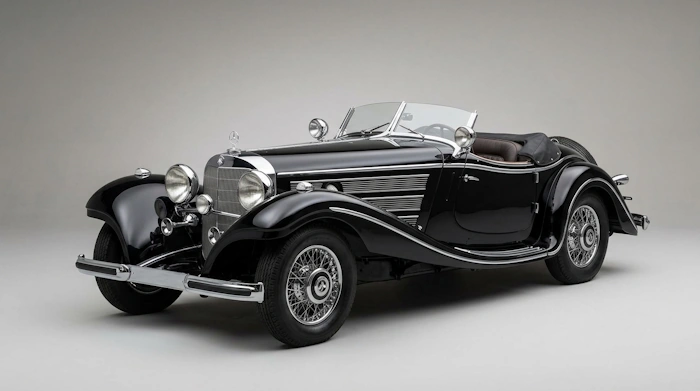
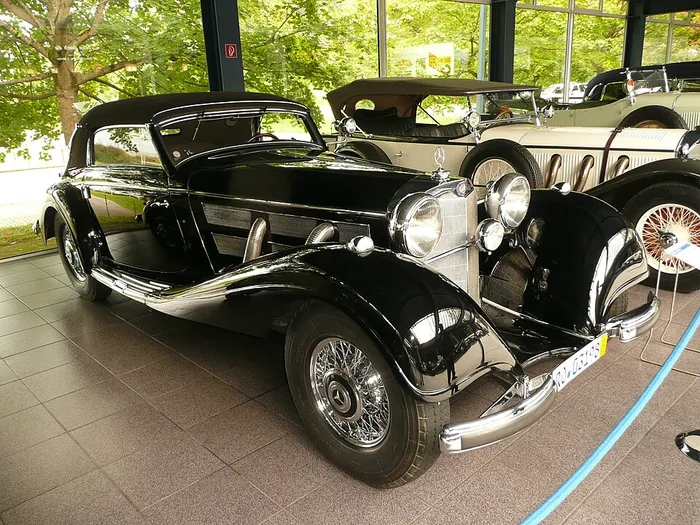
The Mercedes-Benz Typ 500 K Luxus-Roadster is an open roadster-style body on the five-litre W29 chassis that leans toward luxury appointments and formal open presence rather than the most stripped sporting Spezial cut. It still uses the approximately 5,018 cc supercharged eight — about 100 PS unblown and about 160 PS with blower engaged in period class language — but the coachwork brief prioritises comfort and finish within an open silhouette.
Do not treat “Luxus-Roadster” and “Spezial-Roadster” as interchangeable captions. Compare carefully with the 500 K Spezial-Roadster, later 540 K Spezial Roadster, and multi-seat open Cabriolet B.
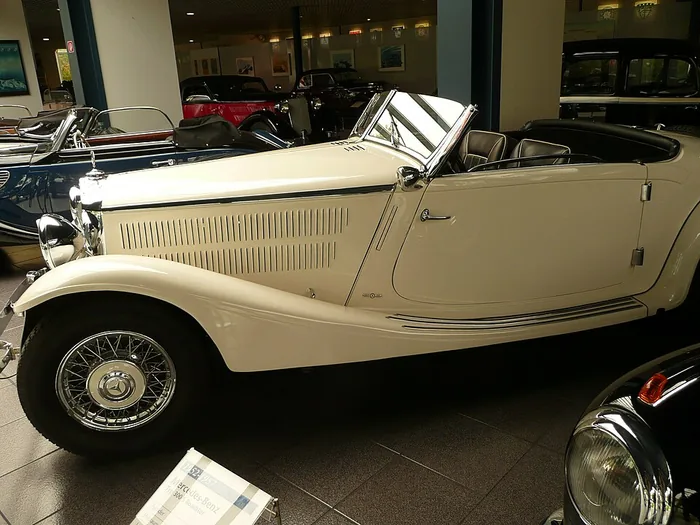
Image source: Wikimedia Commons
Naming and place in the open map
Within the roughly 342 five-litre cars, open styles range from high-volume Cabriolet B through intimate A-type convertibles to rare roadster specials. Luxus-Roadster language sits on the luxury side of that roadster spectrum: more complete weather and trim intent than a pure sports special, less multi-seat social capacity than Cab B or Cab C.
1. Why the distinction matters
Auction and online captions often flatten every open long-bonnet 500 K into “roadster.” That erases real order differences in seating, top gear, and brightwork. Historians and owners need the finer map.
2. 1935 as a working year
Mid-programme years show mature Sindelfingen open craft on the still-new W29 chassis. Individual cars still vary; year alone never proves body identity.
3. Package confirmation
Many roadster types associate with sports packaging in literature. Measure wheelbase-related hard points and mass layout; do not assume from the word “roadster” alone.
Design and appointments
Expect long wings, a long bonnet, and an open cabin with richer interior materials and more complete weather equipment than the most sporting specials. Screen design, spare-wheel treatment, and chrome density can read more formal. Restoration should preserve that luxury lean rather than forcing a pure race-special aesthetic the car never had.
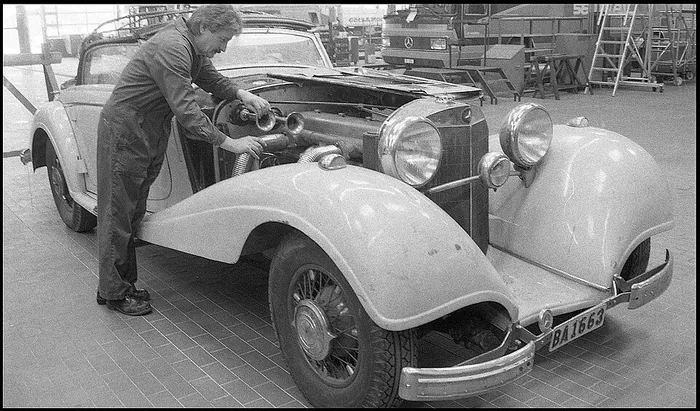
Image source: Wikimedia Commons
1. Interior finish as identity signal
Wood quality, seat construction, and instrument presentation help distinguish luxury-leaning open cars from stripped specials. Over-restoration into modern show leather can erase those signals.
2. Top and side equipment
More complete weather systems mean more irons, fabric, and seal surfaces to maintain. Inspect the full stack with the top up and down before accepting a “ready” car.
3. Brightwork balance
Luxury open cars can carry more chrome than pure sports roadsters without becoming multi-seat cabriolets. Keep brightwork consistent with the car’s own period photographs when available.
Driving a luxury-leaning open 500 K
Powertrain character matches the five-litre family: smooth eight-cylinder cruise, blower for decisive load, hydraulic brakes, independent front suspension lineage, and 12-volt electrics. Open air still dominates sensory experience. Mass and period tyres set limits that luxury trim does not raise.
1. Comfort versus spectacle
A Luxus-Roadster may feel more composed for longer open tours than a stripped special if seats and weather gear are correct. It is still not a modern grand tourer with climate control.
2. Blower and cooling
Treat supercharger engagement as a high-load tool. Cooling system health remains primary after storage. Luxury appointments do not reduce thermal load on the five-litre eight.
3. Brakes and open-road planning
Hydraulic drums need full service. Plan routes with early braking points; do not import modern dual-carriageway expectations into 1930s open mass.
4. Electrical and accessories
Luxury-leaning cars may carry more electrical accessories. Clean grounds and sound wiring matter more when load is higher than on minimal sports specials.
Ownership notes for Luxus-Roadster custodians
Ownership combines open-car coachwork costs with the documentary burden of rare body naming. Sellers may upgrade a car to “Spezial” language for market effect or, conversely, under-describe a luxury roadster as a generic cabriolet. Primary documents win.
- Luxury open identity — distinct from stripped Spezial and from multi-seat Cab B.
- Five-litre Kompressor powertrain — ~100/160 PS class when maintained.
- Richer appointment potential — rewarding when original materials survive.
- Caption inflation risk — “Spezial” and “Luxus” get swapped carelessly online.
- Weather-system expense — more complete tops cost more to restore correctly.
- Specialist dependency — blower, chassis, and open woodwork need experienced hands.
Budget for a coachwork survey that includes top irons and a mechanical survey that includes blower drive and hydraulics. Treat naming claims as hypotheses until chassis and body evidence agree.
Sibling comparisons
Choose Luxus-Roadster for luxury-leaning open 500 K style. Choose Spezial-Roadster for the more sporting five-litre open special. Choose 540 K Spezial Roadster for later larger-displacement roadster drama. Choose 540 K Cabriolet A for intimate formal convertible letter practice on the later engine. Multi-seat open: Cabriolet B.
Luxury-leaning open maintenance priorities
A 500 K Luxus-Roadster asks for open-car structural care plus attention to richer trim systems that stripped specials may never have carried. Weather equipment is usually more complete; interior wood and brightwork density can be higher. Neglect shows first in those comfort systems, then in floors and scuttle wood that every open W29 shares as a risk class regardless of luxury lean.
1. Weather-system schedule
Service top fabric, seals, and side equipment on a calendar, not only when something fails at an event. More complete tops mean more surfaces that age. Store the car with the top in a position that does not permanently crease fragile materials, following specialist advice for the specific iron design fitted to that chassis.
2. Trim ethics
When leather or wood must be replaced, document original patterns and colours first. Luxury-leaning identity lives partly in those materials. Modern show leather that erases period grain and colour choices turns a Luxus-Roadster into a generic open special in all but name, which is exactly the caption failure this page warns against.
3. Market naming discipline
Resist both inflation to Spezial language and deflation to generic cabriolet language when describing the car publicly. Accurate Luxus-Roadster captions educate buyers and protect the middle path of open W29 coachwork. Include seating, top completeness, and chassis evidence in any sale description so the next owner inherits clarity.
Correctly maintained, the Luxus-Roadster can be among the more pleasant open five-litre cars for longer fair-weather tours, provided cooling, brakes, and tyres receive the same seriousness as the interior shine that first attracts attention at a distance.
Legacy
The 500 K Luxus-Roadster shows that open W29 coachwork was not a single sports silhouette. Luxury-leaning roadsters carried clients who wanted open-air prestige with richer finish than pure specials. Accurate naming keeps that middle path visible in a family history too often reduced to Cab B volume and Spezial glamour alone.
Leave a Reply
You must be logged in to post a comment.