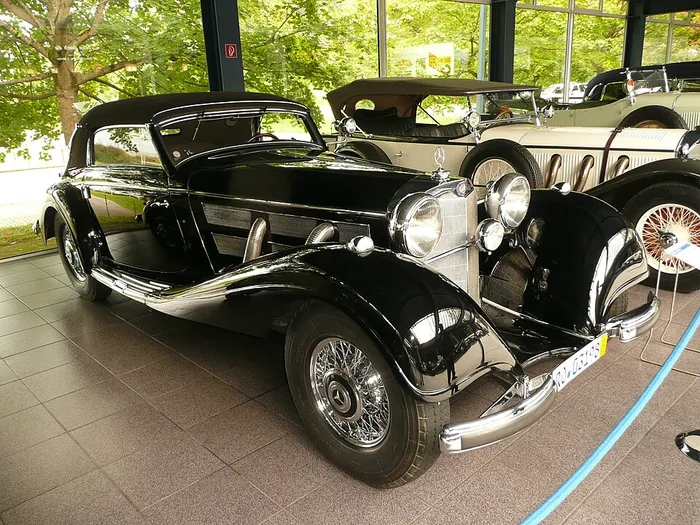
General information & model overview
| Category | Specification Details |
|---|---|
| Model name | Mercedes-Benz Typ 540 K Cabriolet A (W29) (1938–1939) |
| Internal code | W29 |
| Series | Mercedes-Benz Typ 540 K |
| Production years | Approximately 1938 – 1939 within late 540 K production |
| Manufacturer | Daimler-Benz AG (Untertürkheim chassis; Sindelfingen special coachwork for many catalogue bodies) |
| Body focus of this entry | Cabriolet A — intimate two-seat-oriented open body on 540 K (sports chassis package often associated with A/roadster types) |
| Layout | Front-engine, rear-wheel drive |
| Programme context | About 419 Typ 540 K cars of all bodies in the late-1930s W29 continuation; combined 500 K + 540 K chassis on the order of roughly 760 units |
| Related W29 bodies | 540 K Spezial Roadster, 540 K Cabriolet B, 540 K Spezial-Coupé, 500 K Cabriolet B |
| Notes | Cabriolet A across 500 K/540 K is a minority open cut versus high-volume Cabriolet B; combined A tallies are much smaller than B |
Body & dimensions
| Specification | Details |
|---|---|
| Wheelbase class | Often associated with the more compact sports package / shorter effective cabin on the W29 long chassis family — confirm on car (literature links A and roadster types to the rearward-set layout; ~2,980 mm class association is approximate) |
| Construction | Separate chassis with long-bonnet W29 proportions; exact length and mass depend on coachwork |
| Family equipment themes | Hydraulic brakes; independent front suspension lineage shared with related mid-1930s Mercedes sports/GT cars; 12-volt electrical system on the W29 generation |
| Coachwork source | Sindelfingen special body department for many catalogue and special styles; individual fittings vary by order |
Engine specifications (540 K)
| Theme | Details |
|---|---|
| Configuration | Inline eight-cylinder petrol with Roots-type supercharger engagement |
| Displacement | Approximately 5.4 litres (growth from the 500 K five-litre theme) |
| Output (approximate) | About 115 PS without blower; about 180 PS with supercharger engaged (period class figures) |
| Character | Stronger blown grand-touring eight than 500 K; long-chassis luxury performance rather than pure short-chassis racing special |
| Induction | Unblown running for ordinary road work; Kompressor for high-load acceleration and period high-speed touring |
Drivetrain, chassis & performance (approximate)
| Category | Details |
|---|---|
| Gearbox | Manual multi-speed (four-speed common; higher-count options appear in period literature for some cars) |
| Brakes | Hydraulic drums — advanced for large supercharged Mercedes of the era when maintained |
| Suspension | Independent front suspension theme of the W29 line; period rear axle practice |
| Electrical system | 12-volt generation standard on W29 family cars |
| Top speed class | Body- and gearing-dependent; treat published figures as approximate envelopes, not modern cruise targets |
540 K Cabriolet A: intimate open cut of the late supercharged GT
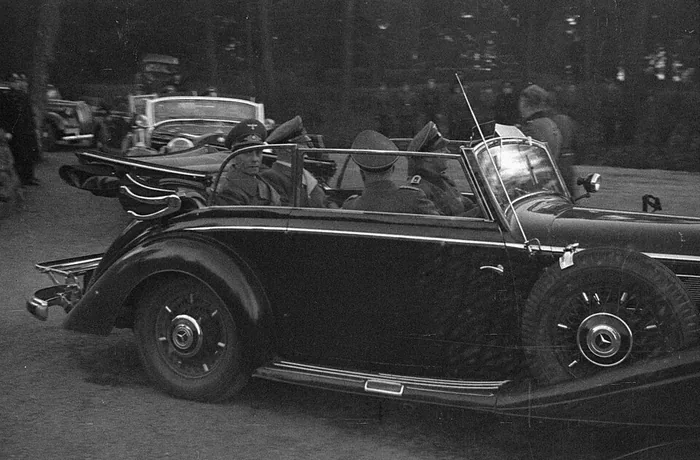
The Mercedes-Benz Typ 540 K Cabriolet A is the more intimate open body style of the late W29 grand tourer. In Mercedes letter practice, Cabriolet A emphasises driver and front passenger with a folding top, as distinct from multi-seat Cabriolet B and C. On the 540 K’s roughly 5.4-litre supercharged eight, that intimacy still sits on a long, heavy, expensive chassis.
Related late open styles include the Spezial Roadster and the multi-seat Cabriolet B. The five-litre predecessor open map includes 500 K Cabriolet B and Cabriolet C.
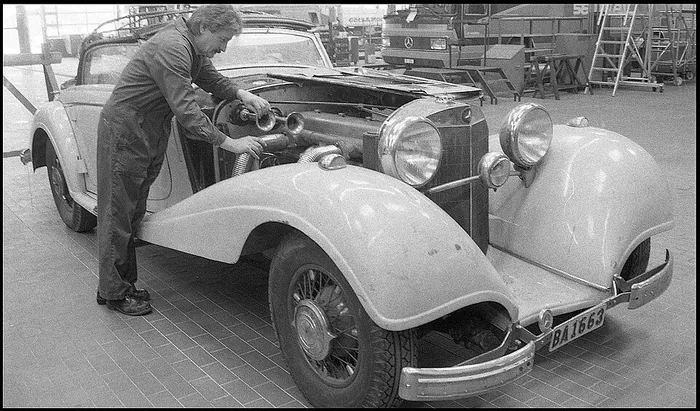
Image source: Wikimedia Commons
Development context for late A-bodies
By 1938–1939 the 540 K had replaced the 500 K as the catalogue supercharged W29 eight. Production volumes remained tiny by modern standards. Cabriolet A numbers across the whole 500 K/540 K story are far below Cabriolet B, which was the commercial backbone of open W29 bodies. That scarcity shapes both values and the need for careful letter-code identification.
1. Letter meaning is coachwork, not trim
A is not a performance pack. It is a coachwork arrangement: typically two main doors, sporting-open cabin emphasis, and weather equipment sized for that cut. Selling language that treats “A” as a generic open 540 K erases the distinction that collectors and historians need.
2. Chassis package associations
Literature associates A-type and roadster bodies with the W29 layout that shifts major masses slightly rearward relative to many multi-seat formal bodies. Do not assume every A uses identical packaging without documents and measurement.
3. Late production climate
Cars completed near the end of the decade may show individual equipment choices as factory and client priorities shifted. Record options as found rather than “standardising” them against earlier 500 K A-cars that never existed in the same form.
Design and top gear
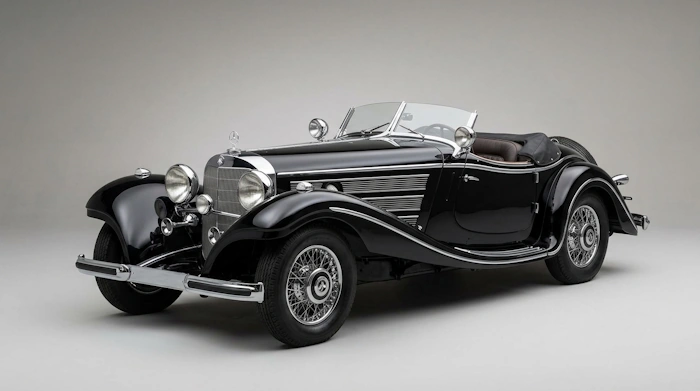
Long wings, a long bonnet, and a compact open cabin define the silhouette. With the top raised, the car reads more formal; with it lowered, the eight-cylinder bay dominates. Interior materials and brightwork quality vary with original order and restoration ethics. Over-gloss can erase the quiet formality of late Sindelfingen open work; neglect destroys wood and fabric that are nearly irreplaceable in original form.
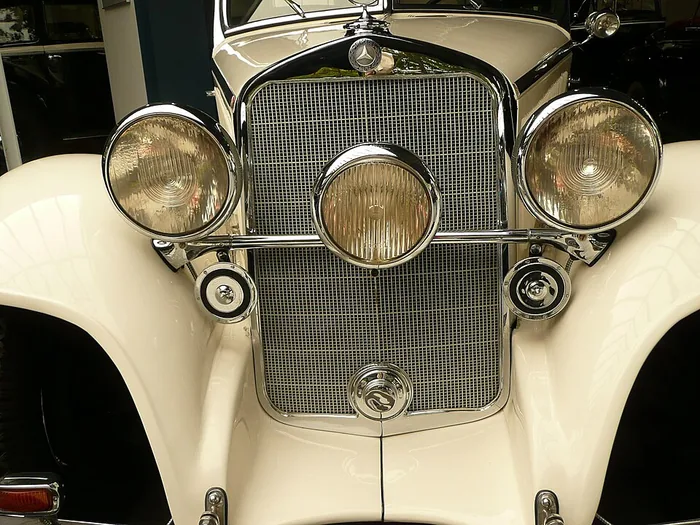
Image source: Wikimedia Commons
1. Top irons and fabric stack
Inspect the full stack before paint. A beautiful A-body with tired irons is a multi-year coachwork project. Check hinge points, rear deck seals, and side-window interfaces with the top raised and lowered.
2. Versus Spezial Roadster
Roadsters often present a more stripped sporting cut and different weather philosophy. A Cabriolet A is still a formal convertible with more complete weather intent, not a pure competition silhouette. Clients who wanted the most dramatic open sports look often ordered the roadster path instead.
3. Seating and cabin scale
Primary seating is front-focused. Occasional rear accommodation, if present, must be verified on the car. Do not import multi-seat expectations from Cabriolet B into an A-body evaluation.
Driving the blown 540 K open
Expect about 115/180 PS class unblown/blown. Open air increases wind and engine voice. Hydraulic brakes and independent front suspension improve control relative to older large Mercedes when healthy, but mass and period tyres still set the safety ceiling. The car rewards planned routes and early braking more than modern dual-carriageway rhythm.
1. Blower engagement discipline
Use the supercharger as designed for decisive load, not as constant noise for spectators. Heat and lubrication demands rise with prolonged engagement; service intervals should reflect actual use, not calendar storage alone.
2. Fair-weather realism
Period soft-tops are not modern all-season systems. Plan storage, covers, and humidity control. Raised-top cruising at motorway-class speeds of the era was possible; continuous wet-weather commuting was never the design goal.
3. Cooling after seasonal storage
Seasonal open cars often return with varnish in fuel systems and tired radiators. Service before public roads. Verify fan, water pump, and thermostat behaviour under load after any long sit.
4. Tyres, steering feel, and mass
Correct load-rated tyres and sound kingpins or equivalent period hardware matter as much as engine polish. Steering remains deliberate; the open cabin does not reduce the physical length the driver must place in traffic.
Ownership notes specific to Cabriolet A
Collectors pursue A-bodies for relative intimacy within an already exclusive 540 K open map. That interest also attracts mis-lettered cars. A purchase process should treat door count, seat layout, top geometry, and chassis package evidence as a single package of identity.
- Intimate open 540 K identity — distinct from high-volume Cab B and from pure roadster specials.
- Late supercharged eight — 5.4-litre Kompressor performance class when correctly maintained.
- Strong documentation interest — A-bodies are carefully studied; incomplete files reduce confidence more than cosmetic age.
- Top and wood costs — open formal cars punish neglect harder than closed coupés of similar age.
- Letter mis-selling — confirm A vs B on tags, door/seat photographs, and body numbers where available.
- Brake and tyre condition — blown mass needs excellent hardware before any demonstration of period performance claims.
Budget for specialist storage and for a coachwork survey independent of the engine rebuild invoice. Many A-cars fail economically on the soft-top structure long after the engine looks healthy.
Sibling comparisons
Choose Cabriolet A for intimate open 540 K use. Choose Spezial Roadster for the most sporting open presentation. Choose Cabriolet B for multi-seat open social touring. Closed alternative on late chassis: Spezial-Coupé. For earlier multi-seat open 500 K context, see 500 K Cabriolet B.
Inspection priorities for a late Cabriolet A
Before any purchase of a late 540 K Cabriolet A, separate the open-structure survey from the powertrain survey. The first asks whether the scuttle, door bottoms, and top-iron mounts still form a rigid open car; the second asks whether the 5.4-litre eight and blower drive can be used without immediate catastrophe. Mixing the two into a single casual walk-around is how expensive surprises begin.
1. Open-structure sequence
Raise and lower the top through its full travel. Listen for binding, check fabric tension, and inspect landau relationships at rest. Probe A-pillar bases and floor edges from below where access allows. Soft floors under perfect leather are a classic failure mode on intimate open bodies that spent decades in damp storage.
2. Powertrain sequence
Cold start behaviour, oil pressure once warm, and blower engagement under controlled load belong on a quiet road with a specialist present. Hydraulic brake pedal feel and fluid condition should be checked before any demonstration of period performance claims. Tyre age and load rating are non-negotiable on a long supercharged convertible.
3. Identity sequence
Photograph door count, seat layout, and top geometry against known A-type references. Compare chassis and body numbers to factory records where available. A car sold as Cabriolet A that seats like a B or looks like a roadster needs explanation before money moves.
After purchase, plan the first year around humidity control, a top service, and a cooling-system refresh rather than around concours paint. Intimate open 540 K cars reward owners who treat weather equipment as primary machinery, not as an accessory after the engine rebuild invoice is paid. Keep a log of top-iron lubrication and seal replacement dates so the next custodian inherits usable history rather than only glamorous photographs.
Legacy
The 540 K Cabriolet A shows how Mercedes kept a two-seat-oriented open letter alive into the last years of W29 production. It is not the most numerous open body, which is exactly why accurate A-letter records matter for the historical map of supercharged grand tourers. Survivors should be remembered as intimate open formality on a late 5.4-litre chassis, not as interchangeable “540 K cabriolets” in auction captions.
Leave a Reply
You must be logged in to post a comment.