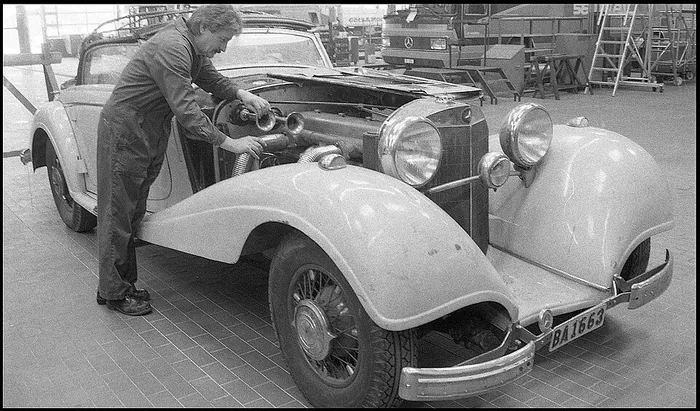
General information & model overview
| Category | Specification Details |
|---|---|
| Model name | Mercedes-Benz Typ 540 K Spezial-Coupé (W29) (1939) |
| Internal code | W29 |
| Series | Mercedes-Benz Typ 540 K |
| Production years | Associated with late 540 K production, including 1939 catalogue/delivery window (very small closed special-coupé numbers within W29) |
| Manufacturer | Daimler-Benz AG (Untertürkheim chassis; Sindelfingen special coachwork for many catalogue bodies) |
| Body focus of this entry | Spezial-Coupé — closed two-door special coupé on the 540 K W29 chassis |
| Layout | Front-engine, rear-wheel drive |
| Programme context | About 419 Typ 540 K cars of all bodies in the late-1930s W29 continuation; combined 500 K + 540 K chassis on the order of roughly 760 units |
| Related W29 bodies | 540 K Spezial Roadster, 540 K Cabriolet A, 540 K Cabriolet B, 500 K Spezial-Roadster |
| Notes | Coupé variants across 500 K/540 K are among the rarest closed W29 bodies (combined coupé tallies in literature are only on the order of a dozen family-wide) |
Body & dimensions
| Specification | Details |
|---|---|
| Wheelbase class | W29 grand-touring chassis; exact wheelbase depends on sports vs formal packaging — verify on the vehicle (sports-leaning bodies often discussed near ~2,980 mm class associations; formal multi-seat cars often near ~3,290 mm — approximate literature classes only) |
| Construction | Separate chassis with long-bonnet W29 proportions; exact length and mass depend on coachwork |
| Family equipment themes | Hydraulic brakes; independent front suspension lineage shared with related mid-1930s Mercedes sports/GT cars; 12-volt electrical system on the W29 generation |
| Coachwork source | Sindelfingen special body department for many catalogue and special styles; individual fittings vary by order |
Engine specifications (540 K)
| Theme | Details |
|---|---|
| Configuration | Inline eight-cylinder petrol with Roots-type supercharger engagement |
| Displacement | Approximately 5.4 litres (growth from the 500 K five-litre theme) |
| Output (approximate) | About 115 PS without blower; about 180 PS with supercharger engaged (period class figures) |
| Character | Stronger blown grand-touring eight than 500 K; long-chassis luxury performance rather than pure short-chassis racing special |
| Induction | Unblown running for ordinary road work; Kompressor for high-load acceleration and period high-speed touring |
Drivetrain, chassis & performance (approximate)
| Category | Details |
|---|---|
| Gearbox | Manual multi-speed (four-speed common; higher-count options appear in period literature for some cars) |
| Brakes | Hydraulic drums — advanced for large supercharged Mercedes of the era when maintained |
| Suspension | Independent front suspension theme of the W29 line; period rear axle practice |
| Electrical system | 12-volt generation standard on W29 family cars |
| Top speed class | Body- and gearing-dependent; treat published figures as approximate envelopes, not modern cruise targets |
540 K Spezial-Coupé: closed special body on the late W29 chassis
The Mercedes-Benz Typ 540 K Spezial-Coupé is a closed two-door interpretation of the W29 supercharged grand tourer in its larger-displacement 540 K form. Where roadsters and cabriolets dominate public memory of the 500 K / 540 K line, the Spezial-Coupé represents the minority closed special path: weather-secure coachwork without abandoning the long-bonnet eight-cylinder performance identity of the series.
This page treats the Spezial-Coupé as a body-focused entry. Shared mechanical baselines for the 540 K engine and W29 chassis appear in the tables; sibling open and multi-seat bodies are linked where useful, including the 540 K Spezial Roadster, 540 K Cabriolet A, and earlier 500 K Spezial-Roadster.
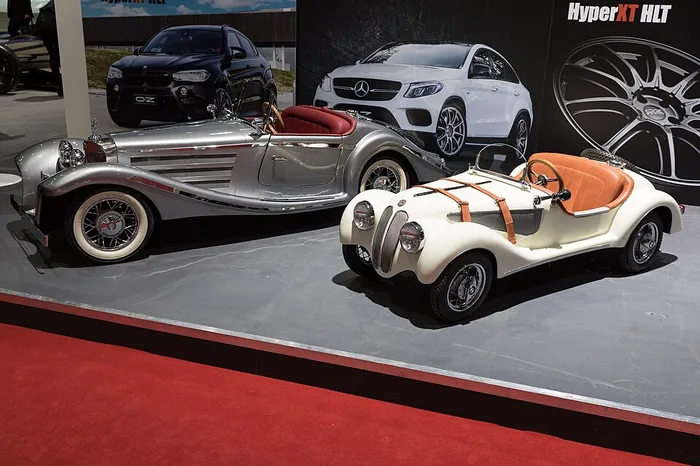
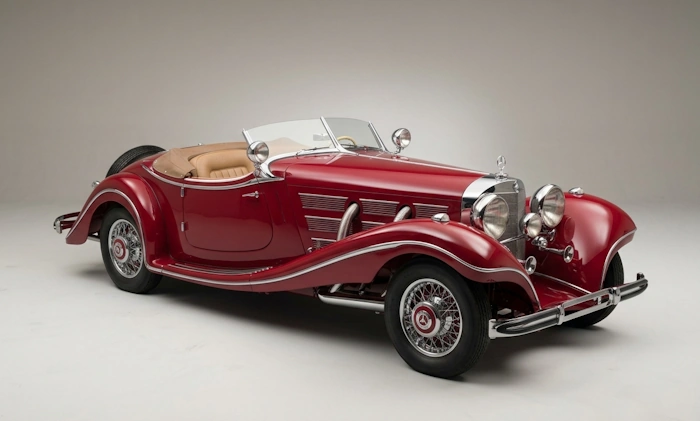
Image source: Wikimedia Commons
Place in the W29 programme
The W29 family began as Typ 500 K in 1934 with an approximately five-litre supercharged inline eight and continued from 1936 as Typ 540 K with roughly 5.4 litres and higher blown output. Combined chassis production for both engines sits near the high seven hundreds, with most cars bodied at Sindelfingen’s special body department. Within that total, closed coupés are a thin slice — literature often places all coupé variants of the combined 500 K/540 K story on the order of about a dozen cars.
1. Why a special coupé existed
Clients who wanted Kompressor performance without soft-top maintenance ordered closed specials. The Spezial-Coupé answered that brief with fixed-roof formality and sporting two-door proportions rather than a multi-door formal limousine stance.
2. 1939 timing
Late 540 K production into 1939 sits at the end of the W29 story, as European political and industrial conditions tightened. Surviving late coupés therefore carry both mechanical and documentary interest: they are last-wave cars of a short, exclusive line.
3. Chassis layout caution
W29 sports-leaning bodies sometimes used a more rearward package of radiator, engine, and seats on the long chassis. Always confirm which layout a coupé uses from plates and period notes rather than from side photographs alone.
Design of the closed special
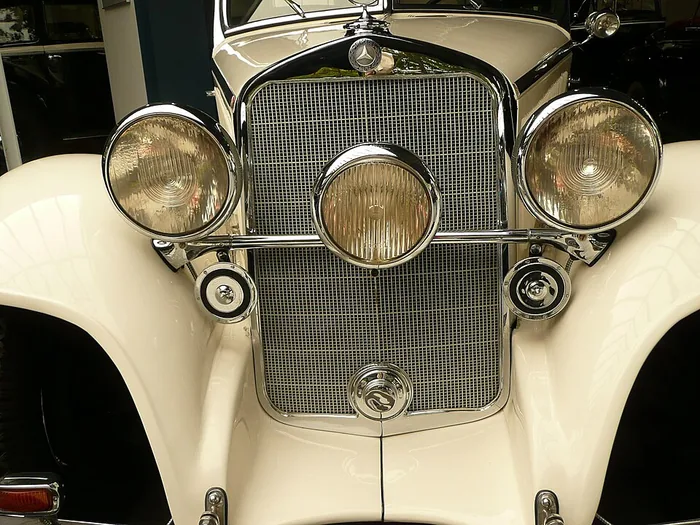
Exterior language is classic late-1930s Mercedes grand tourer: long bonnet for the inline eight, sweeping wings, and a closed cabin with a shorter roof relative to formal sedans. Brightwork and window chrome vary by order and restoration. Interiors typically emphasise two primary seats with luggage priority behind; any occasional rear space must be verified on the car rather than assumed from generic W29 photographs.
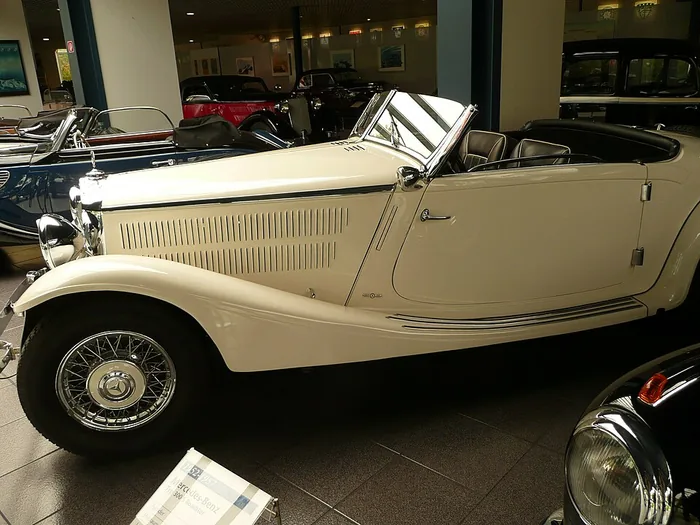
Image source: Wikimedia Commons
1. Fixed roof advantages in practice
Compared with a Spezial Roadster, the coupé gains structural stiffness potential and year-round usability. Compared with a multi-seat Cabriolet B, it usually offers less social capacity and more two-door sporting closure. The design brief is private high-speed touring under a solid roof, not parade openness.
2. Glass, pillars, and sealing
Door glass channels, A-pillar bases, and roof-edge seals define whether a closed special feels tight or rattly. Period rubber ages into hardness; incorrect modern profiles change door shut and water paths. Check scuttle-to-screen joints carefully after any repaint.
3. Restoration risks unique to closed specials
Closed specials can hide roof-stick and pillar rot behind perfect paint. A gleaming exterior on a soft structure is a common expensive surprise. Inspect door gaps, floor edges, and bulkhead joints invasively before accepting a “complete” car.
Engine, blower, and driving character
The 540 K’s approximately 5.4-litre eight delivers roughly 115 PS unblown and about 180 PS with the Roots blower engaged in period class language. On a closed coupé, noise and heat management differ from open cars: cabin insulation and ventilation matter more, and cooling still faces full thermal load in slow traffic. The experience is long-car grand touring, not short-chassis sports lightness.
1. Supercharger use on the road
The blower is a high-load tool, not a permanent cruising state. Engagement technique, oil condition, and drive hardware belong on every specialist service checklist. Spectators may want constant noise; the machinery wants correct load cycles.
2. Hydraulic brakes under coupé mass
W29 hydraulic drums are a generation step forward from purely mechanical large-car systems, but only when fluid, seals, and linings are correct. Supercharged mass makes brake health non-negotiable before any enthusiastic use.
3. Steering, gearing, and placement
Expect deliberate steering, long-car placement skill, and gearing suited to period high-speed roads rather than modern dual-carriageway clusters. The coupé’s closed cabin can feel calmer than a roadster at the same speed; it does not make the car small or agile in a modern sports-car sense.
4. Cooling after storage
Seasonal cars often return with varnish in fuel systems and tired radiators. Bleed, flush, and verify thermostat behaviour before public roads, especially if the car sat with a closed cabin trapping residual heat cycles.
Ownership realities for a Spezial-Coupé
Owning a late 540 K closed special is a research and conservation project as much as a driving hobby. Chassis numbers, body numbers, and Sindelfingen documentation must align before any claim of originality is trusted. Insurance, storage humidity, and specialist workshop access are fixed costs of entry.
- Extreme rarity among W29 bodies — closed special-coupé identity is scarce even within an exclusive programme; market descriptions often blur coupé, sport limousine, and rebody stories.
- 540 K blown eight — late, strong Kompressor grand-touring powertrain when lubrication and cooling are correct.
- All-weather usability relative to open Spezial bodies — fixed roof simplifies climate storage but concentrates corrosion risk inside pillars.
- Hidden closed-body structure — roof and pillars conceal rot that open cars expose earlier.
- Identity and rebody risk — rare closed cars attract wrong labels; demand chassis proof and period photography where available.
- Parts and specialists — museum-class budgets apply; generic classic-car shops are rarely sufficient for blower and coachwork work.
When evaluating a purchase, prioritise structural integrity and documentation over cosmetic shine. A correct but imperfect coupé is usually safer than a re-skinned chassis with a glamorous but unverifiable closed body.
Sibling comparisons
Choose the Spezial-Coupé when closed two-door special formality on 540 K is the priority. Choose the Spezial Roadster for open high-style sports presentation. Choose Cabriolet A for intimate open convertible form. For multi-seat open social use on 540 K, see Cabriolet B. Earlier five-litre counterparts live under 500 K body pages such as the 500 K Spezial-Roadster and the 500 K Sport-Limousine for closed multi-seat themes.
Legacy of the late closed special
The 540 K Spezial-Coupé is a reminder that the W29 story is not only roadsters. Closed special coachwork carried the same supercharged eight into weather and formal settings that soft-tops could not match. For research and ownership, treat every documented coupé as a primary object: few were built, fewer survive intact, and none should be padded with generic open-car mythology drawn from Cab B photographs.
In the wider map of pre-war Mercedes grand tourers, the Spezial-Coupé occupies a quiet corner: less photographed than roadsters, more usable than pure open specials, and more exclusive than multi-seat formal convertibles. Accurate captions and careful chassis work keep that corner from disappearing into undifferentiated “540 K” language online.
Leave a Reply
You must be logged in to post a comment.