General information & model overview
| Category | Specification Details |
|---|---|
| Model name | Mercedes-Benz Typ Nürburg / Nurburg Cabriolet D (W08) |
| Internal code | W08 (Cabriolet D body style on the Typ Nürburg chassis programme) |
| Production years | Approximately 1928 – 1934 (formal open social expression within the wider ~1928–1939 W08 family) |
| Parent model | Mercedes-Benz Typ Nürburg / Nurburg (W08) family overview |
| Body style | Cabriolet D — typically four-door formal open luxury with multi-seat social capacity and full weather-equipment character |
| Manufacturer | Daimler-Benz AG (Mercedes-Benz) |
| Engineering context | Early-to-mid W08 years on Mercedes-Benz’s first eight-cylinder passenger car; Porsche-period foundations with ongoing chassis evolution toward later lower presentations |
| Market role | Social open luxury for households and professionals who needed more than two seats without abandoning folding-top theatre |
| Layout | Front-engine, rear-wheel drive |
| Key characteristics | Inline-eight luxury power (~4622 cc 460 / 18/80 PS class and evolutionary themes; ~80 PS class); four-door formal open coachwork; dual-mode social use |
Body & dimensions
| Specification | Details |
|---|---|
| Body concept | Formal four-door open car: multi-passenger social touring with weather equipment designed for genuine dual-mode use |
| Seating | Typically four or more usable seats — more social capacity than intimate open cuts or two-seat roadsters |
| Wheelbase & length | Long luxury proportions; substantial passenger cell relative to Cabriolet C and Sport Roadster |
| Mass | Heavier than intimate open bodies; lighter and earlier in open-formal logic than later Pullman-scale Cabriolet F |
| Top & weather gear | Fuller folding-top character than minimal sporting open cars; raised-top formality is part of the mission |
| Doors | Four-door formal open layout typical of Cabriolet D letter logic; verify exact coachwork on the individual car |
| Construction | Period steel-and-wood composite practices; rear structure, top irons, and multi-door apertures need careful inspection |
| Contrast within family | More social and formal than Cabriolet C or Sport Roadster; less late Pullman ceremony than Cabriolet F; open opposite of the closed sedan |
Engine specifications
| Theme | Details |
|---|---|
| Configuration | Inline eight-cylinder petrol (shared W08 luxury theme) — see family overview |
| Displacement class | Approximately 4622 cc early 460 / 18/80 PS theme; evolutionary updates within the programme as years progress |
| Output (period class) | Roughly 80 PS class for core luxury ratings |
| Character in this body | Smooth multi-cylinder power for formal open touring with passengers; leisurely rather than sporting |
| Induction | Primarily naturally aspirated; not a W06 Kompressor sports engine |
| Cooling under load | Four-up summer touring with top raised stresses cooling systems; radiator health is critical |
Drivetrain & transmission
| Category | Details |
|---|---|
| Drive layout | Front-engine, rear-wheel drive |
| Gearbox | Manual multi-speed of period design; smoothness under passenger load is social manners |
| Clutch | Mechanical clutch; progressive engagement essential with formal open mass |
| Final drive | Luxury touring gearing for period roads |
| Driving implication | Every shift is felt by guests — technique is hospitality as well as mechanics |
Chassis, brakes & structure
| Category | Details |
|---|---|
| Chassis base | W08 luxury ladder frame; early tall Hochbett cars common in the 1928–early 1930s window; later lower trends appear as the family evolves |
| Suspension | Solid axles with leaf springs; ride and pitch change with multi-passenger load |
| Steering | Mechanical box; high parking effort on long formal open cars |
| Brakes | Period drums under substantial mass — linings, actuation, and fade management safety-critical |
| Structure priorities | Top irons, rear floors, multi-door alignment, sills, and cowl integrity |
| Tyres | Load-rated classic tyres mandatory for social four-seat use |
Performance (period context)
| Category | Details |
|---|---|
| Power-to-weight | Less favourable than roadster or intimate cabriolet cuts; more favourable than later Pullman-scale F in many comparisons of bulk and mission |
| Character | Social open touring: dignified pace, multi-seat conversation when the top is down, formal presence when raised |
| Comparison within family | More multi-passenger practicality than Sport Roadster or Cabriolet C; earlier social open role than Cabriolet F |
| Comparison outside family | Not a competitor to supercharged Typ S / W06; luxury segment peer logic with Horch-class open formal cars |
| Success metric | Can it take a small party into the open air with Mercedes dignity and real weather equipment? |
Timeline & history
| Period | Development |
|---|---|
| 1928 | W08 Typ Nürburg launches as Mercedes-Benz’s first eight-cylinder passenger car; closed sedan/Pullman defines the core |
| 1928–early 1930s | Cabriolet D appears as the four-door formal open social option alongside more intimate Cabriolet C and sporting roadster themes |
| Social use culture | Prosperous households and professional owners use formal open eights for spa touring, events, and fair-weather display |
| Through ~1934 | Cabriolet D window emphasised in this entry; broader W08 production continues later with bodies such as Cabriolet F |
| Family total | Overall Typ Nürburg programme on the order of roughly 3,800 units class across all bodies |
| Afterlife | Surviving Cabriolet D cars valued as social open expressions of early W08 luxury |
Body & variants notes
| Theme | Details |
|---|---|
| Cabriolet D identity | Four-door formal open social luxury on the Nürburg eight-cylinder chassis |
| Sibling: Cabriolet C | More intimate open cut — Cabriolet C |
| Sibling: Cabriolet F | Later Pullman-scale open ceremony — Cabriolet F |
| Sibling: Sport Roadster | Two-seat sporting open extreme — Sport Roadster |
| Sibling: Sedan | Closed all-weather core — Nurburg Sedan |
| Family hub | Typ Nürburg W08 overview |
Safety & construction notes (classic-era context)
| Category | Details |
|---|---|
| Multi-passenger open risk | Four or more occupants increase responsibility; soft top is not a safety cell |
| Braking with load | Drums plus passengers and luggage demand early planning on hills and in traffic |
| Lighting | Weak period lamps; night social returns need special caution |
| Top structure | Formal tops have more irons and fabric than minimal open sports bodies |
| Wood & corrosion | Rear floors, wheel arches, door bottoms, and multi-door apertures hide expensive problems |
| Tyres | Load rating and condition non-negotiable for social touring |
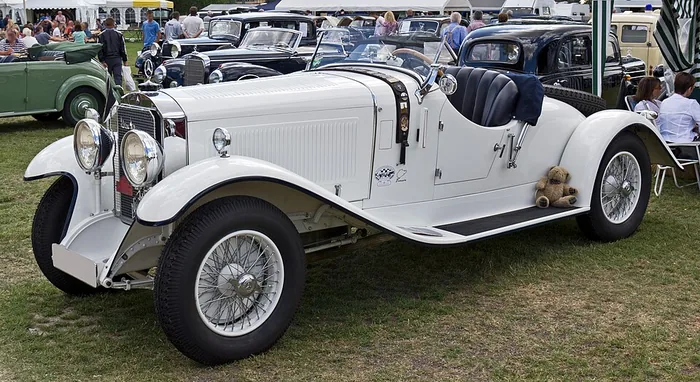
Cabriolet D: four-door formal open social use on the first Mercedes eight
The Mercedes-Benz Typ Nürburg Cabriolet D is the formal multi-seat open body of the early W08 years. It keeps the defining facts of Mercedes-Benz’s first eight-cylinder passenger programme — inline eight, roughly eighty-horsepower class luxury ratings, rear-wheel drive, large-car prestige — and applies them to a four-door formal open body meant for more than two people. Where the Sport Roadster concentrates on two-seat open presentation, and where the closed sedan prioritises all-weather Pullman security, the Cabriolet D answers a household question: can passengers ride in the open air under a Mercedes star without abandoning formal dignity?
This entry focuses on approximately 1928–1934, the window in which Cabriolet D formal open logic is especially central to the family’s social open story. The wider W08 programme continues later, notably with the Pullman-scale Cabriolet F. Readers should treat letter codes as functional guides and still verify door counts, seating, and coachwork on any individual survivor.
Mechanical and naming context lives on the Typ Nürburg overview: Nürburg/Nurburg name, roughly 3,800 units class for the whole programme, 460 and 500 engine themes, Porsche-period foundations, Nibel-era lower-chassis updates, and rivalry with Horch-class luxury eights rather than with supercharged sports specials.
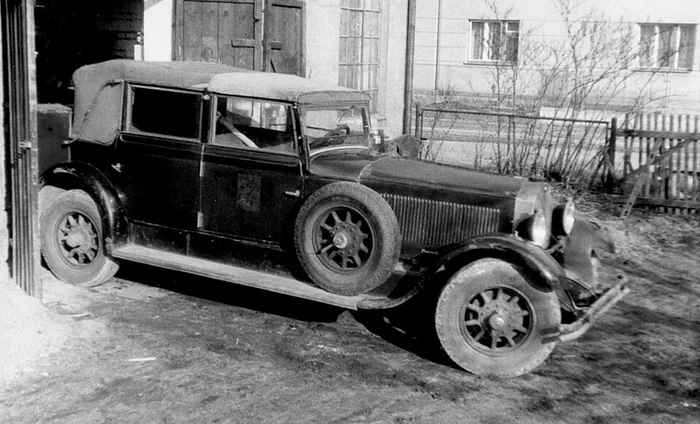
Image source: Wikimedia Commons
Why formal open eights mattered
European road culture of the late 1920s and early 1930s still treated open cars as normal tools, not only as weekend toys. Dust, weather, and clothing were managed with coats, rugs, and planning. A four-door formal cabriolet with proper weather equipment was rational for mixed climates: German summers that turn wet without warning, Alpine approaches, and the spa-town and lakeside hotel circuit that defined prosperous leisure.
Two-seat open cars could not always answer household needs. Closed limousines always could, yet they denied open-air use in fair weather. The Cabriolet D sits between those poles as a dual-mode social machine: top down for fair-weather touring and events, top up for respectable arrival when weather closes in. On an eight-cylinder Mercedes chassis, that dual mode carried extra prestige. Multi-cylinder smoothness was itself a social signal when the bonnet was opened at a hotel.
Letter logic in period European body nomenclature often sorted intimate sporting open cars from roomier formal ones. Within this Motor Wiki family map, Cabriolet D is the four-door formal social open expression; Cabriolet C is the more intimate open cut; Cabriolet F is the later Pullman-scale open extreme; the Sport Roadster is the two-seat sporting pole. Exact details still vary by coachbuilder and year.
Contrast with sports models
The concurrent Typ S / W06 line occupies a different performance and cultural niche. Supercharged sports cars and formal open luxury eights could appear at the same concours decades later; in period they answered different desires. Judging a Cabriolet D by SSK standards is a category error. Judging it by whether four adults can tour with dignity is historical literacy.
Design: four doors, two modes, formal mission
A good Cabriolet D must pass two visual tests. Top down, it should look balanced with a full passenger cell and a purposeful waistline — not like a stretched two-seater with improvised rear cushions. Top up, it should look like a finished formal car, with fabric tension and rear treatment that protect occupants without collapsing into shapelessness. Dual success is harder than it sounds. Many open restorations look correct only in one mode.
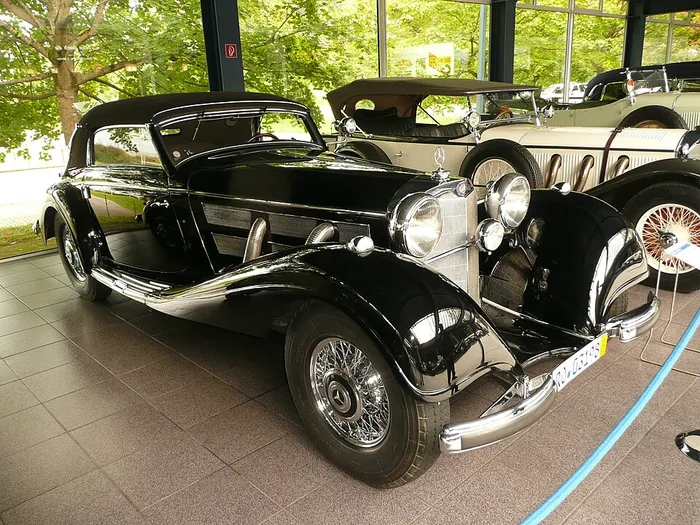
Mass and bulk are honest. Compared with a Cabriolet C, there is typically more body and more formal weather equipment. Compared with a later Cabriolet F, the D often reads as the earlier social open tool rather than the full late-decade Pullman open state carriage. Running boards, separate wings, and an upright radiator complete shared Mercedes grammar with the closed sedan, while multi-door open apertures and top hardware create a different ownership workload.
Interior space is the practical justification. Rear passengers expect more than a token perch. Legroom remains period-tight by modern standards, and entry over running boards in formal clothes is a practised skill, but the social intent is real. Luggage is better than on many two-seat open cars yet rarely matches a closed Pullman. People come first; cargo second.
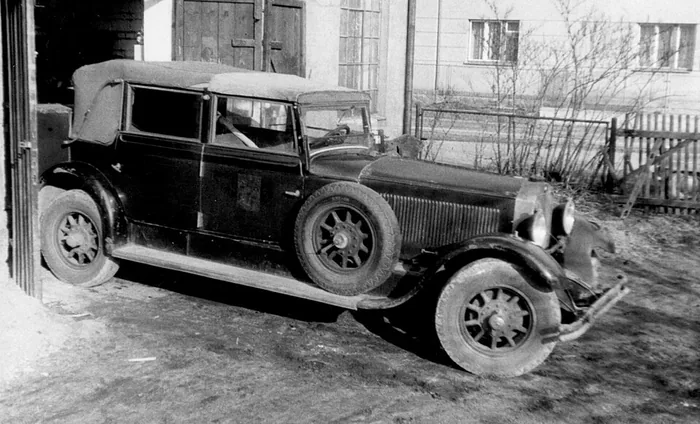
Image source: Wikimedia Commons
The eight-cylinder under social open mass
Shared W08 facts apply: roughly 4622 cc in the early 460 / 18/80 PS theme, evolutionary updates as the programme ages, about eighty horsepower class core ratings, natural aspiration as the centre of gravity, liquid cooling, period carburettor. Under Cabriolet D mass with passengers, those facts translate into dignified progress. The engine’s virtue is smoothness and adequacy for period touring, not high power-to-weight ratios.
Four adults and luggage on a warm day reveal cooling, ignition, or mixture weaknesses faster than a solo cool-weather demonstration. Because the Cabriolet D is chosen for social use, reliability is part of hospitality. A roadside failure with guests aboard is both mechanical and social failure.
Oil discipline on a long inline eight, clean fuel, and correct ignition timing are ownership fundamentals. Specialists who understand pre-war Mercedes eights are worth more than generic classic-car advice.
Drivetrain manners with passengers aboard
The manual gearbox becomes a social instrument. Jerky clutch release, missed shifts, and abrupt throttle inputs are felt by everyone. Smoothness is hospitality. Double-declutching and patient ratio selection keep the cabin calm. Final-drive gearing still belongs to the early 1930s; modern dual carriageways are not the natural habitat. Secondary roads, spa-town approaches, and club stages with modest averages suit the car.
Rear-wheel drive on period tyres with multi-seat weight distribution asks for gentle throttle on wet cobbles and tramlines. The driver manages other people’s comfort and safety. That responsibility is why the Cabriolet D feels different from a solo roadster morning run.
Chassis behaviour: load, pitch, and formal length
Leaf springs and solid axles respond to load. One driver feels one car; four adults and luggage feel another. Pitch under braking increases, ride can wallow if springs are tired, and steering effort at parking speeds rises. Evaluation should include realistic load when possible, or at least honest discussion of spring rates, dampers, and tyre pressures for social use.
Brakes need more respect than on lighter open siblings. Period drums do not gain modern performance because the body is elegant. Early application on descents, generous following distances, and mechanical perfection of linings and linkages are non-negotiable. Tyres must be correct in size and load capability.
Structurally, multi-door open bodies with rear seats multiply inspection points. Top irons must articulate freely without forcing fabric. Rear floors and seat framing must be sound. Door alignment across formal apertures should be consistent. Flex and rattles are not charming if they signal failing joints. A formal cabriolet stored with a damp top often hides expensive structural truth behind attractive paint.
Performance without pretence
Expect leisurely acceleration and a touring character defined by composure rather than urgency. The Cabriolet D will not feel as lively as a Sport Roadster. That is physics, not failure. Its metric is different: can it take a small party to a destination and home again with dignity, open or closed as weather requires?
Against a closed sedan, the D trades weather simplicity for open-air use and higher top-related maintenance. Against a later Cabriolet F, it often represents an earlier, slightly less processional formal open mission. Against mid-size Mercedes such as the Typ Stuttgart, it remains a true large luxury eight. Against a Typ S, it was never a competitor.
Social driving culture
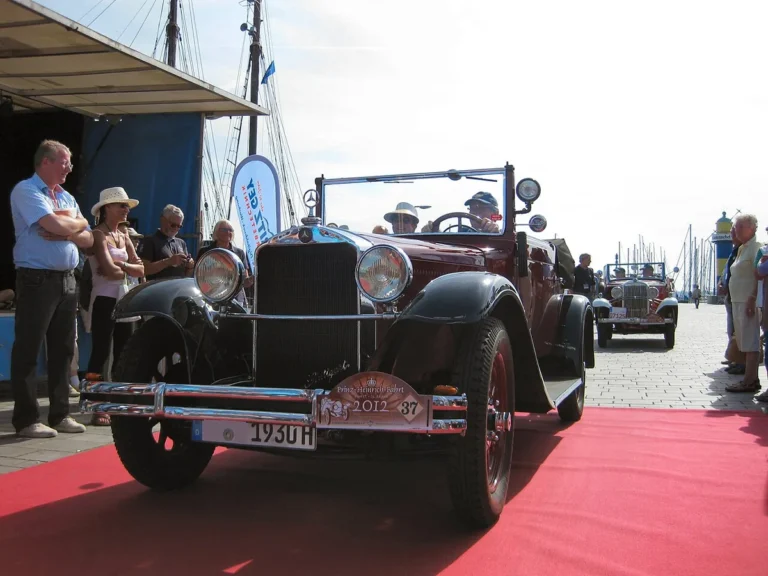
Owning a Cabriolet D changes how one uses a pre-war Mercedes. Friends can be invited. Club events that assume four seats become possible without a second car. Parades and formal gatherings suit raised-top presence. Fair-weather touring with conversation among four adults becomes the central pleasure — distinct from couple-focused roadster intimacy.
With that pleasure comes etiquette. Passengers need briefing on entry, on hats and scarves in the open air, and on slower period pace. Children need secure arrangements appropriate to law and common sense. Weather plans must be real: a formal top that is stiff, torn, or incomplete turns a social promise into an embarrassment when rain arrives. The owner who maintains weather equipment is the owner who can keep social promises.
Multi-day tours with four people require honesty about luggage, fuel stops, and daily distance. The Cabriolet D can be a capable tourer within period limits. It becomes a burden when daily distances are planned as if the car were a modern executive saloon. Conservative itineraries protect both the machine and the people aboard.
Collecting: formal open values and inspection priorities
Formal four-seat open Mercedes sit in a complex market position. They can outrank plain closed cars because open air remains desirable, yet they can be less fashionable than pure two-seat sporting shapes. Condition and originality decide more than letter labels. A coherent Cabriolet D with documented body history, a sound top structure, and a properly rebuilt W08 drivetrain can be a satisfying centrepiece for collections focused on usable elegance rather than racing lore.
Inspection priorities include rear body integrity, multi-door fit, the larger top assembly, brakes and tyres under realistic load, cooling under multi-passenger use, and evidence of conversion or rebody work. Matching the car to the main mechanical story prevents fantasy expectations of supercharged sports performance.
Running costs include fabric, wood, and formal trim. Dry storage with proper top care is cheaper than repairing rot after damp neglect. Specialist networks matter more than mainstream parts counters.
Ownership: strengths and things to watch
Strengths
- True multi-seat open social use — the early W08 body that best invites guests into the open air.
- Dual-mode formality — convincing raised-top presence and open-air use when weather allows.
- Touring practicality — more usable rear accommodation than two-seat siblings.
- Historical clarity — shows how Mercedes sold eight-cylinder prestige beyond pure sports niches.
- Family links — pairs with the overview, Cabriolet C, Cabriolet F, roadster, and sedan.
Things to watch
- Mass and brakes — multi-seat drum braking distances are long; systems must be excellent.
- Large top assemblies — cost, complexity, and rot risk higher than on minimal open cars.
- Rear and multi-door structure — floors, arches, and apertures hide expensive problems.
- Cooling under load — summer tours with a full cabin expose marginal systems.
- Passenger safety culture — no modern crash cell; drive and plan defensively.
- Documentation — body originality and coachwork history affect value strongly.
- Expectation mismatch — not a lively two-seat sports roadster and not a W06 Kompressor car.
Sibling comparisons
Choose the Cabriolet D if intended use includes friends, family, or formal events where four seats and open air both matter. Choose the Cabriolet C if a more intimate open cut is preferred. Choose the Cabriolet F if later-year Pullman-scale open formality is the goal. Choose the Sport Roadster for two-seat open presentation. Choose the sedan if weather security outweighs open-air use.
All share the W08 luxury-eight idea. The Cabriolet D applies that idea to multi-seat hospitality with four doors and a folding top.
Legacy
The Typ Nürburg Cabriolet D should be remembered as the four-door formal social open expression of the early W08 years. Multi-seat capacity, full weather-equipment character, roughly eighty-horsepower class eight-cylinder luxury power, rear-wheel drive, and a mission of dignified touring rather than sporting myth. It completes the open triangle with the intimate Cabriolet C and the later ceremonial Cabriolet F, while the roadster holds sporting two-seat desire and the sedan holds closed weather security. The overview remains the mechanical hub.
Understood on those terms, the Cabriolet D is not a compromise. It is a specialist tool for a different pleasure: sharing the open air under a Mercedes star without leaving half the household behind.
In a complete W08 collection, the Cabriolet D is the teaching car for social open use. The sedan teaches closed formality; the Cabriolet C teaches intimacy; the Sport Roadster teaches two-seat presentation; the later Cabriolet F teaches Pullman-scale ceremony. The D sits where many real households actually lived: open air for more than two, weather equipment that must work, and eight-cylinder smoothness without sports pretence. That is why it remains one of the most historically balanced open expressions of Mercedes-Benz’s first passenger eight.
Owners should treat multi-seat open touring as a system, not a pose. Brakes, tyres, cooling, top structure, and passenger briefing all form part of the same responsibility. Plan routes for period averages. Keep the raised-top mode as usable as the open mode. Archive body documentation so future keepers know what they inherit. Read mechanical claims against the Typ Nürburg overview rather than against supercharged sports folklore. Do those things, and the Cabriolet D continues to deliver the use it was designed for: inviting people into the open air under a three-pointed star as a luxury car rather than as a racing myth.
Leave a Reply
You must be logged in to post a comment.