General information & model overview
| Category | Specification Details |
|---|---|
| Model name | 1928 Mercedes-Benz Nurburg / Typ Nürburg Sedan (Pullman limousine and related closed formal bodies on W08) |
| Internal code | W08 (closed sedan / Pullman limousine expressions of the Typ Nürburg programme) |
| Title focus year | 1928 launch identity within approximately 1928 – 1939 overall family production |
| Parent model | Mercedes-Benz Typ Nürburg / Nurburg (W08) family overview |
| Body style | Closed limousine / Pullman sedan — the formal all-weather core of the eight-cylinder luxury range |
| Manufacturer | Daimler-Benz AG (Mercedes-Benz) |
| Historic first | Closed face of Mercedes-Benz’s first eight-cylinder passenger car programme |
| Engineering context | Early development associated with Ferdinand Porsche’s passenger-car work; later lower-chassis updates associated with Hans Nibel–era engineering |
| Market role | Large luxury closed car for elite and professional use — rival logic in the Horch 8 class rather than supercharged sports niches |
| Layout | Front-engine, rear-wheel drive |
| Key characteristics | Early Typ Nürburg 460 / 18/80 PS theme (~4622 cc I8, ~80 PS class); later 500 theme (~4918 cc); tall early Hochbett chassis evolving lower; Pullman formality |
Body & dimensions
| Specification | Details |
|---|---|
| Body concept | Closed formal sedan / Pullman limousine: all-weather prestige, rear-seat priority, and the classic large-Mercedes silhouette of the late 1920s |
| Seating | Typically five to seven depending on Pullman partition and jump-seat arrangements; verify on the individual car |
| Wheelbase & length | Long luxury-class proportions suited to formal closed coachwork |
| Mass | Heavy closed bodywork; among the least power-to-weight-favourable expressions of the W08 idea |
| Weather security | Full closed roof, windows, and formal weather sealing — the practical opposite of open cabriolets and roadsters |
| Doors | Usually four-door formal layouts; rear doors and running-board entry define period limousine manners |
| Construction | Period steel-and-wood composite practices; roof structure, sills, and floor integrity are major inspection themes |
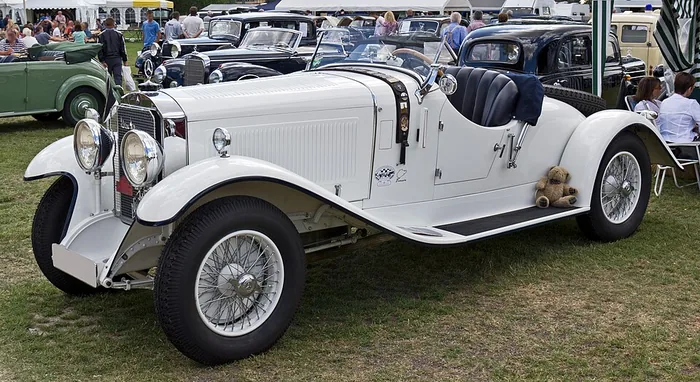
| Contrast within family | All-weather core versus Cabriolet D, Cabriolet F, Cabriolet C, and Sport Roadster |
Engine specifications
| Theme | Details |
|---|---|
| Configuration | Inline eight-cylinder petrol — first Mercedes-Benz eight-cylinder passenger-car powerplant theme |
| Early 460 theme | Approximately 4622 cc; Typ Nürburg 460 / 18/80 PS class identity for the 1928 launch era |
| Later 500 theme | Approximately 4918 cc; Typ Nürburg 500 / Typ 500 evolutionary updates on later closed cars |
| Output (period class) | Roughly 80 PS class for core luxury ratings |
| Character in closed bodies | Smooth multi-cylinder progress intended to pull heavy formal coachwork with composure rather than sporting urgency |
| Induction | Primarily naturally aspirated; contrast supercharged Typ S / W06 |
| Cooling | Liquid-cooled; dark-coloured limousines in summer traffic are a hard test of radiator and water-pump health |
Drivetrain & transmission
| Category | Details |
|---|---|
| Drive layout | Front-engine, rear-wheel drive |
| Gearbox | Manual multi-speed of period design; chauffeur smoothness valued on formal closed cars |
| Clutch | Mechanical clutch; progressive engagement essential under limousine mass |
| Final drive | Luxury touring gearing suited to period roads, not modern motorway cruise |
| Use culture | Often chauffeur-driven or professionally used; rear-seat passengers are the primary clients on true Pullman cars |
Chassis, brakes & structure
| Category | Details |
|---|---|
| Early chassis | Tall Hochbett / overslung luxury character on many 1928-era cars — high seating, formal verticality |
| Later chassis | Lower modern presentations appear as the programme evolves under later engineering leadership |
| Suspension | Solid axles with leaf springs; ride quality depends on spring condition and realistic passenger load |
| Steering | Mechanical steering box; low gearing and high effort at parking speeds on long closed cars |
| Brakes | Period drums under heavy closed mass — stopping distances long; linings and adjustment safety-critical |
| Structure priorities | Roof wood/metal integrity, sills, floors, door bottoms, and partition structures on Pullman cars |
| Tyres | Load-rated classic tyres mandatory for limousine mass |
Performance (period context)
| Category | Details |
|---|---|
| Power-to-weight | Leisurely by any post-war standard; closed mass maximises the “dignified progress” character of the ~80 PS class eight |
| Touring character | Isolation, smoothness, and formal arrival rather than open-air drama or sporting response |
| Comparison within family | Less lively than Sport Roadster; more weather-complete than all open siblings |
| Comparison outside family | Horch-class luxury rival; not a W06 Typ S competitor; above mid-size Typ Stuttgart programmes |
| Success metric | Can it move important people all year with multi-cylinder composure? That defines sedan performance |
Timeline & history
| Period | Development |
|---|---|
| Pre-1928 context | Merged Mercedes-Benz brand needs a large civilian luxury flagship beyond mid-size cars such as the Typ Stuttgart |
| 1928 | Typ Nürburg 460 / W08 launched; closed sedan and Pullman identity establish the eight-cylinder passenger car in public view |
| Early engineering | Ferdinand Porsche–period foundations for the passenger eight-cylinder programme |
| Late 1920s – early 1930s | Open siblings expand the catalogue: Cabriolet C, Cabriolet D, Sport Roadster |
| Chassis evolution | Tall early closed cars gradually joined by lower later presentations |
| Mid–late 1930s | 500-era mechanical updates; Cabriolet F represents later open Pullman ceremony while closed cars continue the all-weather role |
| Through ~1939 | Overall W08 programme production on the order of roughly 3,800 units class |
| Afterlife | Closed Nürburgs remain foundational study pieces for Mercedes eight-cylinder luxury history |
Body & variants notes
| Theme | Details |
|---|---|
| Sedan / Pullman identity | Closed formal core and 1928 launch face of the Typ Nürburg |
| Sibling: Cabriolet C | Intimate open luxury — Cabriolet C |
| Sibling: Cabriolet D | Four-door formal open social car — Cabriolet D |
| Sibling: Cabriolet F | Later Pullman-scale open ceremony — Cabriolet F |
| Sibling: Sport Roadster | Two-seat sporting open cut — Sport Roadster |
| Family hub | Typ Nürburg W08 overview |
| Coachbuilt variation | Partition, jump seats, roof style, and trim level can vary; document the individual body |
Safety & construction notes (classic-era context)
| Category | Details |
|---|---|
| Crash protection | Separate chassis and period closed body offer minimal modern energy management; defensive low-speed driving mandatory |
| Braking with mass | Heavy closed cars magnify drum limitations; early application on hills is essential |
| Lighting | Period headlamps weak by modern standards; night driving is specialist activity |
| Roof & wood | Closed roofs hide rot and structural fatigue until inspection; door bottoms and sills are frequent problem zones |
| Tyres | Load rating and age condition non-negotiable under limousine mass |
| Interior fire & wiring | Period electrical systems need careful restoration; formal interiors contain flammable materials |
1928 Nurburg Sedan: closed core of Mercedes-Benz’s first passenger eight
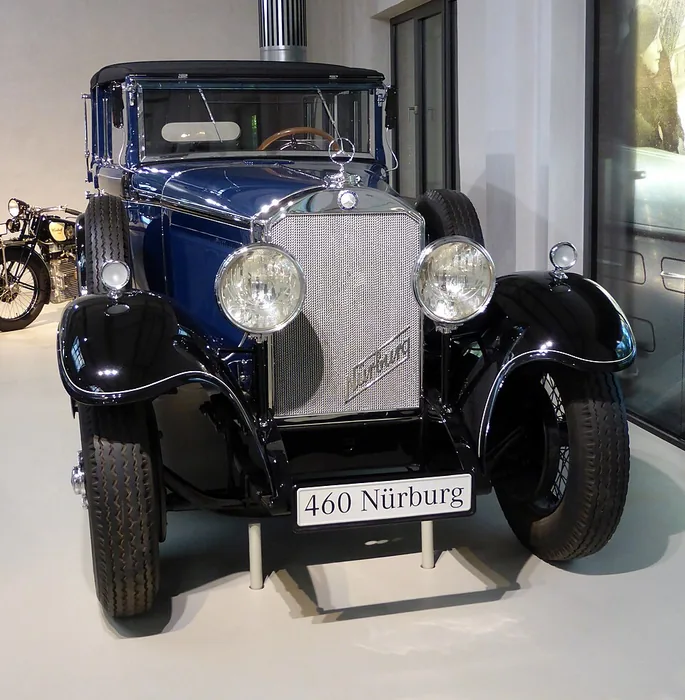
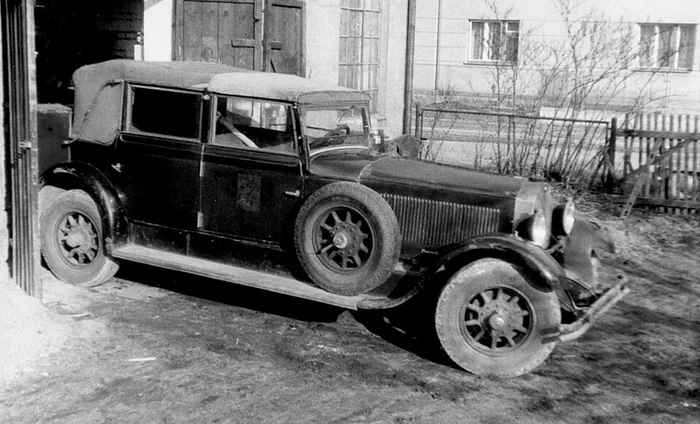
The 1928 Mercedes-Benz Nurburg Sedan is the closed limousine and Pullman identity of the Typ Nürburg (W08) programme. When Daimler-Benz introduced its first eight-cylinder passenger car, the commercially serious face of that programme was not an open sports body but a formal closed car: multi-seat, weather-secure, and intended for year-round prestige use. This entry covers that closed story within the wider family production window of approximately 1928–1939.
English titles often spell the name Nurburg without the umlaut; the German designation is Typ Nürburg. The name refers to Nürburg in the Eifel and carries period associations with the Nürburgring region. The sedan does not claim sporting specification from that geography. It uses a place-name of recognised prestige while performing the work of closed luxury transport. Full mechanical and chronological context appears on the Typ Nürburg family overview.
Overall W08 production is commonly placed in the order of roughly 3,800 units across all body styles. Closed cars formed a substantial share of that total. Without them, the eight-cylinder passenger idea would have remained a limited catalogue curiosity rather than a multi-year luxury line.
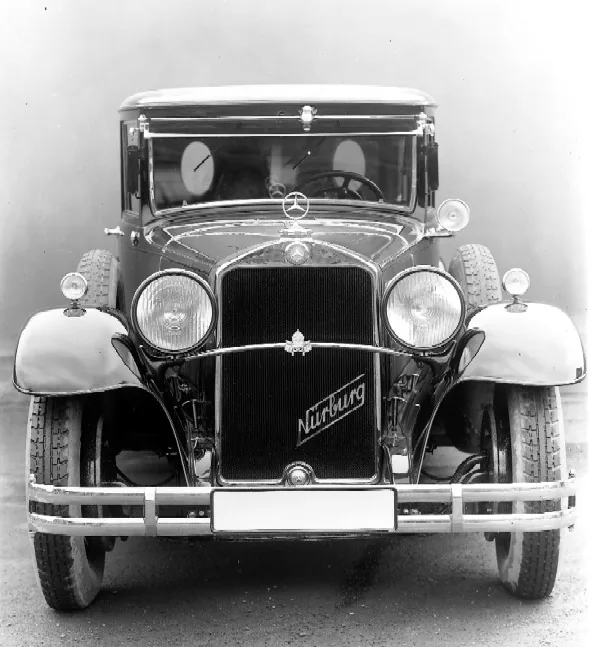
Image source: Wikimedia Commons
Development and market position
After the Daimler-Benz merger, the Mercedes-Benz brand required a clear passenger ladder. Mid-size programmes such as the Typ Stuttgart served buyers who wanted the three-pointed star without flagship mass or cost. At the other end of the scale, the company needed a large civilian luxury car that could compete with other German multi-cylinder prestige makes, notably Horch eights, rather than with short-chassis supercharged sports cars.
The Typ Nürburg 460 / W08, launched in 1928, filled that upper civilian slot. Early development is associated with Ferdinand Porsche’s passenger-car work at the firm. Later chassis updates, including lower-frame presentations, are associated with Hans Nibel–era engineering. The closed sedan and Pullman limousine established the programme in public: a long formal silhouette, an inline eight under a long bonnet, and a cabin designed around passenger comfort and professional use.
Concurrent supercharged sports models such as the Typ S / W06 occupied a different product and cultural niche. They shared a brand and an era, not a brief. Judging a Nurburg Sedan by S-series performance standards confuses two separate Mercedes strategies of the late 1920s and 1930s.
Above the mid-size ladder
Compared with accessible mid-size cars, the Nurburg Sedan is longer, heavier, more formal, and powered by an eight rather than a four or mid-size six. Buyers and institutions that ordered closed Nürburgs were purchasing rank, capacity, and multi-cylinder smoothness for formal and professional duty. The car was not designed as economical family transport.
Design: formal closed coachwork
A correct Nurburg Sedan reads as large-car architecture rather than a stretched mid-size shell. The upright radiator with three-pointed star, long engine bay for the inline eight, tall glasshouse on early cars, and formal rear quarters define the type. Pullman variants may include partitions, jump seats, and richer rear compartments; simpler limousines prioritise a continuous cabin. Both sit under the closed formal umbrella of this entry. Individual seating and partition layouts should be verified on the car and its documents.
The interior is the functional product. Rear seats, door cards, headlining, hardware, and floor covering determine whether a given example was a professional tool or a private household flagship. Wood and fabric quality vary with original specification and with restoration ethics. Over-restoration into modern gloss can erase the quiet formality that made the model convincing; neglect turns the same materials into moisture traps and structural risk.
Exterior brightwork, lamps, and running boards complete period grammar. Closed cars often photograph as less glamorous than open siblings. Historically that is their importance: they represent how the eight-cylinder Mercedes was used in ordinary weather, not only how it appeared in summer catalogue imagery.
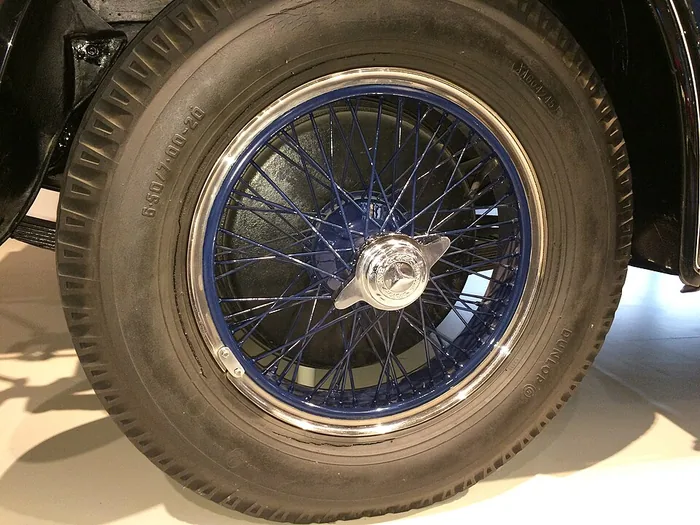
Image source: Wikimedia Commons
Engines: 460 and 500 themes
The 1928 launch identity is the Typ Nürburg 460 / 18/80 PS theme — approximately 4622 cc and about eighty horsepower in period class language. Those figures look modest by later standards. Against heavy closed coachwork and period roads, they formed a serious multi-cylinder argument: more cylinders for smoothness, enough power for formal touring, and a clear brand statement that Mercedes-Benz passenger prestige now included an inline eight.
As the programme continued, closed cars participated in the roughly 4918 cc Typ Nürburg 500 conversation. Displacement growth and evolutionary updates kept the luxury message current without converting the sedan into a sports car. Core ratings remain in a similar roughly eighty-horsepower class. The story is refinement and catalogue modernity rather than a step-change in performance.
Under closed mass, cooling and mixture control are central ownership subjects. A dark limousine body in slow summer traffic is a demanding thermal load. Radiators, hoses, water pumps, and clean fuel systems decide whether a formal outing ends in composure or overheating. Ignition integrity on a long eight-cylinder engine rewards specialist attention. Some late-programme literature discusses supercharged options in the broader 500 conversation; individual cars must be verified. The sedan’s historical centre of gravity is naturally aspirated multi-cylinder luxury. Supercharged sports culture belongs with the Typ S / W06 line.
Drivetrain and driving character
Manual gearboxes on formal closed cars reward smoothness more than speed. Chauffeurs and careful owner-drivers treat clutch and throttle as tools of passenger comfort. Abrupt inputs telegraph through the cabin. Final-drive gearing belongs to period touring; modern dual carriageways are usable only with conservative expectations and mechanical sympathy.
Rear-wheel drive on period tyres requires caution on wet cobbles and tramlines, especially with a full rear cabin. The sedan’s task is reliable arrival rather than dramatic exits from junctions. That ethic still reads as correct behaviour when the car is driven slowly and well.
On closed sedans and Pullmans specifically, the tall early Hochbett stance means high step-in, formal vertical glass, and a carriage-like presence that later lower chassis presentations soften without inventing independent-suspension modernity. Evaluating a sedan therefore includes asking which stance generation the frame represents, not only whether the paint is formal black.
Chassis, brakes, and structure
Brakes under closed mass are the primary safety limit. Linings, actuation hardware, and adjustment must be in excellent condition. Following distances that feel excessive in a modern car are simply rational here. Tyres must carry limousine loads; under-rated or aged rubber is dangerous.
Structurally, closed roofs hide problems until water stains and soft wood appear. Sills, floors, door bottoms, and partition bases need invasive inspection on any serious purchase. A polished exterior over a rotten understructure is a common pre-war luxury failure mode. Roof framing, headlining stains, and door-bottom corrosion are inspection priorities equal to mechanical systems.
Steering is low-geared by modern standards and heavy at parking speeds on long cars. Suspension ride quality depends on spring condition and realistic passenger load. Evaluation with only a driver aboard understates how the car behaves with a full cabin and luggage.
Performance in period context
Acceleration is leisurely. Top-speed figures depend on gearing, condition, and body drag. The closed Nurburg Sedan is the least sporting emotional expression of the W08 idea and the most honest about luxury mass. Its success metric is multi-cylinder composure and year-round formal transport, not open-air response or circuit ambition.
Against open siblings, the sedan wins on weather security, potential structural stiffness, and year-round usefulness. Against the Sport Roadster, it offers less visual drama. Against the Cabriolet F, it trades open-air presentation for simpler roof maintenance and often lower long-term fabric costs. Against mid-size Mercedes, it remains a true large luxury car. Against a Typ S, it was never a competitor.
Use culture and ownership
Closed Nürburgs lived in a culture of professional and elite transport. Hotels, industrial families, diplomatic and governmental users, and prosperous private households all appear in the period social landscape of large German limousines. Use patterns mix chauffeur service and owner-driver formality depending on household.
Modern collectors who prioritise open-air glamour sometimes undervalue closed cars. That undervaluation misreads the programme. The sedan and Pullman are the reason the eight-cylinder passenger idea had scale. They explain why the W08 ran for roughly a decade rather than remaining a niche open-car experiment.
Touring today suits conservative itineraries, secondary roads in good condition, and events that celebrate pre-war luxury rather than speed. Club rallies with modest averages, museum runs, and formal gatherings fit the machine. Sustained modern motorway pace does not.
Collecting closed W08 cars
Values depend on originality, chassis generation (tall early versus later lower), engine theme (460 versus 500), Pullman equipment, and documentation. Fashion sometimes favours open cars, which can make a coherent closed sedan a relatively rational entry into W08 ownership — still expensive, still large, but often more usable in wet climates and less dominated by top-iron costs than a Cabriolet D or Cabriolet F.
Inspection should cover frame, wood, roof, brakes, cooling, electrical systems, and identity papers. Matching the car to the family mechanical story prevents pricing based on sports-car myths. Specialist storage and maintenance networks are essential; these are not mainstream classic-car consumables objects.
Ownership: strengths and things to watch
Strengths
- 1928 launch identity — closed face of Mercedes-Benz’s first passenger eight-cylinder programme.
- All-weather formality — year-round prestige use without soft-top complexity.
- Historical centrality — explains why the W08 programme existed at multi-year scale.
- Chauffeur and rear-seat culture — authentic large-Mercedes social role.
- Family context — links cleanly to open siblings and the overview.
Things to watch
- Mass and brakes — heavy closed cars need excellent drums and defensive driving.
- Hidden roof and sill rot — closed bodies conceal structural failure.
- Cooling in traffic — summer limousine use is a hard thermal test.
- Parts and specialists — large pre-war eights need expert support.
- Expectation mismatch — not open glamour and not W06 Kompressor performance.
- Space and storage — physically large cars that punish damp neglect.
Sibling comparisons
Choose the sedan if the priority is closed luxury and the 1928 programme identity. Choose the Cabriolet C for intimate open luxury. Choose the Cabriolet D for four-door social open touring. Choose the Cabriolet F for later Pullman-scale open formality. Choose the Sport Roadster for two-seat open presentation on the same luxury-eight idea.
All are expressions of one W08 luxury eight. The sedan is the closed foundation that made the programme publicly legible.
Legacy
The 1928 Mercedes-Benz Nurburg Sedan should be remembered as the formal closed core of the Typ Nürburg / W08 family — Mercedes-Benz’s first eight-cylinder passenger-car programme. Roughly 4.6-litre 460 identity at launch, later 500 evolution, tall early chassis and lower later presentations, Horch-class luxury rivals, and a mission of all-weather prestige rather than sports performance. Open siblings extend the catalogue; the overview holds the full map; the Typ S and Typ Stuttgart supply the necessary contrasts at sports and mid-size poles.
Collectors who approach the sedan after open siblings often discover why the closed car is central: all-weather prestige and multi-seat formal capacity explain the programme’s multi-year life more clearly than open summer imagery alone. The sedan is not a lesser open car with a roof added; it is the launch-identity tool of the W08 luxury eight.
For research and display, pair the sedan with the family overview and at least one open body — ideally a social open car such as the Cabriolet D or later Cabriolet F, and if possible a Sport Roadster for the opposite extreme. That set teaches the full W08 lesson: one luxury eight, several social roles, and a clear separation from both mid-size programmes and supercharged sports lines.
Keep the closed car healthy with dry storage, correct load-rated tyres, excellent brakes, honest cooling, and specialist attention to wood and electrical systems. Maintained on those terms, the Nurburg Sedan continues to perform the role it was designed for: carrying eight-cylinder Mercedes prestige through any weather with formal composure.
Leave a Reply
You must be logged in to post a comment.