General information & model overview
| Category | Specification Details |
|---|---|
| Model name | Mercedes-Benz Typ SS (Super Sport) |
| Internal code | W06 family (long Super Sport branch) |
| Production years | Approximately 1928 – 1933 |
| Name meaning | Super Sport — the grand sporting evolution of the W06 idea, longer than the short-wheelbase SSK |
| Body style | Open sporting and grand-touring bodies common; coachbuilt variety on a long sporting chassis |
| Layout | Front-engine, rear-wheel drive |
| Key characteristics | Longer than SSK; ~7.1-litre supercharged inline-six; outputs often discussed around ~140 PS unblown / ~200 PS blown, with higher variants toward ~170/225 PS without/with supercharger depending on tune and listing; grand touring sports character |
| Production scale | Often cited around ~111 units (sources vary; treat as indicative scale rather than a single sacred number) |
| Family role | Bridges the foundational Typ S and the short-chassis racing extremes of SSK / SSKL |
| Manufacturer | Daimler-Benz AG (Mercedes-Benz) |
Body & dimensions
| Specification | Details |
|---|---|
| Chassis character | Long Super Sport frame — more grand-touring and high-speed stable than Super Sport Kurz cars |
| Wheelbase | Longer than SSK; continues the long-legged W06 sports tradition established by Typ S |
| Overall length | Imposing open or coachbuilt sporting length; bonnet dominance remains a visual signature |
| Body styles | Touring sports bodies, cabriolets, and related open grand-touring forms; individual coachwork varies |
| Seating | Often more usable multi-seat sporting layouts than pure two-seat short racers — depending on body |
| Construction | Separate chassis with high-quality sporting coachwork; mass remains significant despite “sports” designation |
| Design contrast | Less nervous than SSK; more refined long-distance sports tool than stripped SSKL |
Engine specifications
| Category | Details |
|---|---|
| Configuration | Inline-six petrol with Roots-type supercharger in the W06 sports tradition |
| Displacement | Approximately 7.1 litres (period SS family capacity class) |
| Output (common discussion band) | Approximately 140 PS without supercharger / about 200 PS with Kompressor on widely cited variants |
| Higher tunes | Variants discussed up toward roughly 170 PS unblown / 225 PS with supercharger depending on period listing and preparation |
| Supercharger | Driver-engaged Roots Kompressor via progressive / kickdown-style extra throttle push |
| Character | Huge torque and blower surge; slightly more grand-touring in calibration emphasis than pure short-chassis racers, though still extremely potent |
| Relationship to Typ S | Evolves the ~6.8 L / 120–180 PS Typ S idea into larger capacity and higher Super Sport outputs |
Drivetrain & transmission
| Category | Details |
|---|---|
| Drive layout | Front-engine, rear-wheel drive |
| Gearbox | Period manual multi-speed transmission; skilled operation required |
| Clutch | Heavy-duty unit matched to supercharged six-cylinder torque |
| Gearing philosophy | Suited to high-speed open-road Super Sport use; individual cars may reflect road or competition priorities |
| Traction | Long wheelbase can be more forgiving than SSK at the limit, but power still overwhelms period tyres if abused |
Chassis, brakes & structure
| Category | Details |
|---|---|
| Frame | Long W06 Super Sport ladder chassis |
| Suspension | Solid axles with leaf springs; period damping; setup quality dominates ride and control |
| Steering | Mechanical steering box; stability at speed was a design virtue of the long chassis |
| Brakes | Large drum brakes for the era; still demand early, planned application at Super Sport velocities |
| Wheels & tyres | Wire wheels common; tyre choice and condition define real-world safety more than brochure horsepower |
| Safety context | No modern crash structure or electronic aids; driver skill and mechanical condition are the safety system |
Performance (period context)
| Category | Details |
|---|---|
| Power class | ~140/200 PS and higher ~170/225 PS bands without/with supercharger depending on variant |
| Character vs SSK | More grand touring sports; longer stride; less pure short-chassis nervousness |
| Character vs Typ S | More power and Super Sport branding maturity; capacity and output step beyond the 1927 foundation car |
| Top speed class | High for the early 1930s on open sporting bodies; exact figures depend on gearing, body drag, and tune |
| Intended use | Rapid long-distance sporting travel and prestigious private ownership; competition use also part of the wider W06 story |
Timeline & history
| Period | Development |
|---|---|
| 1927 | Typ S launches the W06 supercharged sports line |
| 1928 | Typ SS Super Sport and short SSK expand the family in parallel directions — long GT sports vs short weapon |
| 1928–1933 | SS production and sales life; multiple output variants; coachbuilt diversity |
| 1931–1932 | SSKL takes the short-car racing path to an extreme the long SS was never meant to follow |
| Afterlife | SS recognised as the grand-touring heart of the W06 sports family; survivors prized for usable (relative) long-chassis manners and Super Sport prestige |
Variants & output themes
| Theme | Details |
|---|---|
| ~140 / 200 PS class | Widely cited without/with supercharger pairing for core Super Sport discussion |
| ~170 / 225 PS class | Higher-output variants in period literature and later summaries |
| Coachbuilt diversity | Open sporting, cabriolet, and related bodies create very different cars on similar mechanical bases |
| Production tally | Often cited ~111 units — useful scale marker; verify any individual car against primary research |
| Road vs sport emphasis | Some cars lived as prestigious road Super Sports; others brushed competition or high-speed continental touring hard |
Safety & construction notes (classic-era context)
| Category | Details |
|---|---|
| Structure | Long separate chassis and open or light closed sporting bodies; not designed to modern crash standards |
| Brakes | Drum systems require perfect adjustment and quality linings; Super Sport speeds make mediocrity dangerous |
| Supercharger systems | Engagement mechanisms and lubrication need specialist attention; intermittent blower use was part of design philosophy |
| Lighting & weather | Period lamps and open bodies limit safe night and foul-weather use by modern norms |
| Tyres | High-quality classic tyres appropriate to weight and speed potential are a primary safety upgrade |
| Restraint | Any seatbelt retrofit must be structurally engineered; period seats were not designed around modern harness loads without care |
Mercedes-Benz Typ SS (W06): the long Super Sport
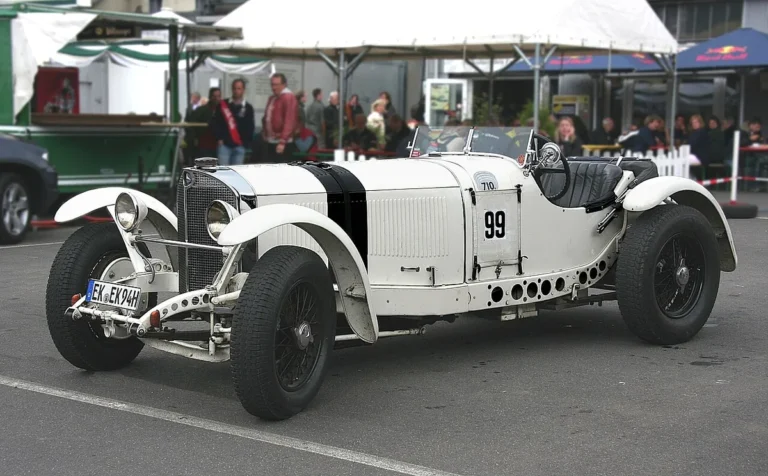
The Mercedes-Benz Typ SS, Super Sport, is the long-chassis branch of the W06 supercharged sports family. Production ran approximately from 1928 to 1933. The car used an inline-six of roughly 7.1 litres with a driver-engaged Roots-type Kompressor, and it was built in limited numbers often cited around 111 units (figures vary by source and counting method). In mechanical character it sits between the foundational Typ S of 1927 and the short-wheelbase extremes of the SSK and SSKL. Where the short cars concentrate on agility and, later, pure racing lightness, the SS keeps wheelbase and proportions suited to high-speed open-road travel and coachbuilt grand-touring bodies.
Output is customarily discussed as paired figures reflecting unblown and blown operation. Widely cited variants sit near about 140 PS without the supercharger and about 200 PS with it; higher states of tune are discussed toward roughly 170 PS unblown and 225 PS with Kompressor, depending on period listing and preparation. Those bands placed the SS among the most powerful private sporting cars available in the late 1920s and early 1930s. They also mark a clear step beyond the earlier Typ S in capacity and Super Sport product maturity, while remaining within the same family architecture of large supercharged six, separate chassis, and open sporting coachwork.
This entry treats the Typ SS as a distinct product idea: longer than the SSK, less extreme than the SSKL, and intended for buyers who wanted supercharged performance with a more stable, long-legged chassis character than a pure short sports special.
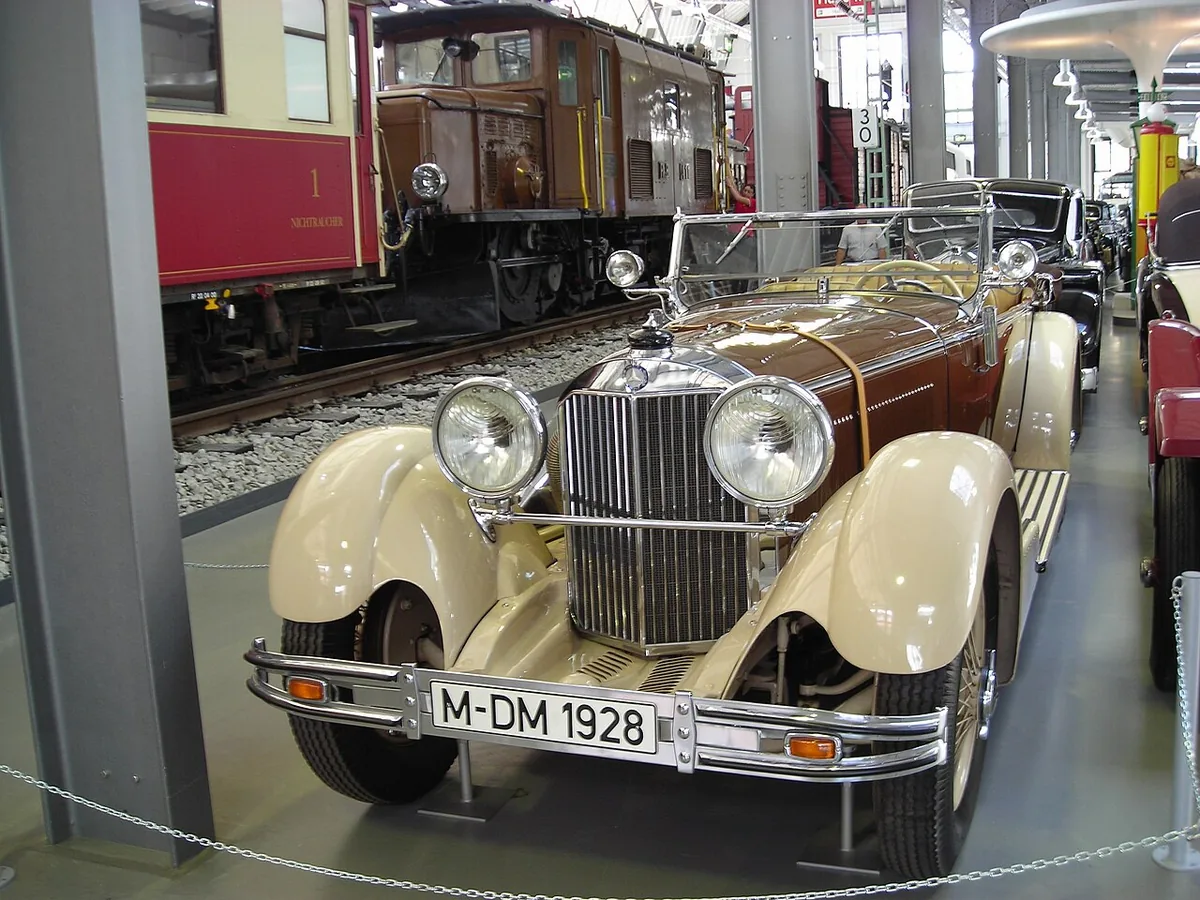
Image source: Wikimedia Commons
Development context after the Typ S
In 1927 the Typ S established the W06 supercharged sports line as a serious private and competition product. By 1928 Mercedes-Benz developed that idea in two complementary directions. One shortened the chassis to create Super Sport Kurz: the SSK path toward sharper response and racing usefulness. The other retained a long Super Sport frame, raised or refined outputs, and sold a car that could cover continental distances as well as deliver high performance on open roads. That second direction is the Typ SS.
The long chassis was not merely a styling preference. On the uneven surfaces and high-speed straights of interwar Europe, wheelbase length affected stability, coachbuilder options for multi-seat sporting bodies, and the car’s manners when the supercharger was engaged. Private owners who needed a machine for long journeys, mountain touring, and formal arrival had practical reasons to prefer the SS over a short-chassis sibling. The short car became the more concentrated sporting statement; the long Super Sport often matched a dual life of road use and occasional hard driving more closely.
Supercharger philosophy and dual power ratings
Mercedes period practice taught drivers that peak output was an operational choice as well as a laboratory figure. Running without the blower still left a large six with substantial torque by contemporary standards. Engaging the Roots Kompressor through the progressive extra throttle travel produced a second character: stronger surge, more noise, and the ability to climb or overtake with reserves ordinary touring cars did not possess. Accurate description of the SS therefore requires both sides of the pairing. Listing only the blown figure overstates continuous duty; listing only the unblown figure understates why Super Sport pricing and prestige existed.
Higher-output variants toward the 170/225 PS discussion band show that “SS” is a family of closely related states rather than a single frozen datasheet. When assessing a surviving car, the useful questions are specific: what does this engine produce in its present rebuild, how is the blower timed and lubricated, and what gearing and body mass complete the package? Brochure language from nearly a century ago is a guide, not a substitute for measurement and specialist inspection.
Design and coachwork
Visually, the Typ SS continues the W06 emphasis on a long bonnet housing six cylinders and supercharger hardware. Cabin and rear deck proportions vary with coachbuilder choices. Open sporting and grand-touring bodies dominate the historical image; they also introduce the practical issues of weather, wind noise, and long-distance comfort that closed modern cars avoid. Compared with a short SSK, an SS often reads as a more complete travelling machine — more cabin flexibility, more length for luggage and passengers depending on body, and a less nervous silhouette. Compared with the drilled, lightened SSKL, it appears almost restrained, even though the mechanical specification remains that of a large supercharged sports car.
Coachwork authenticity is central to collecting. Decades of repairs, rebodies, and aesthetic upgrades mean that two cars with similar mechanical descriptions can differ sharply in historical weight. Chassis, engine, and body documentation should be read together. Transparent provenance is the difference between a coherent Super Sport and an expensive special carrying a famous designation without a continuous story.
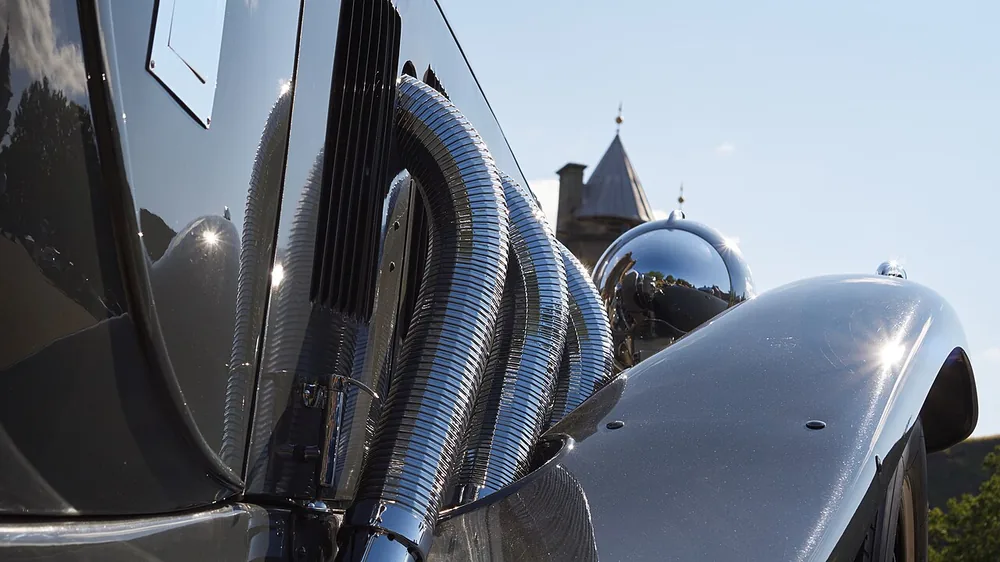
Image source: Wikimedia Commons
Driving character on the long chassis
On the road, the SS rewards a different temperament from the SSK. The longer wheelbase encourages progressive inputs and favours high-speed stability relative to short-chassis cars, always within the limits of period tyres, brakes, and roads. The supercharger still changes the experience when engaged, but the car does not feel as tightly wound as a short sibling the moment the road bends. Steering remains heavy and slow by modern standards. Drum brakes still require early, planned application. Gearboxes demand practised technique. None of those traits is corrected by Super Sport branding.
Where the SS is most coherent is the open-road brief: long stages between cities, mountain passes taken with preparation rather than haste, and arrival in a machine that announced Mercedes Super Sport status without the stripped severity of an SSKL. For multi-day historic rallies, the long Super Sport concept is often the more suitable W06 tool, provided the individual car is correctly maintained, the cooling and brake systems are sound, and the driver respects early-1930s technology. Power available through the blower can exceed what period rubber will put down if the throttle is used without judgment.
Chassis, brakes, and mechanical systems
The long W06 Super Sport ladder frame, solid axles, and leaf springs define ride and control. Setup quality — spring condition, damper state, tyre pressures, and steering-box free play — determines whether the car feels stable or vague. Large drum brakes of the era were advanced for their day and still insufficient by modern emergency standards. At Super Sport speeds, mediocre linings or poorly adjusted linkages are a primary hazard. Wire wheels and correct classic tyres are safety components as much as appearance items.
Supercharger engagement mechanisms, lubrication, and associated drive components require specialist attention. Intermittent blower use was part of the design philosophy for road cars; competition or sustained hard use changes thermal and mechanical loads. Engine rebuilds should be undertaken by people familiar with large pre-war Mercedes sixes. Electrical systems, fuel delivery, and cooling on open sporting bodies need the same disciplined inspection culture as any serious pre-war sports car.
Market role then and collecting now
In period, the SS occupied the upper tier of private sporting luxury. Sales life ran across the late-1920s boom and the early Depression years; these were never cars for cautious middle budgets. The often-cited production scale near 111 units places the model above pure racing extremes in numbers and far below ordinary passenger programmes such as the Typ Stuttgart. That intermediate rarity is historically useful: enough cars existed for a real product story, few enough that each well-documented survivor remains significant.
Today’s market ranks W06 cars by provenance, originality, body quality, and competition history where applicable. An SS without race fame can still stand near the summit of pre-war collecting because the supercharged Mercedes sports hierarchy carries exceptional cultural weight. Values, insurance, storage, and transport typically push ownership toward institutional habits: climate control, specialist mechanics, and planned event use rather than casual daily errands.
Ownership notes
Strengths
- Long-chassis Super Sport character — more grand-touring usability than short racers within the same family.
- Documented power bands — about 140/200 PS and higher 170/225 PS without/with supercharger discussion ranges with genuine Kompressor capability.
- Historical position — essential middle chapter of the W06 sports story between Typ S and short-car extremes.
- Coachbuilt potential — open sporting and cabriolet bodies of high period quality.
- Event suitability — strong presence at concours and selective multi-day historic road events when properly prepared.
Things to watch
- Identity and paperwork — chassis, engine, body, and ownership documentation must cohere.
- Engine and blower rebuild quality — the core of value, reliability, and safety.
- Brake system condition — Super Sport speeds demand correct drums, linings, and free linkages.
- Frame and coachwork integrity — wood, metal, previous accident repairs, and rebody history.
- Operator familiarity — new custodians should plan professional instruction before road use.
- Parts and specialist access — lead times are long; improvisation is inappropriate.
- Weather and storage — open bodies deteriorate quickly if neglected.
Touring practice and body diversity
Grand touring before the motorway age meant staged journeys, changing weather without modern climate control, and acceptance that an open Super Sport car was exposed as well as prestigious. Fuel, oil, and tyre consumption entered itinerary design. Mountain stages might use the blower freely; wet valley running might keep it in reserve. That operational judgment is part of what Super Sport meant in lived use, not only a horsepower figure on a card.
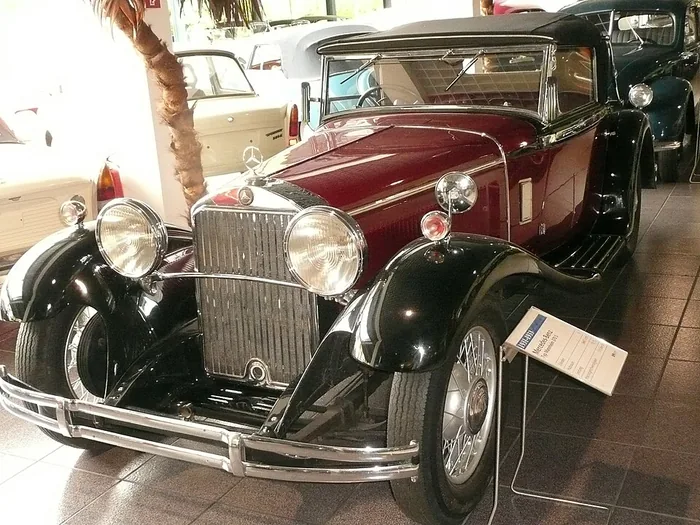
Coachbuilders translated the long chassis into different social messages. Sporting open bodies emphasised leisure and speed; more formal cabriolets emphasised wealth with a calmer outline. Screen design, interior timber, instrument finishes, and wing profiles could push a car toward concours elegance or functional sporting honesty. Body history therefore belongs in any serious description alongside chassis and engine numbers.
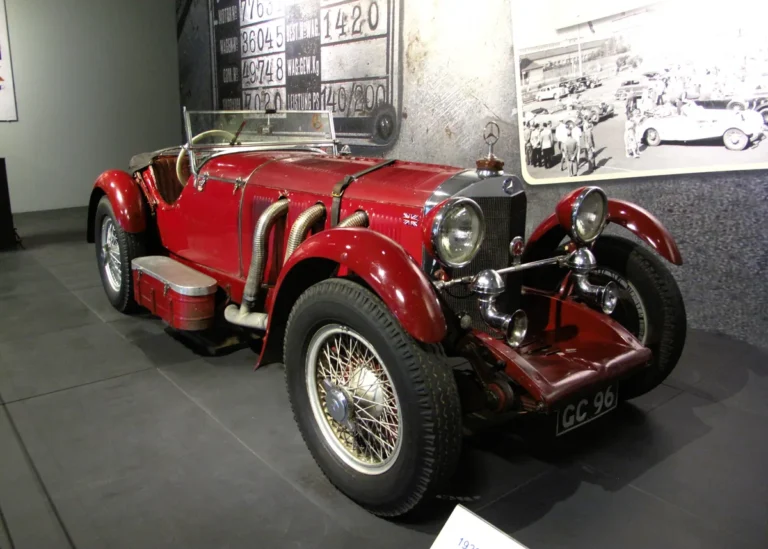
Compared with the accessible Typ Stuttgart, the SS was never a volume mid-market tool. Compared with the SSK, it was less of a pure short-chassis statement and more of a high-speed continental express. Compared with the SSKL, it was never intended as a lightened factory racing extreme. Those contrasts prevent treating every W06 car as interchangeable. They were related rungs on a product ladder that shared supercharger technology and brand prestige while serving different briefs.
Custodians planning multi-day historic rallies should prioritise cooling capacity, brake condition, spare strategy, and driver discipline around drum-brake physics. The car can still cover ground with authority when sorted. It cannot compensate for poor maintenance or poor judgment.
Legacy
Popular memory sometimes collapses the W06 family into a single short sports silhouette labelled SSK. The Typ SS resists that simplification. Super Sport also meant length, stride, and the ability to cover distance in a grand machine rather than only the ability of a shortened chassis to change direction. Without the SS, the family narrative jumps from the 1927 Typ S to short-car mythology and erases the grand-touring sports ideal that many private customers actually purchased.
Core reference points: Typ SS; Super Sport; W06; approximately 1928–1933; longer than SSK; about 7.1 litres; output discussion bands near 140/200 PS and higher 170/225 PS without/with supercharger; production often cited near 111 units; grand touring sports character; same family as Typ S, SSK, and SSKL.
Related Motor Wiki entries: Typ S (1927), SSK (1928), SSKL (1931–1932), and Typ Stuttgart. This model’s path is Mercedes-Benz Typ SS (W06, 1928–1933).
Leave a Reply
You must be logged in to post a comment.