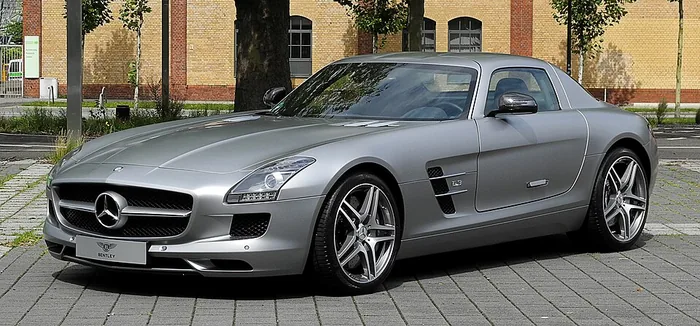
General information & model overview
| Category | Specification Details |
|---|---|
| Model name | Mercedes-Benz SLS AMG GT Coupé |
| Internal code | C197 (GT specification) |
| Manufacturer | Mercedes-AMG / Mercedes-Benz |
| Availability | From approximately 2012 (market launch autumn 2012 in many regions; 2013 model year framing in some markets including the United States) |
| Body style | Two-door, two-seat gullwing coupé |
| Layout | Front mid-engine, rear-wheel drive, rear dual-clutch transaxle |
| Power class | 435 kW / 591 PS; 650 Nm — higher power than base 571 PS cars, same torque peak |
| Family position | High-output closed road car between the base Coupé and the Black Series; open sibling is the GT Roadster |
| Hub | SLS AMG family overview |
Body & dimensions
| Specification | Details |
|---|---|
| Wheelbase | 2,680 mm |
| Overall length | 4,638 mm |
| Overall width | 1,939 mm excluding mirrors |
| Overall height | Approximately 1,252 mm (coupé) |
| Doors | Gullwing — shared closed-body identity with base and Black Series coupés |
| Construction | Aluminium spaceframe and panels; optional carbon exterior packages on many cars |
| Curb weight class | Near base coupé mass (about 1.6-tonne class); not the Black Series lightened package |
| Visual / cabin GT cues | Alcantara-heavy themes, contrasting stitching, red belt options, high-gloss black trim themes, specific wheel designs |
Engine specifications
| Theme | Details |
|---|---|
| Engine | M159 6,208 cc naturally aspirated V8, dry-sump |
| Peak power | 435 kW / 591 PS (583 hp) at approximately 6,800 rpm |
| Peak torque | 650 Nm at approximately 4,750 rpm — unchanged peak versus base SLS |
| Delta versus base | +20 PS / +15 kW class increase; torque plateau strategy keeps the same 650 Nm headline |
| Redline character | Still a high-revving NA eight; not the full Black Series 8,000 rpm package |
Drivetrain & transmission
| Category | Details |
|---|---|
| Transmission | AMG SPEEDSHIFT DCT 7-speed dual-clutch |
| GT-specific behaviour | Reduced reaction time in manual “M” mode versus earlier base calibration; more aggressive Sport Plus shift mapping |
| Architecture | Carbon driveshaft in torque tube; rear transaxle — unchanged family layout |
| Drive | Rear-wheel drive |
Chassis, suspension & brakes
| Component | Specification |
|---|---|
| Suspension theme | AMG RIDE CONTROL performance suspension with selectable damping modes via AMG DRIVE UNIT |
| Geometry base | Double wishbones front and rear with forged aluminium arms — family hardware language |
| Brakes | High-performance iron standard path; optional ceramic composite system widely ordered on GT cars |
| Wheels | Additional AMG forged and alloy designs versus early base cars; staggered 19/20-inch fitment retained |
| Aerodynamics | Retractable wing behaviour retained on standard GT coupés; fixed carbon wings appear on Final Edition packages, not as the definition of every GT |
Performance (approximate)
| Metric | Approximate data |
|---|---|
| 0–100 km/h | Slightly quicker than base 3.8 s claims; contemporary US-market language often cited about 3.6–3.7 s class to 60 mph depending on year framing |
| Top speed | Same electronically limited mid-310 km/h class as base cars |
| Circuit reference | AMG-associated Nordschleife work placed GT cars in the sub-7:30 minutes conversation for the era — treat as context, not a universal owner result |
| Torque delivery | Same 650 Nm peak; higher power changes how the upper rev range pulls |
What “GT” means on the SLS AMG Coupé
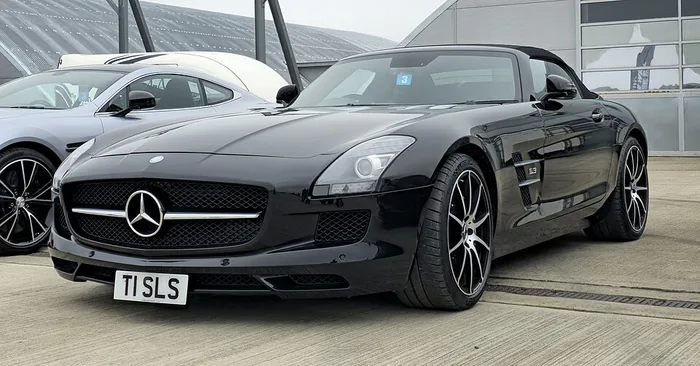
The Mercedes-Benz SLS AMG GT Coupé is the mid-cycle high-output closed road car of the C197 line. From about 2012 it raised peak power to 591 PS while holding torque at 650 Nm, sharpened dual-clutch response in manual mode, and standardised a more performance-oriented RIDE CONTROL suspension theme. It keeps gullwing doors and the aluminium spaceframe layout of the launch Coupé. It does not adopt the full mass reduction, wide-body aero, and 631 PS package of the Black Series.
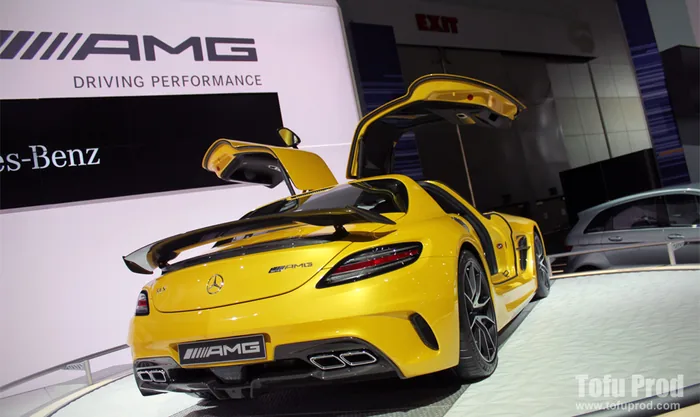
Image source: Wikimedia Commons
In some markets the GT effectively became the volume SLS coupé offer as base 571 PS cars phased. Researchers should therefore check model year and documentation rather than assuming every late coupé is a Final Edition or a Black Series. The family hub places GT cars between base and Black Series on the performance ladder.
Powertrain step without a new engine family
The M159 remains a 6,208 cc dry-sump V8. GT work increases peak power by roughly twenty PS without inventing a different displacement or forced induction. Torque’s 650 Nm peak matches the base car, so the GT is not “more torque everywhere” in brochure terms; it is a higher power ceiling with transmission and chassis calibration that make that ceiling more usable. Drivers feel the difference most when holding gears to the upper register and when the dual-clutch executes faster manual shifts.
That distinction matters in used listings. A base car with aftermarket exhaust is not a GT. A GT with worn tyres will not reproduce period acceleration claims. Identity is ECU, documentation, and equipment codes — not badge photography alone.
1. Dual-clutch refinements
Faster reaction in M mode addresses a common early criticism of the first SLS dual-clutch calibration. Sport Plus remains aggressive. Everyday C mode still exists for urban work, but buyers choosing GT usually expect the sharper end of the map to be the car’s personality.
2. Unchanged mechanical layout
Carbon shaft, torque tube, and rear transaxle packaging are shared. The GT is a systems calibration and output step, not a re-architecture.
3. Relation to Final Edition
Late Final Edition cars build on GT mechanicals with carbon aesthetic packages and limited numbering. Performance figures stay GT-class; they are not a silent Black Series upgrade. Keep those categories separate when writing captions or valuations.
Chassis and cabin of the GT Coupé
AMG RIDE CONTROL performance suspension is central to the GT story. Selectable damping lets the same car cover imperfect roads and circuit sessions without a full spring swap. Geometry remains double-wishbone aluminium. Optional ceramics reduce unsprung mass for repeated hard stops. Forged wheel options cut rotational inertia relative to heavier cast designs.
Cabin themes emphasise Alcantara, contrast stitching, and driver-focused colour combinations. Red belts and dark high-gloss trim appear frequently in GT presentations. Optional designo Exclusive Style leather packages add diamond stitching and broader leather coverage. These materials do not change the car’s width or seating package; they signal the GT’s road-performance positioning between base luxury sports and Black Series austerity.
1. Gullwing continuity
Doors, seals, and rollover exit logic remain coupé problems and coupé solutions. GT status does not simplify garage height planning.
2. Stability systems
Multi-stage ESP remains part of the road car brief. Track days still require tyre temperatures, brake bedding, and sensible electronic settings rather than assuming the badge removes physics.
3. Noise and heat
Higher-strung calibration and freer optional exhaust paths can raise cabin sound. Heat soak after hard use should be managed with cool-down habits familiar to any high-output front mid-engine car.
Driving character versus base and Black Series
Against the base 571 PS coupé, the GT feels more immediate in upper-rpm pulls and shift response. Against the Black Series, the GT remains the more road-balanced closed car: less track-specialised aero, less extreme tyre and damper bias, more everyday cabin equipment retention. Owners who want the gullwing silhouette with meaningful performance uplift over base without Black Series ownership intensity often land on the GT for rational reasons.
Circuit competence is real when brakes and tyres are correct. The car is still wide, still heavy relative to pure exotics under 1,400 kg, and still front mid-engine in its turn-in behaviour. Smoothness and commitment work better than constant correction.
Sibling navigation
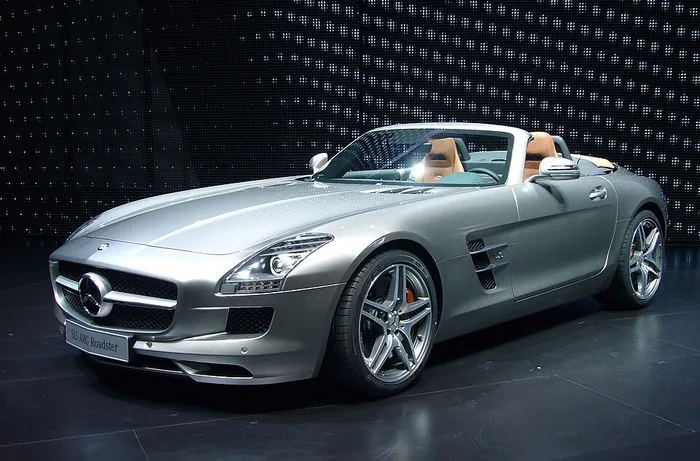
Use the 2010 base Coupé for launch 571 PS reference. Use the GT Roadster for the same 591 PS class in open form. Use the 2011 base Roadster for open air at 571 PS. Use the Black Series for the limited lightweight extreme. Use the hub for architecture shared by all.
- 591 PS / 650 Nm — GT headline pair.
- From ~2012 — introduction window.
- RIDE CONTROL performance — chassis theme.
- Sharper DCT — manual mode response focus.
- Not Black Series — no 631 PS / ~70 kg lightening claim.
Documentation and market notes
GT cars can carry extensive option lists: ceramics, carbon mirrors, performance media, premium audio. Option density affects value but not the fundamental power class. Service history for dual-clutch and engine oil specification remains more important than cosmetic carbon. Accident repairs on aluminium and gullwing alignment should be inspected with the same seriousness as on base coupés.
Where markets rebadged or year-changed the range, rely on power figures and equipment codes. A 2013–2014 coupé may be GT by default in that market even if casual speech still says “SLS AMG” without the GT suffix.
Legacy
The SLS AMG GT Coupé is the mature road specification of the gullwing programme: enough extra power and chassis focus to feel distinct from 2010 cars, without the exclusivity and compromises of the Black Series. It is the closed car many enthusiasts mean when they describe a late SLS driven hard on public roads.
Historically the GT also bridges marketing generations. It kept the M159 naturally aspirated story alive as forced induction spread across other AMG lines, and it prepared customers for Final Edition closure packages that still rested on GT mechanicals. The later AMG GT (C190) name reuses “GT” for a different car; encyclopedia readers should not merge C197 SLS AMG GT with C190 AMG GT identity.
Durable facts: C197 gullwing, 435 kW / 591 PS, 650 Nm, dual-clutch rear transaxle, RIDE CONTROL performance suspension themes from about 2012, and a clear rung below Black Series on the SLS ladder.
Leave a Reply
You must be logged in to post a comment.