General information & model overview
| Category | Specification Details |
|---|---|
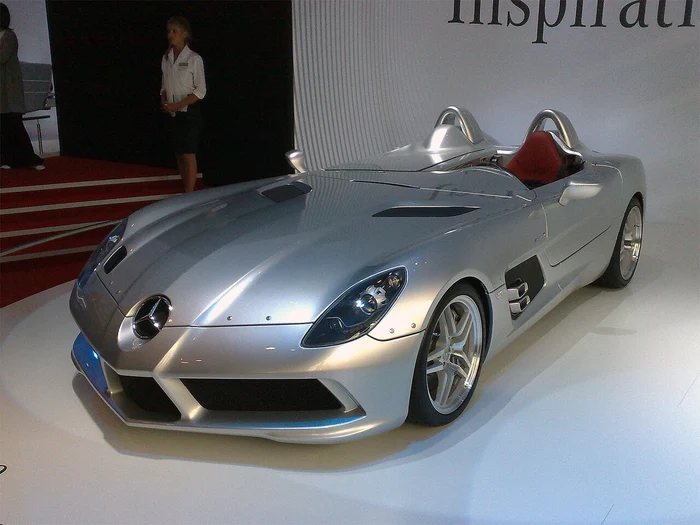
| Model name | 2009 Mercedes-Benz SLR Stirling Moss |
| Internal code | Z199 |
| Manufacturers | Mercedes-Benz / AMG; McLaren Technology Centre, Woking |
| Reveal | Unveiled around the 2009 North American International Auto Show (early public reveal January 2009) |
| Production window | Built approximately June–December 2009 after the base roadster programme had ended |
| Production limit | 75 units — all completed; offered only to existing SLR owners |
| Body style | Two-door speedster: no roof, no windscreen; minimal wind deflectors |
| Layout | Front mid-engine, rear-wheel drive |
| Namesake | Sir Stirling Moss — linked also to the 1955 Mille Miglia 300 SLR story already celebrated by the 722 Edition |
| Design credits (period) | Exterior design work associated with Yoon Il-hun; interior design associated with Sarkis Benliyan |
| Programme role | Final series model of the Mercedes–McLaren SLR partnership before later McLaren Special Operations upgrade programmes on existing cars |
Body & dimensions
| Specification | Details |
|---|---|
| Wheelbase | 2,700 mm class (shared SLR architecture) |
| Overall length / width | Shared long-bonnet SLR proportions with unique speedster upper body |
| Roof / glasshouse | None — open speedster; no windscreen; small wind deflectors only |
| Construction | Extensive CFRP; mass reduction versus closed and soft-top cars is a primary design goal |
| Curb weight (approximate) | About 1,598 kg class in detailed secondary sources — roughly 170–200 kg lighter than a typical base coupé depending on comparison baseline |
| Doors | Butterfly-style doors adapted to the speedster body |
| Seating | Two seats; highly driver-focused cabin with reduced weather protection |
| Inspiration | Visual and conceptual nods to open 300 SLR racing forms rather than to the fabric-roof R199 Roadster |
Engine specifications
| Theme | Details |
|---|---|
| Engine | M155 SLR 5.4-litre supercharged V8 in 722-class calibration |
| Displacement | 5,439 cc |
| Peak power | 478 kW / 650 PS (641 hp) at 6,500 rpm |
| Peak torque | 820 Nm (605 lb-ft) at about 4,000 rpm |
| Shared with | Same output pair as the 722 Edition coupé and related 722 road cars |
| Architecture | Hand-built AMG supercharged V8: twin-screw blower, dual intercoolers, dry sump, SOHC three-valve heads |
Drivetrain & transmission
| Category | Details |
|---|---|
| Gearbox | AMG SPEEDSHIFT R five-speed automatic with manual modes |
| Drive | Rear-wheel drive |
| Character | Same fundamental gearbox philosophy as other SLRs: torque capacity and durability over dual-clutch shift speed |
Chassis, suspension & brakes
| Component | Specification |
|---|---|
| Mass reduction theme | Deletion of roof, windscreen, and related structure plus carbon construction focus cut roughly 200 kg versus a typical closed SLR |
| Brakes | High-performance carbon-ceramic package in the SLR family tradition (722-class large front hardware themes) |
| Aerodynamics | Speedster-specific upper surfaces and underbody work; extremely high top-speed target implies careful high-speed stability engineering without a conventional cabin bubble |
| Usability constraint | No weather protection — helmets and weather planning are practical realities for owners, not affectations |
Performance (approximate)
| Metric | Approximate data |
|---|---|
| 0–100 km/h | About 3.0–3.5 seconds depending on manufacturer wording and secondary sources (often cited near 3.5 s to 62 mph / 3.0 s class claims in other materials) |
| Top speed | About 350 km/h (217 mph) |
| Power-to-weight theme | 650 PS in a car roughly 200 kg lighter than the base coupé yields the most extreme road SLR acceleration/top-speed package of the factory series |
| Price class (period) | Above US$1 million at introduction; allocation restricted to existing SLR clients |
What the SLR Stirling Moss is
The 2009 Mercedes-Benz SLR Stirling Moss (Z199) is the final series model of the Mercedes–McLaren SLR partnership: a 75-car speedster with no roof and no windscreen, 650 PS from the supercharged M155, roughly 200 kg less mass than a base coupé, and a claimed top speed near 350 km/h. It is named for Stirling Moss and visually nods to open 300 SLR racing forms. It is not a soft-top Roadster. It is a purpose-built open extreme for clients who already owned an SLR and wanted the last factory chapter of the partnership.
Production ran roughly from June to December 2009. By then the base roadster had already been discontinued. Remaining closed cars finished through 2010, but the Stirling Moss is the ceremonial end of the joint series range.
Speedster concept: more than a roadster with the roof deleted
Deleting a fabric roof does not create a Stirling Moss. The Z199 removes the windscreen and upper glasshouse entirely and redesigns the upper body as a speedster. Occupants sit in a carbon tub-like environment with minimal wind protection. The car is legal as a road vehicle in its intended markets, but its practical mission is short, high-intensity open driving in dry weather — closer in spirit to historic open sports-racers than to a touring convertible.
1. Mass as a performance tool
At about 1,598 kg in detailed secondary figures, the Stirling Moss is the lightest major factory SLR variant. Combined with 650 PS and 820 Nm, it is also the most power-dense. Acceleration and top-speed claims exceed the closed 722 Edition despite sharing the same peak power pair, because mass and aero differ so strongly.
2. Design language
Exterior design work associated with Yoon Il-hun shapes a pure, almost sculptural speedster form still recognisable as SLR in the long nose, side exhausts, and butterfly doors. The interior, associated with Sarkis Benliyan, reduces luxury clutter relative to a base coupé while remaining a finished Mercedes product rather than a bare race shell. Materials still signal high-end construction; weather protection simply is not part of the brief.
3. Relationship to the 722 name
The 722 Edition celebrated Moss’s race number. The Stirling Moss celebrates the driver by name and goes further in open-car radicalism. Owners who hold both cars own two different chapters of the same tribute: closed performance edition versus final open speedster.
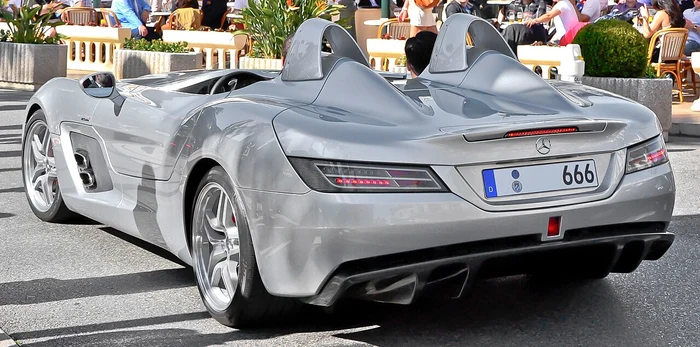
Image source: Wikimedia Commons
Powertrain and performance package
The engine is the 650 PS / 820 Nm M155 calibration familiar from the 722 programme: supercharged 5.4-litre V8, dry sump, twin-screw blower, dual intercoolers. The five-speed AMG SPEEDSHIFT R remains. What changes the experience is mass, aero, and the absence of a cabin bubble. At wide-open throttle the supercharger and side exhausts are immediate and loud; at high speed the lack of a windscreen makes the car a physical experience in a way no closed SLR matches.
Manufacturer and secondary figures cluster around 3.0–3.5 seconds to 100 km/h (or 62 mph) and about 350 km/h top speed. Treat the exact tenth as approximate across sources; the ranking within the family is clear: this is the fastest factory SLR road car of the partnership era.
1. Why the automatic stayed
Even at the extreme end of the range, Mercedes did not introduce a dual-clutch or manual. The SPEEDSHIFT R was still the durable gearbox for 820 Nm. Enthusiasts who wanted a different shift character looked outside the factory series (including later MSO work on other SLR bodies).
2. Brakes and high-speed stops
Carbon-ceramic brakes remain essential. Stopping a 650 PS speedster from very high speed without a roof structure still depends on ceramic thermal capacity and electronic brake control. Service and inspection rules match other SLRs, with the added context that cars may cover low annual miles between high-load events.
3. Not a track day toy by default
Despite the extreme open form, the Stirling Moss is still a front mid-engine grand-touring architecture with an automatic gearbox. It is not a mid-engine prototype. Its uniqueness is open-air speed and scarcity, not lap-record packaging.
Allocation, price, and collector status
Only existing SLR owners could order a Stirling Moss. That rule made the car a loyalty and collection piece rather than a conquest product. Pricing sat above one million US dollars at launch. All 75 planned cars were built by the end of 2009. On the modern collector market the Z199 sits at the top of the factory SLR hierarchy for rarity and drama, above the 150-car 722 Edition and far above base coupés and roadsters in both value and exclusivity.
Documentation of ownership chain, matching numbers, and correct Z199 identity is critical. The car is distinctive enough that cosmetic confusion with a roadster is unlikely, but build sheets still matter for provenance.
Ownership notes unique to the Z199
1. Weather and storage
There is no roof. Storage, transport, and event planning must assume full weather exposure. Covers, enclosed transport, and careful paint and interior care are part of normal ownership, not optional extras.
2. Low-mileage systems
Many examples cover few kilometres. Low-use cars still need fluid changes, brake service, battery care, and exercise of electronic systems. Sitting unused is not a preservation strategy for ceramics, seals, or fuel systems.
3. Shared SLR specialist needs
Supercharged M155, SPEEDSHIFT R, CFRP repair, and carbon-ceramic brakes still require SLR-experienced technicians. The speedster body adds unique exterior panels and interior pieces that are effectively unobtainable except through specialist or McLaren/Mercedes channels.
4. Later MSO programmes
McLaren Special Operations later offered McLaren Edition and other upgrade paths mainly for non-Stirling-Moss SLRs. The Z199’s factory completeness and rarity mean many owners leave cars in original series specification; any later modification should be documented carefully.
Legacy
The SLR Stirling Moss is the closing factory statement of the Mercedes–McLaren SLR era: 75 speedsters, 650 PS, no roof, no windscreen, about 350 km/h, and a client list limited to people who already believed in the car. It freezes the partnership’s themes — carbon structure, supercharged AMG V8, Formula One adjacent prestige — in the most theatrical open form Mercedes sold in that decade.
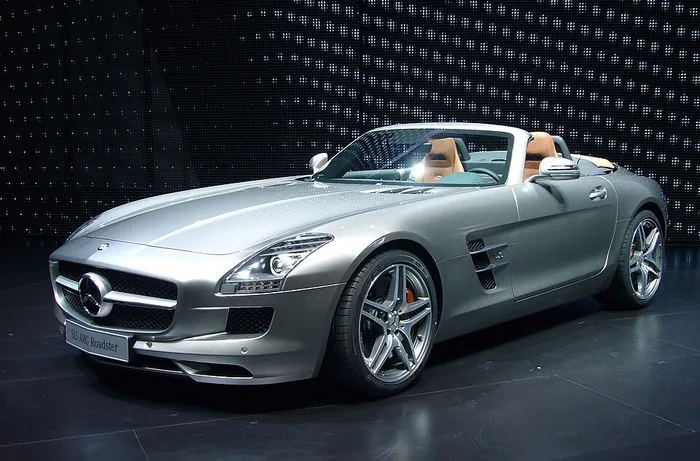
After the Stirling Moss, the SLR story continues only as remaining coupé deliveries, owner-club culture, and later McLaren Special Operations reworks of existing cars. Mercedes’ next clean sports-car chapter under AMG was the SLS AMG, with a different engine philosophy and in-house Affalterbach authorship. The Z199 therefore ends one collaboration rather than beginning the next. Durable facts: Z199, 75 cars, 650 PS / 820 Nm, ~1,600 kg class, ~350 km/h, existing-owner allocation, June–December 2009 build window.
Leave a Reply
You must be logged in to post a comment.