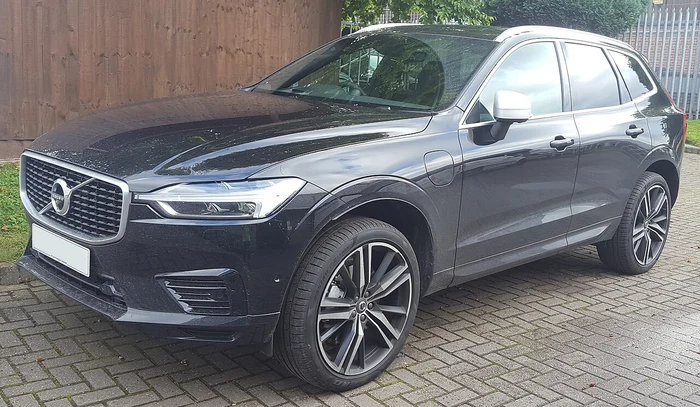
Ask an engineer what a plug-in hybrid is for, and you will usually get an answer about emissions certification, tax bands, or fuel consumption averages. Ask a Volvo owner who has lived with a T8 for a few years, and you tend to get a different answer entirely — one about habits.
About plugging in a cable each evening the way you might plug in a phone, without thinking about it. About watching a small battery icon fill up overnight instead of watching a fuel gauge fall during the day.
About the strange, quiet satisfaction of driving to the shops and back without the engine turning over once.
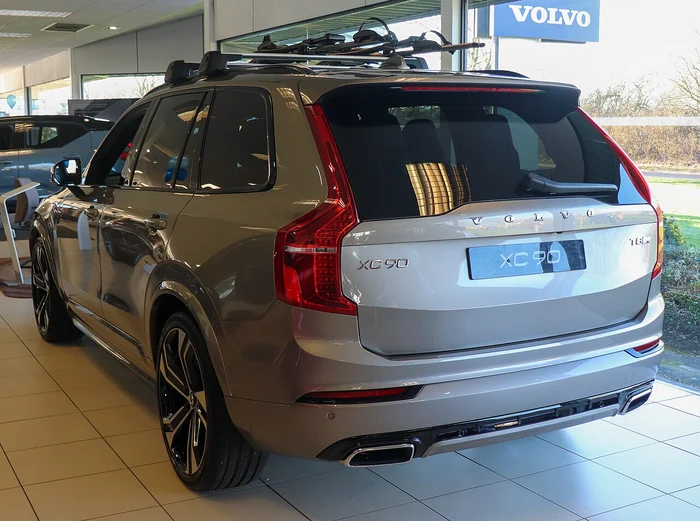
Image source: Wikimedia Commons
That gap between the technical justification for a plug-in hybrid and the lived experience of owning one is, in Volvo’s case, not an accident. It is close to the entire point.
Over roughly a decade, Volvo built a plug-in hybrid programme that functioned less like a conventional efficiency technology and more like a slow-motion training programme — for its engineers, for its dealers, and above all for its customers — in how to live with an electric car before most of those customers were remotely ready to buy one outright.
Lesson One: Range Anxiety Is a Habit, Not a Number
The most persistent argument against electric vehicles in their early years was rarely about the technology itself.
- Be trusted. Volvo’s T8
- Introduced on the second-generation XC90 in the middle of the 2010s
- Offered a strange kind of therapy for that feeling. Its battery
- At first only around 9 kWh
- Gave drivers somewhere between 15
- 20 miles of electric-only range under the testing standards of the day — enough for a school run
- A supermarket trip
- Or a short commute
- But never enough to remove the combustion engine as a safety net
That combination turned out to be psychologically important in a way that a full battery-electric car, at the time, could not replicate. A T8 owner learned to trust the electric side of the car in low-stakes situations, because failure carried no real consequence — the petrol engine was always there, a few hundred metres away in reserve.
Over months and years, that trust compounded. By the time Volvo’s battery packs had grown to nearly 19 kWh in the most recent XC60 and XC90, delivering upward of 35 miles of electric range, many long-term T8 owners had already spent years treating overnight charging as a normal, unremarkable part of car ownership — precisely the habit that full electric ownership would eventually demand of them, learned gradually and without a single moment of enforced conversion.
Lesson Two: Infrastructure Gets Built Around Demand, Not Ahead of It
Volvo’s plug-in hybrid rollout coincided almost exactly with the most uneven period of public charging infrastructure development across Europe and North America — a decade in which some cities raced ahead with dense charger networks while entire regions remained functionally unserved. A brand betting everything on battery-electric vehicles during that period would have been betting against geography as much as against technology.
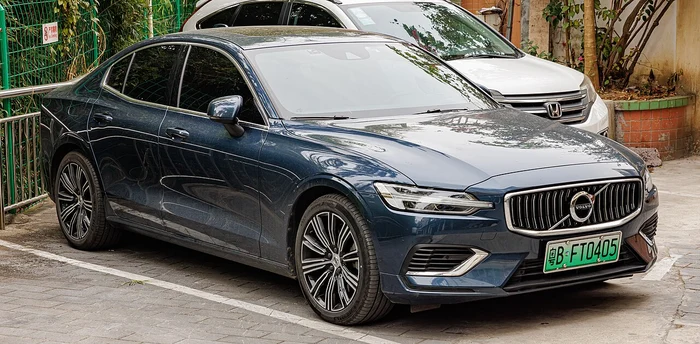
Image source: Wikimedia Commons
The T8 sidestepped that problem by design. Because the car remained fully functional without ever finding a public charger, Volvo could sell plug-in hybrids into markets and postcodes where a battery-electric equivalent would have been a genuine gamble for the buyer.
That, in turn, gave Volvo something valuable: real usage data, gathered at scale, showing where owners actually plugged in, how often, and how far they drove on electricity before reverting to petrol. Few carmakers had a decade-long, geographically dispersed dataset of this kind before committing seriously to their battery-electric rollout plans.
Volvo did, and it came directly from the T8 programme.
Lesson Three: Performance Sells Electrification Faster Than Virtue Does
It would be easy to assume that a technology designed to teach customers electric habits would be marketed primarily on efficiency and environmental grounds. Volvo largely resisted that instinct.
Instead, the T8 badge was consistently positioned as the performance flagship within nearly every model line it touched — a combined output that reached 400 horsepower at launch and climbed to 455 in the current XC60 and XC90, figures that comfortably eclipsed the brand’s previous petrol-only flagship engines.
That decision mattered more than it might first appear. A customer drawn to a T8 by its acceleration, rather than by a sense of environmental obligation, was still absorbing the same lesson in electric behaviour — charging overnight, driving silently around town, monitoring a battery percentage — but arriving at it through desire rather than duty.
Volvo’s own performance sub-brand, Polestar Engineered, leaned into this further still, building its most track-focused road cars on the same T8 plug-in hybrid foundation rather than on a purely combustion platform. The message, intentional or not, was that electrification and driving enjoyment were not in tension with one another, a lesson that would prove far more persuasive to a broad customer base than any fuel-economy chart.
Lesson Four: The Bridge Does Not Need to Have a Fixed Length
Volvo’s original electrification roadmap, set out in 2021, imagined the plug-in hybrid as a finite technology with a clear expiry date — fully electric sales only, across the entire lineup, by 2030, with combustion and plug-in hybrid models phased out entirely by then. Reality intervened.
In September 2024, Volvo formally revised that target, citing a slower-than-expected build-out of charging infrastructure, the withdrawal of purchase incentives in several key markets, and new tariff pressures affecting electric vehicle sales in multiple regions. The company’s revised goal called for 90 to 100 percent of global sales to be "electrified" by 2030 — a category now explicitly inclusive of plug-in hybrids rather than a purely battery-electric target — with a small allowance for continued mild-hybrid sales where market conditions required it.
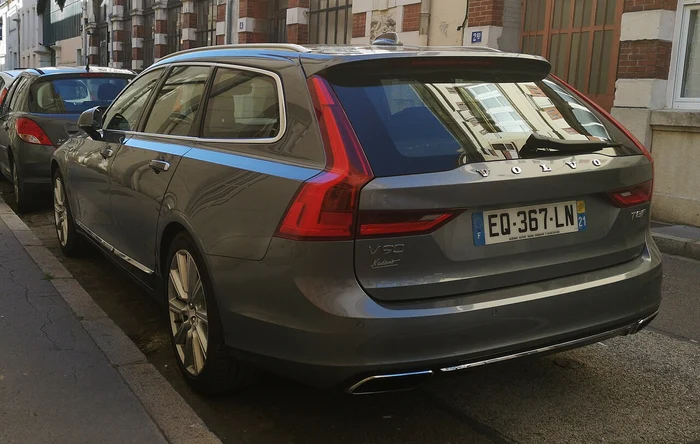
Image source: Wikimedia Commons
What is notable about that reversal is not that it happened — most manufacturers who made similarly ambitious pledges in the early 2020s have since walked them back in one form or another — but how little disruption it caused to the T8 programme specifically. Volvo did not treat the policy change as a reason to deprioritise its plug-in hybrid engineering.
The most recent XC90, redeveloped after the original 2030 pledge had already begun to look unrealistic, continued to offer the T8 as a headline powertrain option rather than a legacy carryover awaiting cancellation. The lesson Volvo appears to have absorbed is that a bridge does not need a fixed, pre-announced length to remain useful — it simply needs to keep carrying traffic in the right direction for as long as that traffic exists.
What the Training Programme Produced
It is difficult to prove a causal link between a decade of plug-in hybrid ownership and a customer’s eventual willingness to buy a fully electric car — Volvo’s own sales figures complicate any tidy narrative, with plug-in hybrid demand holding up in several markets even as sales of the brand’s first-generation battery-electric models slowed, particularly in the United States. What can be said with more confidence is that Volvo now sells electrification, in one form or another, to a customer base that has spent the best part of ten years becoming quietly, incrementally comfortable with the mechanics of it — the cable, the overnight charge, the battery percentage instead of the fuel gauge — without ever being asked to make a single leap of faith.
That may turn out to be the T8 programme’s most lasting contribution to Volvo’s future, more durable than any horsepower figure or electric-range statistic printed in a brochure. Technologies get superseded constantly in this industry. Habits, once genuinely formed, tend to persist rather longer.
Leave a Reply
You must be logged in to post a comment.