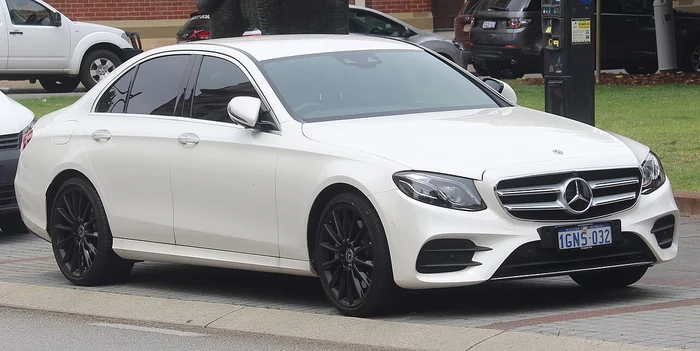
Park a Mercedes-Benz E-Class next to a Volvo XC90 T8 and, on paper, both cars will tell you they are "hybrids." That single word is doing an enormous amount of work. One car carries a battery you could hold in a rucksack and never plugs into anything.
The other carries a battery pack the size of a large suitcase, has a charging flap, and can cover a genuine commute on electricity alone before its combustion engine ever fires. Both approaches count as hybridisation in regulatory terms.
In engineering terms, and in terms of what each brand is actually trying to achieve, they could hardly be more different.
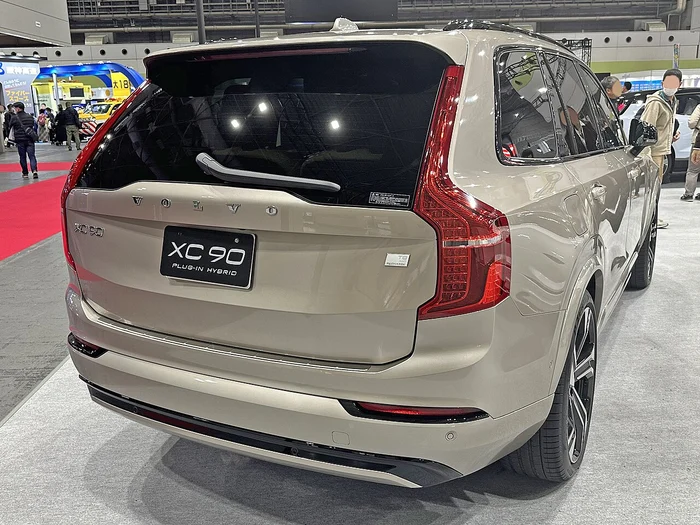
Image source: Wikimedia Commons
Mercedes-Benz and Volvo sit on opposite sides of a strategic fork in the road that the entire industry has had to navigate over the past decade: do you spread a small amount of electrification across as many cars as possible, or concentrate a large amount of electrification into fewer models and let it do the heavy lifting? Mercedes has, for most of its lineup, chosen the former.
Volvo, for a long stretch of its recent history, chose the latter. Neither choice was arbitrary, and neither is purely about technology — both are answers to questions about manufacturing cost, customer behaviour, engine architecture, and how each company sees its own timeline toward electric power.
Two Different Definitions of "Hybrid"
It helps to be precise about what these systems actually do, because the marketing language around hybrids has become notoriously slippery.
Mild hybrid (Mercedes’ EQ Boost, badged in newer literature simply as "Mild Hybrid") bolts a 48-volt electrical system onto an otherwise conventional combustion engine. At the centre of it sits an integrated starter-generator — a compact unit between the engine and transmission that acts as starter, alternator, and small electric motor — drawing power from a modest lithium-ion battery, typically under 1 kWh.
This system cannot drive the car on its own. What it can do includes:
- Smooth stop-start cycles
- Add a brief shove of torque under acceleration
- Recover energy under braking and coasting
- Let the engine shut off while the car glides (Mercedes calls this "sailing")
In essence it is a support system for the combustion engine, not an alternative to it.
Plug-in hybrid (Volvo’s T6 and T8 powertrains, previously marketed under the Recharge and Twin Engine names) is a different proposition.
A combustion engine is paired with a substantial electric motor and a battery large enough to charge from a wall socket or public charger — in Volvo’s case, packs from roughly 11 kWh in earlier T8 models to nearly 19 kWh in recent XC60 and XC90 cars.
That is large enough for about 30 to 45 miles of genuine electric-only driving, enough for many owners to commute all week without petrol if they plug in every night.
Unlike a mild hybrid, a plug-in hybrid can move the car under electric power alone, at motorway speeds if needed, with the combustion engine acting as range-extender and performance partner rather than the default source of propulsion.
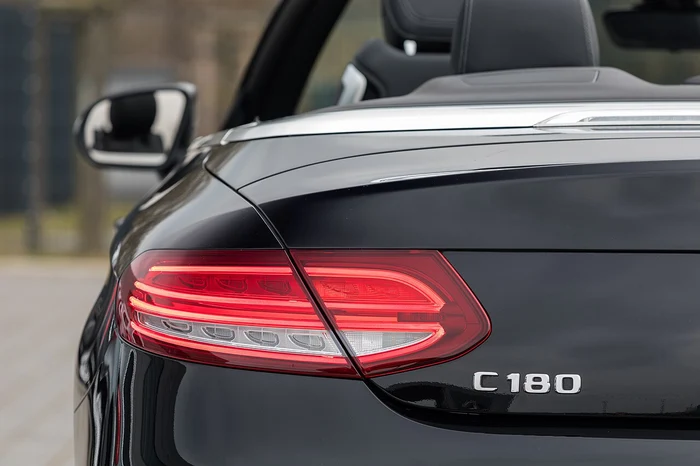
Image source: Wikimedia Commons
The distinction matters because it changes what each system is actually for. A mild hybrid exists to make a combustion engine slightly cleaner and slightly more responsive. A plug-in hybrid exists to let a combustion-engined car behave like an electric one for a meaningful portion of its life.
How the Two Systems Compare
| Mercedes EQ Boost / Mild Hybrid | Volvo T6 / T8 Plug-In Hybrid | |
|---|---|---|
| Electrical architecture | 48-volt | High-voltage (typically 300–400V) |
| Battery capacity | Roughly 0.9–1.0 kWh | Roughly 11–19 kWh depending on generation |
| Electric-only range | None — assist only | Approximately 25–45 miles (WLTP) |
| Charging | Not required; charges via regenerative braking and the engine | Required to realise the benefit; home or public charger |
| Primary role | Refinement, throttle response, stop-start smoothness, minor efficiency gain | Genuine daily electric commuting with combustion back-up |
| Added weight | Roughly 20–25 kg | Often 250–350 kg over the equivalent non-hybrid model |
| Where it typically sits | Standard or near-standard across most engine families | A premium, higher-priced variant within a model line |
| Fuel-saving in real use | Modest, consistent, independent of driver habits | Large if charged regularly; can vanish entirely if the driver never plugs in |
That last row is the sentence that ought to be highlighted in any honest discussion of plug-in hybrids: their efficiency figures are conditional. A T8 driven like a diesel and never connected to a charger will, in reality, haul around several hundred kilograms of unused battery and motor for no benefit whatsoever — sometimes returning worse real-world economy than the equivalent mild-hybrid petrol car.
A mild hybrid, by contrast, delivers its (smaller) benefit automatically, with zero behavioural input from the owner. This asymmetry is central to understanding why the two brands have made such different bets.
Why Mercedes Leans on 48 Volts
Mercedes builds an enormous number of cars across an enormous number of body styles, engine sizes, and price points — from a four-cylinder C-Class to a V8 S-Class and everything in between. EQ Boost was engineered to be dropped into nearly all of them without radically altering packaging, cost structure, or the fundamental character of the car.
It is cheap relative to a full plug-in system, adds negligible weight, and requires nothing of the customer. A buyer in a country with patchy charging infrastructure, or a company-car driver who parks on the street, gets exactly the same benefit as someone with a driveway and a wallbox.
That universality is the entire point.
This is also why Mercedes has historically reserved its plug-in hybrids — badged under the EQ Power name, now increasingly folded into the newer Mercedes Modular Architecture alongside the brand’s battery-electric models — for specific segments where the trade-offs make sense: larger saloons and SUVs where the extra weight and cost are proportionally smaller, and where company-car tax incentives in markets such as Germany and the UK have historically rewarded low official CO2 figures.
The E-Class, S-Class, GLC and GLE all offer plug-in variants with meaningfully larger batteries than earlier generations — the newest units carry over 25 kWh of usable capacity, enough for more than 60 miles of electric range under WLTP testing, which starts to blur the line between "hybrid" and "part-time EV." But these remain a layer on top of a mild-hybrid-equipped base range, not a replacement for it.
Why Volvo Leans on the Plug
Volvo’s calculation has been shaped by a narrower, more premium-focused product range and by a corporate strategy that, since 2021, has been explicitly built around a transition to electric power. With fewer nameplates to cover, Volvo could afford to make the plug-in hybrid — first as the T8 Twin Engine, badged more recently simply as T8 — a flagship offering across nearly every model in the lineup, from the S60 saloon up to the XC90 SUV.
The strategic logic was straightforward: a plug-in hybrid lets a customer who is not yet ready to buy a fully electric car experience electric driving daily, charge at home the way an EV owner would, and become comfortable with the habits and infrastructure that full electrification eventually demands. It also, not incidentally, produced flagship power figures — the range-topping T8 badge has delivered as much as 455 horsepower in the current XC60 and XC90 — that gave Volvo’s plug-ins genuine performance credibility rather than positioning them purely as an economy choice.
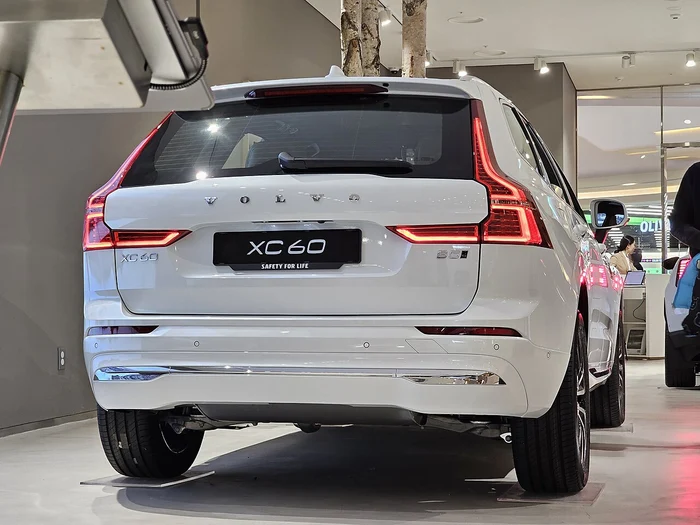
Image source: Wikimedia Commons
Volvo did not abandon mild hybridisation altogether. Its B4, B5 and B6 badges, introduced from 2022 onward, use the same 48-volt logic as Mercedes’ EQ Boost — a small integrated motor assisting a turbocharged four-cylinder engine — and now form the volume backbone of the lineup beneath the plug-in models.
But where Mercedes treats mild hybrid as the default and plug-in as the exception, Volvo has effectively inverted the hierarchy: the plug-in hybrid sits at the top as the aspirational, flagship powertrain in nearly every model line it still builds with a combustion engine.
Reading the Bet
Neither approach is objectively superior; each answers a different question. Mercedes’ mild-hybrid-first strategy is a bet on breadth — on making a fleet of several million cars a year marginally more efficient with minimal disruption to cost, weight, or customer behaviour.
Volvo’s plug-in-first strategy was a bet on depth — on using a smaller number of nameplates to push customers meaningfully closer to an electric ownership experience, accepting the added weight, complexity, and price in exchange for genuine electric-only capability and a clear narrative about where the brand is headed.
Both companies, notably, have recently pulled back slightly from their more ambitious framing. Mercedes has softened its earlier target of fully electric sales by 2030 in markets where conditions allow, and continues investing in combustion-adjacent technology including its next-generation mild-hybrid systems.
Volvo, in September 2024, formally abandoned its pledge to sell only fully electric cars by 2030, replacing it with a target of 90 to 100 percent "electrified" sales — a category that explicitly includes plug-in hybrids and, in small numbers, mild hybrids — citing slower charging infrastructure rollout, the withdrawal of purchase incentives in several markets, and new tariff pressures on EVs.
That single policy reversal says a great deal about how each of these hybrid strategies is likely to be viewed in hindsight: not as a temporary stepping stone that both brands were counting the days to discard, but as a genuinely durable part of how premium carmakers intend to sell cars for years yet, regardless of how quickly the fully electric transition ultimately arrives.
For a buyer trying to choose between the two philosophies in a showroom, the practical test is simple. If there is no reliable way to charge a car overnight, a plug-in hybrid’s headline efficiency figures are largely theoretical, and a mild hybrid’s smaller, unconditional gains will likely serve better in daily use.
If home or workplace charging is available and most journeys are short, a plug-in hybrid can genuinely operate as an electric car most of the time, with the combustion engine there purely as insurance for longer trips. The badge on the boot lid says "hybrid" either way.
What is happening underneath it is a much more interesting story than that single word lets on.
Leave a Reply
You must be logged in to post a comment.