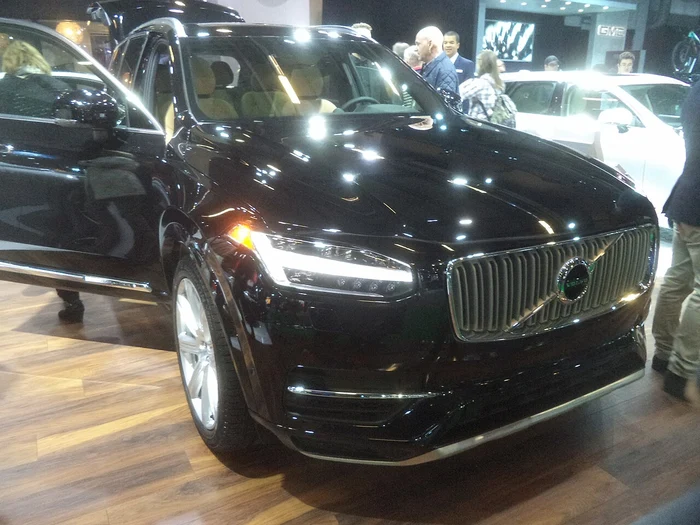
There is a particular kind of engineering decision that only makes sense when you know where a company thinks it is going. Volvo’s plug-in hybrid programme is one of those decisions.
Looked at purely as a way to reduce fuel consumption, a large lithium-ion battery and an electric motor bolted to a turbocharged four-cylinder engine is a fairly conventional, well-understood piece of automotive engineering — Toyota, BMW, and half the industry have built some version of it. Looked at as a piece of corporate strategy, it becomes something more specific: a deliberate, decade-long training exercise, run in public, designed to walk an entire customer base from combustion ownership toward electric ownership without anyone quite noticing the transition happening.
Image source: Wikimedia Commons
A Diesel Start, Not a Petrol One
It is easy to forget, given how thoroughly plug-in hybrids are now associated with petrol engines and big horsepower numbers, that Volvo’s first production plug-in hybrid was a diesel. The V60 Plug-in Hybrid, launched for the 2012 model year, combined a 2.4-litre five-cylinder diesel engine driving the front wheels with an electric motor driving the rear axle — an arrangement that gave the car all-wheel drive without a mechanical connection between the two axles, a trick Volvo would carry forward into every plug-in hybrid it built afterward.
Volvo marketed the car, not without justification, as the world’s first diesel plug-in hybrid to reach production. It offered around 31 miles of electric range by the measurement standards of the time and could return exceptionally low official fuel consumption figures, though the diesel-electric combination proved a relatively short-lived architecture as Volvo’s engine strategy shifted decisively toward petrol over the following years.
The Drive-E Generation and the Birth of T8
The turning point came with the Drive-E engine family, Volvo’s move away from five- and six-cylinder engines toward a single, highly modular 2.0-litre four-cylinder unit that would eventually power almost everything the brand built. Combined with a supercharger and a turbocharger working in sequence — the supercharger providing low-end response, the turbocharger taking over as revs climbed — this engine became the combustion half of what Volvo badged the T8 Twin Engine, introduced first on the second-generation XC90 in 2014 and 2015.
An electric motor, initially producing around 60kW, drove the rear wheels independently, and a battery pack of roughly 9 to 10kWh usable capacity sat in the car’s central tunnel, low and central for a favourable effect on the car’s centre of gravity.
The numbers at launch were striking for a family SUV: a combined system output in the region of 400 horsepower, official CO2 figures low enough to qualify for substantial tax advantages in several European markets, and an electric-only range sufficient for most commuting trips.
Crucially, Volvo did not position the T8 as a niche, price-no-object flagship in the way some rivals treated their own plug-in variants. It rolled the T8 badge out across the S60 saloon, V60 estate, S90 saloon, V90 estate, and XC60 SUV in fairly short order, making plug-in hybrid power a mainstream ordering choice rather than a specialist one.
What Changed Under the Skin
The T8 badge has covered several distinct generations of hardware since 2014, and the differences between them tell their own story about how seriously Volvo took the technology as a long-term proposition rather than a one-off engineering exercise.
Image source: Wikimedia Commons
- First generation (2014–2019): Roughly 9.2kWh battery, combined output around 400 horsepower, electric range in the region of 17 miles under the older NEDC test cycle.
- Second generation (2019–2022): Battery capacity grew to approximately 11.6kWh, electric motor output increased, and combined system power rose in stages toward 415 horsepower, with electric range improving under the newer WLTP standard to roughly 21 miles.
- Third generation (2022 onward): A substantially larger battery — close to 18.8kWh usable capacity in the current XC60 and XC90 — pushed electric-only range past the 35-mile mark and, in the case of the range-topping variants, combined output reached 455 horsepower, figures that put the T8 comfortably ahead of the performance offered by Volvo’s old turbocharged and supercharged T6 petrol engines from a decade earlier.
That progression is worth pausing on, because it runs in the opposite direction from what sceptics of plug-in hybrid technology often predict. Rather than treating the plug-in hybrid as a stopgap to be quietly run down as battery-electric models matured, Volvo kept investing in bigger batteries, stronger electric motors, and more sophisticated energy management for the T8 platform for close to a decade.
Each generation moved the car closer, in daily use, to behaving like an electric vehicle with a combustion engine held in reserve, rather than a combustion vehicle with an electric motor bolted on for a tax break.
The Naming Story Is the Strategy Story
Volvo’s badging of these cars has changed more than once, and each change reflects a shift in how the company wanted the technology understood.
For much of the 2010s, plug-in hybrids wore the Twin Engine name — a literal, mechanical description emphasising that two separate power sources drove the car. Around 2019, Volvo folded its plug-in hybrids into a new umbrella brand, Recharge, alongside its emerging battery-electric models.
This was a deliberate blurring of lines: a customer browsing a Volvo showroom or configurator under the Recharge badge would see plug-in hybrids and full electric vehicles presented as points on a single spectrum rather than as fundamentally different technologies, nudging the psychological association of "Recharge" toward electrification generally rather than toward any one drivetrain specifically.
By 2024, with battery-electric models such as the EX30 and EX90 established enough to carry their own identity, Volvo reversed course again, dropping the Recharge name from its plug-in hybrids entirely. Today, those cars are simply identified by their T6 or T8 suffix, denoting power output, while mild-hybrid models carry B-series badges (B4, B5, B6) and fully electric models carry their own EX and EC nameplates.
The company’s own explanation was that the earlier approach had begun to confuse rather than clarify the distinction between electrified and fully electric ownership — an acknowledgment, in effect, that the bridging strategy had done its job and no longer needed the marketing scaffolding that built it.
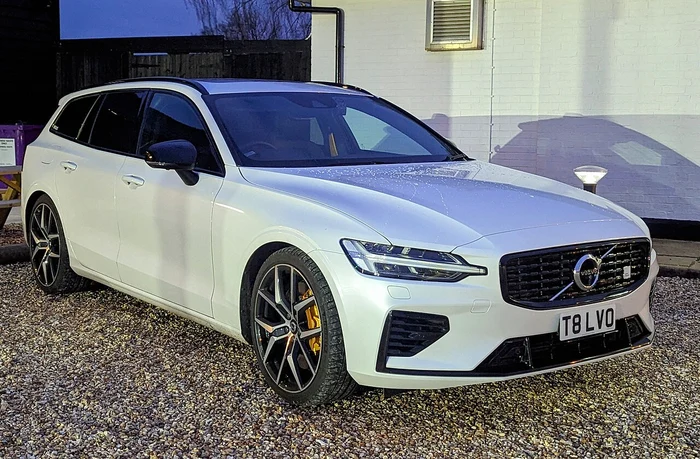
Image source: Wikimedia Commons
The Bridge, Reassessed
Volvo’s plug-in hybrid strategy was always explicitly framed as transitional. In 2021, the company set out an ambition to become a fully electric brand by 2030, phasing out combustion engines — plug-in hybrids included — entirely by the end of the decade.
That target did not survive contact with the market. In September 2024, Volvo formally revised its electrification goals, citing a slower-than-expected build-out of public charging infrastructure, the withdrawal of purchase incentives in a number of markets, and new uncertainty introduced by tariffs on electric vehicles in several regions.
The revised target calls for 90 to 100 percent of global sales to be "electrified" — a category that now explicitly folds in plug-in hybrids alongside battery-electric models — by 2030, with a small allowance, up to 10 percent, for continued mild-hybrid sales where needed. Volvo’s chief executive at the time, addressing the change, described the company as remaining committed to an electric future while acknowledging that the pace of that shift would vary considerably by market and could not be dictated purely by a fixed calendar date.
That reversal has, if anything, strengthened the case for treating the plug-in hybrid programme as more than a temporary measure. Rather than being wound down as a stepping stone Volvo was eager to discard, the T8 and T6 badges have instead become the mechanism by which the company intends to keep the bulk of its combustion-adjacent sales moving in an electrified direction for years beyond the original 2030 deadline.
The revised XC90, unveiled after the 2021 all-electric pledge had already been softened, continues to offer a T8 plug-in hybrid variant as a headline option rather than a legacy holdover, a clear signal that Volvo does not consider the technology obsolete simply because its original expiry date has passed.
What the Bridge Actually Teaches
The genuinely useful function of a well-executed plug-in hybrid programme is behavioural, not just mechanical. A driver who buys a T8 XC60 and plugs it in each evening learns, gradually and without any particular effort, the rhythms that full electric ownership demands: overnight charging rather than forecourt refuelling, range planning for longer trips, and the quiet satisfaction of a car that starts every morning with a full charge rather than however much fuel happened to be left in the tank.
None of that requires the driver to make a single leap of faith into an unfamiliar technology. The combustion engine remains present the entire time, ready to take over the moment the battery runs low or a long motorway journey demands it.
Whether that gradual habituation actually converts plug-in hybrid owners into battery-electric buyers at their next purchase is a harder question to answer with confidence, and Volvo’s own sales data suggests the relationship is not automatic — the company has, at points, seen plug-in hybrid demand rise even as fully electric sales in certain markets, including the United States, have fallen sharply.
What the T8 programme has demonstrated with more certainty is that plug-in hybrid technology, treated as a serious long-term engineering project rather than a compliance afterthought, can deliver genuine daily-use electric driving today, on infrastructure that already exists, at a price and with a range anxiety profile that a great many buyers are still more comfortable with than a fully electric alternative.
Ten years after the first Twin Engine XC90 rolled off the line, that remains the most honest description of what the bridge was built to do.
Leave a Reply
You must be logged in to post a comment.