Mercedes-Benz did not arrive at electrification through a single breakthrough model or a defining press conference. Its hybrid programme grew the way most genuinely durable engineering programmes do — in fits and starts, through several architectures that were tried, refined, occasionally abandoned, and eventually consolidated into the two systems that now define the bulk of the lineup: the 48-volt mild-hybrid technology once badged EQ Boost, and the plug-in hybrid systems marketed under EQ Power.
Getting from one end of that story to the other took the better part of two decades and passed through some genuinely unusual engineering along the way, including a period when Mercedes was arguably more committed to diesel hybrids than any other premium manufacturer in the world.
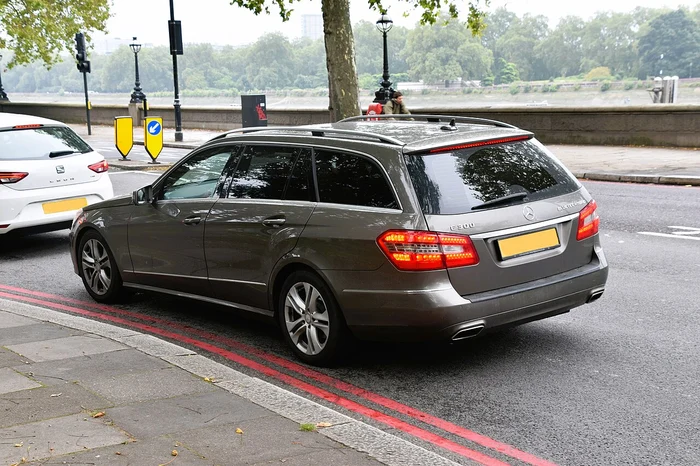
Image source: Wikimedia Commons
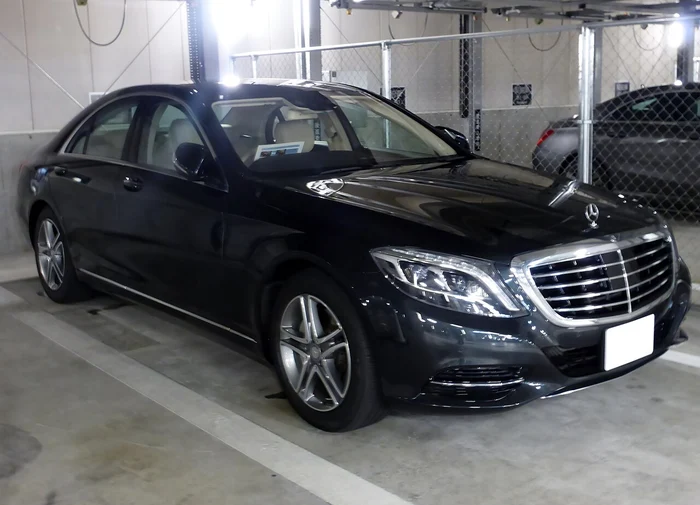
The First Attempt: A Lithium-Ion Battery in a 2009 S-Class
The S 400 Hybrid, launched in 2009 on the W221-generation S-Class, deserves more credit in this story than it usually receives. It was, at the time, the first production car in the world to use a lithium-ion battery — a technology now so ubiquitous in hybrid and electric vehicles that it is easy to forget how unproven it was in an automotive context at the end of the 2000s, when nickel-metal-hydride batteries were still the industry default.
The system itself was modest by later standards. A 20-horsepower electric motor was integrated directly into the housing of the seven-speed automatic transmission, drawing power from a small battery pack mounted in the engine bay, and paired with a naturally aspirated 3.5-litre V6.
This was, in effect, a mild hybrid before the term had entered common industry usage — the electric motor could not drive the car on its own, but it could assist under acceleration, recover energy under braking, and permit brief periods of engine-off coasting. Mercedes marketed it primarily on efficiency grounds, and the S 400 Hybrid did post genuinely competitive fuel consumption figures for a full-size luxury saloon of its era.
Its real significance, though, was as a proof of concept: it demonstrated that lithium-ion chemistry could be packaged safely and reliably in a production vehicle, a lesson the entire industry would eventually apply far more broadly.
The Diesel Hybrid Detour
What followed is a chapter of Mercedes’ history that has aged in an interesting way. Through the early 2010s, with diesel still commercially dominant across Europe and carrying a reputation — not yet dismantled by the emissions scandals that would engulf the wider industry later in the decade — for genuine long-distance efficiency, Mercedes bet heavily on combining diesel combustion with hybrid assistance rather than pursuing petrol hybrids as its primary efficiency play.
The E 300 BlueTEC Hybrid, introduced on the facelifted W212 E-Class around 2012 and 2013, paired a 2.1-litre four-cylinder diesel engine with a 27-horsepower electric motor and a seven-speed automatic transmission, and was capable of official combined fuel consumption figures under 4.2 litres per 100 kilometres — extraordinary numbers for a car of the E-Class’s size and weight, achieved without any plug-in capability at all.
A similarly configured S 300 BlueTEC Hybrid followed on the W222-generation S-Class. These cars represented, in a sense, the high-water mark of Mercedes’ belief that combustion efficiency, rather than electric range, was the more scalable route to lower emissions across a broad and heavy lineup of vehicles.
Image source: Wikimedia Commons
The diesel-hybrid combination never expanded much beyond these two applications, and the reasons were as much about market sentiment as engineering. Diesel’s reputation eroded sharply following the wider industry’s regulatory and emissions controversies later in the decade, and European emissions testing cycles began shifting in a direction that rewarded electric-only range far more heavily than incremental combustion efficiency.
Mercedes did not abandon diesel engineering, which remains a significant part of its lineup in several markets today, but it stopped treating diesel-electric hybridisation as its flagship efficiency technology.
The Pivot to Plug-In Power
The S-Class again served as the testbed for the next major step. The S 500 Plug-in Hybrid, introduced in 2014 on the W222-generation car, was Mercedes’ first series-production plug-in hybrid — a 3.0-litre twin-turbo V6 paired with a substantially more powerful electric motor and a battery large enough to charge from an external source, delivering a combined output in the region of 436 horsepower along with a genuine, if modest by later standards, electric-only range.
Over the following several years, plug-in hybrid variants spread methodically across the range: the C 350 e, E 350 e, GLC 350 e, and GLE 500 e all arrived carrying broadly similar architecture — a turbocharged petrol engine paired with an electric motor integrated into the transmission housing, rather than Volvo’s approach of a separate motor driving a different axle.
Around 2017, Mercedes consolidated its electrified sub-brands under the EQ name, with plug-in hybrids specifically marketed as EQ Power and, later, the mild-hybrid system formalised as EQ Boost — a rebrand that aligned the entire hybrid and, eventually, fully electric lineup under a single, more legible naming convention for customers navigating an increasingly complex list of powertrain choices.
EQ Boost: Turning Mild Hybridisation Into the Default
While plug-in hybrids captured the more dramatic performance and range headlines, the technology that ended up touching by far the largest number of Mercedes customers arrived quietly. EQ Boost rolled out from around 2017 onward, beginning with the inline-six engines in the S-Class.
It uses a 48-volt architecture built around an integrated starter-generator. In practical terms that unit combines:
- Starter motor duties
- Alternator duties
- A modest electric motor for torque fill and recovery
It mounts between the engine block and the transmission and draws on a small lithium-ion battery, typically under 1 kWh, usually at the rear of the car.

Image source: Wikimedia Commons
The ambition behind EQ Boost was different from anything that had come before it in Mercedes’ hybrid programme: rather than being reserved for a flagship model or a specialist variant, it was engineered to be rolled out as close to universally as possible, across four-, six-, and eight-cylinder engines, in saloons, SUVs, and everything between. By the middle of the 2020s, EQ Boost — now increasingly referred to in Mercedes’ own materials simply as "Mild Hybrid," part of a broader retreat from the EQ naming scheme as the company recalibrated its electrification messaging — had become the standard rather than the exception across most of the combustion lineup, from the four-cylinder C-Class to V8-powered S-Class and GLE models.
A Rough Guide to the Milestones
| Era | Model | Technology | Notable detail |
|---|---|---|---|
| 2009 | S 400 Hybrid (W221) | Mild hybrid, V6 petrol | First production car with a lithium-ion battery |
| 2012–2013 | E 300 BlueTEC Hybrid (W212) | Mild hybrid, four-cylinder diesel | Combined fuel consumption under 4.2 l/100km |
| 2013–2014 | S 300 BlueTEC Hybrid (W222) | Mild hybrid, four-cylinder diesel | Diesel-hybrid flagship strategy extended to the S-Class |
| 2014 | S 500 Plug-in Hybrid (W222) | Plug-in hybrid, V6 petrol | Mercedes’ first series-production plug-in hybrid |
| 2015–2019 | C 350 e, E 350 e, GLC 350 e, GLE 500 e | Plug-in hybrid, four- and six-cylinder petrol | Plug-in hybrid technology spread across the mainstream lineup |
| 2017 onward | Various inline-6 and V8 models | 48-volt mild hybrid, badged EQ Boost | Integrated starter-generator becomes near-standard equipment |
| 2022 onward | S 580 e, C 300 e, E 300 e and successors | Plug-in hybrid, EQ Power, larger battery packs | Usable battery capacity exceeds 25kWh, electric range over 60 miles WLTP |
| 2025–2026 | CLA with EQ Technology and successors | Shared MMA architecture across EV and hybrid variants | Battery-electric and hybrid models built on a common platform for the first time |
Where the Two Threads Converge
The most recent development in Mercedes’ hybrid story is architectural rather than purely mechanical. The Mercedes Modular Architecture, underpinning the newest generation of compact cars beginning with the CLA, was designed from the outset to accommodate both fully electric and hybrid powertrains on a shared production line — a marked departure from the earlier era, when electric and combustion models were engineered on largely separate platforms with limited component sharing.
That shared architecture reflects a lesson Mercedes appears to have absorbed from the plug-in hybrid programme specifically: the components that make a good plug-in hybrid — a substantial battery pack, a powerful electric motor, sophisticated energy management software — are, with relatively modest adaptation, largely the same components that make a good electric vehicle.
Where the S 400 Hybrid of 2009 treated its electric motor as a minor assistant to a combustion engine that remained firmly the star of the show, the plug-in hybrids now emerging from Mercedes’ newest platforms increasingly treat the combustion engine as the supporting act, brought in mainly to extend range and cover circumstances where charging infrastructure remains inconvenient.
Mercedes’ current lineup consequently reflects two hybrid philosophies operating side by side rather than one replacing the other. EQ Boost’s near-universal mild hybridisation continues to deliver modest, unconditional efficiency gains across the overwhelming majority of the range, largely invisible to the customer and requiring nothing of them beyond ordinary driving.
EQ Power’s plug-in systems, now built with batteries several times larger than the S 500 Plug-in Hybrid carried in 2014, deliver something closer to genuine electric ownership for customers with access to regular charging, concentrated in the segments — larger saloons, SUVs, and increasingly the newest compact models — where the cost and packaging trade-offs make the most sense. Both technologies trace directly back to that 2009 S-Class and its unassuming lithium-ion battery, and both, in their own way, are still answering the same question that car set out to address: how much electric assistance can a combustion-engined Mercedes carry before it stops being a combustion car with help, and starts being something else entirely.
Leave a Reply
You must be logged in to post a comment.