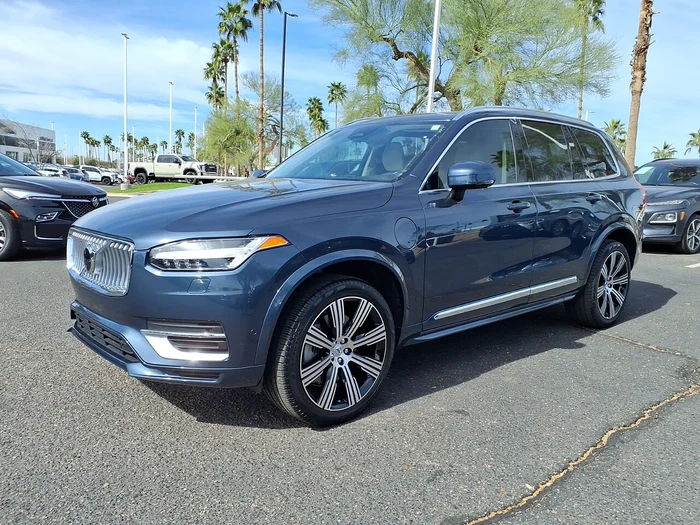
There is a version of Volvo’s plug-in hybrid story that the company itself has told consistently for the better part of a decade: the T8 as a bridge, a temporary and deliberately transitional technology built to carry customers from combustion ownership to full electrification, destined to be quietly retired once that job was done. It is a tidy narrative, and it is not entirely untrue.
But look closely at the actual behaviour of the programme — where the investment went, how the marketing evolved, and especially what happened when Volvo’s original electrification timeline collided with reality in 2024 — and a more complicated picture emerges. The T8 was never simply a bridge waiting to be dismantled.
In several important respects, it became a destination in its own right, one Volvo has shown little genuine appetite to leave.
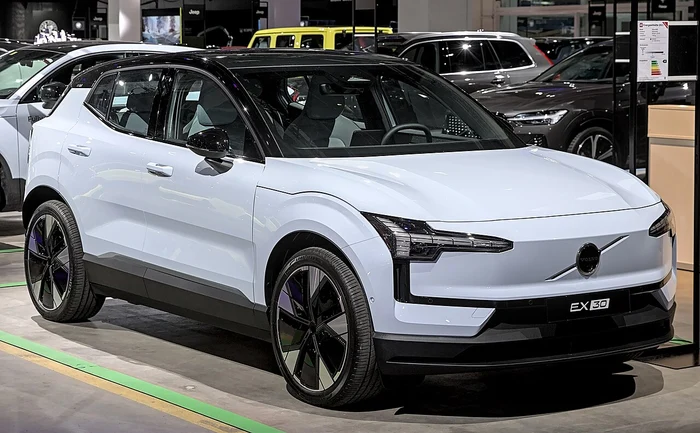
Image source: Wikimedia Commons
The Promise, As It Was Originally Made
In March 2021, Volvo’s then chief executive set out one of the more aggressive electrification pledges in the premium car industry: the entire lineup fully electric by 2030, with combustion engines — and by clear implication, plug-in hybrids — phased out entirely well before the end of the decade. Plug-in hybrid technology was framed explicitly as an interim step, useful precisely because it would not be needed for very long.
The T8 badge, in this telling, existed to smooth a transition that was expected to be largely complete within roughly nine years of the announcement.
That framing shaped how the technology was discussed across the industry for several years afterward. Analysts, journalists, and Volvo’s own marketing treated the plug-in hybrid as a known-quantity stopgap — useful, competent, but fundamentally provisional, its relevance tied to a fixed and fast-approaching expiry date.
What Actually Happened to the Investment
If the T8 were genuinely being treated as a technology on its way out, the engineering investment behind it should have tapered off as the 2030 deadline approached. It did not.
Between the 2019 mid-cycle update and the most recent generation introduced from 2022 onward, battery capacity in the T8 nearly doubled, from around 9.2 kWh to close to 18.8 kWh. Combined system output climbed from roughly 400 horsepower to as much as 455 on the range-topping variants.
Volvo introduced a Miller-cycle refinement to the combustion engine used in some T8 applications during this same period — a genuine efficiency improvement to the petrol side of a supposedly transitional powertrain, engineering effort that makes little sense to expend on a technology genuinely expected to disappear within a few years of its introduction.
This pattern is difficult to reconcile with the "temporary bridge" framing on its own terms. A company treating plug-in hybrid technology purely as an interim measure would more plausibly have frozen development at whatever state the hardware had reached by the early 2020s, redirecting engineering resources entirely toward battery-electric development instead.
Volvo did increase its battery-electric investment substantially over the same period — the EX30, EX40, and EX90 all launched or were substantially developed during this window — but it did so alongside continued, meaningful investment in the T8, not at its expense.
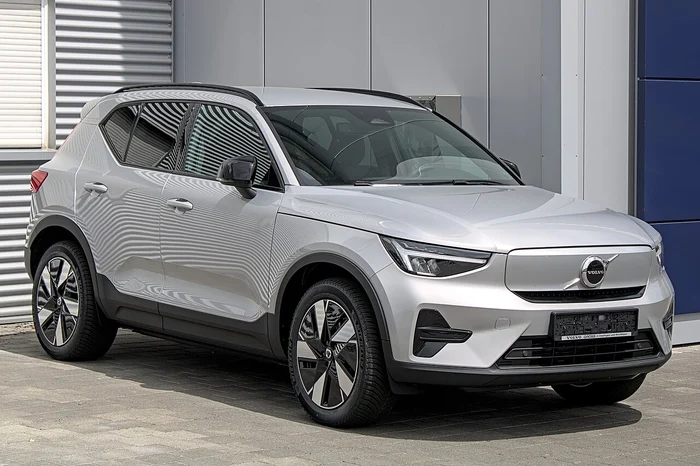
Image source: Wikimedia Commons
The 2024 Reversal, Read Carefully
The clearest evidence against the pure bridge narrative arrived in September 2024, when Volvo formally abandoned its 2030 all-electric sales pledge. The company’s own explanation cited a slower-than-anticipated build-out of public charging infrastructure, the withdrawal of purchase incentives across several major markets, and new tariff pressures affecting electric vehicle sales in multiple regions.
The revised target called for 90 to 100 percent of global sales to be "electrified" by 2030 — explicitly redefined to include plug-in hybrids alongside battery-electric models, with an additional allowance of up to 10 percent for continued mild-hybrid sales.
Consider what that redefinition actually did. Rather than treating the missed 2030 deadline as a temporary setback to an otherwise unchanged battery-electric trajectory, Volvo restructured the entire target so that plug-in hybrid sales would count toward it indefinitely.
A technology that had been explicitly positioned in 2021 as something to be phased out by 2030 was, three years later, formally written into the replacement target as an acceptable long-term outcome rather than a stopgap awaiting its scheduled retirement. Volvo’s leadership, in public comments made at the time of the announcement, described the company as remaining committed to an electric future in principle while acknowledging that market conditions and the pace of adoption would vary considerably and could not be forced to a fixed calendar.
The Efficiency Case Was Always Conditional
A more uncomfortable question sits underneath the strategic story: how much of the T8’s environmental case actually depends on driver behaviour that Volvo has limited ability to guarantee. Official efficiency and emissions figures for any plug-in hybrid assume a driver who charges regularly and covers a meaningful share of daily mileage on electric power alone.
Independent testing and real-world monitoring programmes across the wider plug-in hybrid category — not specific to Volvo alone — have repeatedly found that a meaningful proportion of plug-in hybrid owners charge infrequently, in some studies less than half as often as the official test cycle assumes, at which point the car spends most of its life hauling several hundred kilograms of unused battery and motor while running on its combustion engine, often with real-world fuel consumption worse than a comparable non-hybrid model of similar performance.
Volvo does not publish detailed, model-specific charging-frequency data publicly, which makes it difficult to state with precision how the T8’s real-world efficiency has compared with its official figures across its full ownership base. What can be said is that the gap between official and real-world performance is a structural feature of the plug-in hybrid category generally, not a flaw unique to any one manufacturer, and that a decade of continued engineering investment in larger batteries — the single change most directly correlated with higher real-world electric-driving share — suggests Volvo has been aware of and actively working against this weakness, rather than treating official test-cycle figures as sufficient justification on their own.
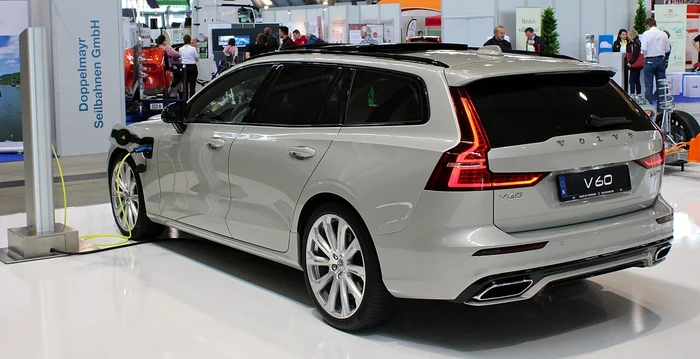
Image source: Wikimedia Commons
Performance Positioning: Bridge Technology or Brand Identity?
Perhaps the strongest evidence that the T8 outgrew its original "bridge" framing is where Volvo chose to place it within the lineup. A technology intended purely as a transitional stepping stone would typically be positioned as a value-oriented, efficiency-focused variant — the sensible, slightly worthy choice for a customer easing toward electrification.
Volvo instead consistently positioned the T8 as its performance flagship, the most powerful engine option in nearly every model line it touched, and extended the platform into its Polestar Engineered performance sub-brand rather than confining it to an economy trim.
That positioning choice built genuine enthusiast credibility around plug-in hybrid ownership that a purely transitional technology would have had little reason to cultivate. It is difficult to imagine a company investing in that kind of brand-building — badges, performance halo models, motorsport-adjacent Polestar variants — around a powertrain it genuinely expected to discontinue within a decade of introducing it.
So What Was the T8 Actually For?
The fairest reading, weighing the engineering investment, the 2024 policy reversal, and the performance positioning together, is that Volvo’s plug-in hybrid programme began as a genuine bridge but was gradually, quietly repurposed into something closer to a permanent second pillar of the lineup, running alongside rather than beneath the company’s battery-electric ambitions. The "bridge" language persisted in Volvo’s public communications well past the point where the underlying strategy had clearly shifted, likely because it remained a useful and largely accurate way to describe the technology’s function for individual customers — even if it no longer accurately described the company’s institutional commitment to phasing it out on any fixed timeline.
None of this makes the T8 a failure or a case of corporate misdirection. A plug-in hybrid genuinely can function as a bridge for an individual driver, easing them toward electric habits over years of ownership, regardless of whether the manufacturer behind it ever intended to discontinue the technology on schedule.
But the distinction matters for anyone trying to understand where Volvo, and by extension a fair portion of the wider premium car industry, is actually headed. The T8 was sold as a technology built to make itself obsolete.
Ten years, three hardware generations, and one abandoned deadline later, obsolescence looks considerably further away than the original pitch suggested.
Leave a Reply
You must be logged in to post a comment.