General information & model overview
| Category | Specification Details |
|---|---|
| Model name | Mercedes-Benz Viano |
| Internal code | W639 (passenger MPV of the second-generation Vito family) |
| Production years | 2003 – 2014 (Europe; related commercial Vito production continued longer in some plants) |
| Body style | Multi-purpose vehicle / people carrier (passenger van); typically 6–8 seats depending on layout |
| Assembly | Primarily Vitoria-Gasteiz, Spain (Mercedes-Benz España); related production also in other alliance plants for commercial derivatives |
| Related models | Mercedes-Benz Vito (commercial); marketed as Valente in some Australian contexts; V-Class naming used in certain export markets |
| Layout | Front-engine, rear-wheel drive; four-wheel drive (4MATIC) available on selected later engines and markets |
| Key characteristics | Premium large MPV with three body lengths, two wheelbases, sliding side doors, modular seating, diesel- and petrol-powered range including V6 options |
| Predecessor / successor | Succeeded the first-generation V-Class (W638 family); replaced by the third-generation V-Class / Vito era from 2014 onward |
Body & dimensions
| Specification | Details |
|---|---|
| Wheelbases | 3,200 mm (126.0 in) standard / long family; 3,430 mm (135.0 in) extra-long |
| Overall length | Approx. 4,748 mm compact; approx. 4,990 mm long; approx. 5,223 mm extra-long |
| Overall width | Approx. 1,900–1,906 mm (excluding mirrors) |
| Overall height | Typically around 1,875–1,900+ mm depending on suspension, roof rails, and equipment |
| Turning circle | Approx. 11.8 m on 3,200 mm wheelbase versions; around 12.5 m on extra-long models |
| Seating | Configurable multi-row layouts; common 6-, 7-, or 8-seat arrangements with removable / sliding seats |
| Doors | Two front hinged doors, dual sliding side doors (passenger versions), rear hatch or barn-door style access depending on market and body |
| Luggage volume | Highly variable with seats in/out; extra-long variants can approach large-van cargo volumes when rearmost rows are removed |
| Fuel tank | Typically around 75 litres class (confirm on vehicle plate / handbook for exact market spec) |
Engine specifications (common variants)
| Engine family | Type | Approx. output range | Notes |
|---|---|---|---|
| 2.0 CDI / 2.2 CDI (OM646 era) | Inline-4 common-rail turbo diesel | From about 80 kW / 109 hp up through higher 2.2 CDI outputs around 110 kW / 150 hp at launch, with later power steps in facelift years | Core European workhorses for private and shuttle use; strong mid-range torque for a large MPV |
| 3.0 CDI V6 (later years) | V6 turbo diesel | Often quoted around 165 kW / 224 hp class with strong torque (market-dependent) | Flagship diesel refinement for long-distance and heavy occupancy use |
| 3.2 / 3.5 V6 petrol (M112 / related) | V6 petrol | Roughly 190–258 hp class depending on exact code and year | More common in some export markets; smoother at high rpm, thirstier than diesels |
Exact power, torque, and emissions figures vary by model year, gearbox, drive layout, and national homologation. Always treat handbook data for a specific vehicle as authoritative.
Drivetrain & transmission
| Category | Details |
|---|---|
| Drive layout | Rear-wheel drive as the defining architecture of the W639 passenger family (a major change of character versus some earlier front-drive Mercedes people-movers) |
| Four-wheel drive | 4MATIC available on selected engines and years for traction in wet, snow, or unsealed approaches |
| Manual gearbox | 6-speed manual offered on many four-cylinder diesels |
| Automatic gearbox | 5-speed TouchShift automatic widely used; later combinations and calibration updates improved urban drivability |
| Use case | Designed for loaded passenger work, airport transfers, family touring, and professional people-carrying rather than pure commercial panel-van duty (that role belonged to Vito) |
Chassis, suspension & brakes
| Component | Specification |
|---|---|
| Front suspension | Independent suspension tuned for comfort under multi-passenger loads |
| Rear suspension | Independent rear suspension on the passenger architecture — important for ride quality compared with crude leaf-spring people carriers of earlier decades |
| Steering | Power-assisted rack-and-pinion; heavier feel when empty than a saloon, more composed when occupied |
| Brakes | Four-wheel discs with ABS and electronic stability aids evolving through the production run |
| Wheels | Typically 16–18 inch packages depending on trim and options; larger alloys on Ambiente-oriented specifications |
Performance (approximate figures)
| Metric | Approximate data |
|---|---|
| 0–100 km/h (typical 2.2 CDI) | Often in the low-to-mid teens of seconds depending on load, gearbox, and exact power step |
| 0–100 km/h (stronger V6 diesels / petrols) | Can drop into single digits or low tens of seconds unladen — still a large, tall vehicle first |
| Top speed | Roughly 160–200+ km/h class depending on engine and market limiter strategy |
| Driving character | Stable motorway cruiser when properly loaded; noticeable frontal area and mass in crosswinds; best when seats are used as intended rather than driven empty like a sports estate |
Key timeline & model changes
| Year | Changes |
|---|---|
| 2003 | W639 Viano introduced as the passenger counterpart to the new Vito generation; rear-drive architecture and modern CDI diesels at the core of the European launch range |
| Mid-cycle updates | Equipment, emissions, and powertrain refinements through the second half of the 2000s; broader automatic and comfort packaging |
| Around 2010 | Major facelift: revised front and rear styling, updated cabin electronics and assistance, BlueEFFICIENCY-oriented diesel messaging in many markets, stronger emphasis on premium people-mover positioning |
| 2010–2014 | Late-run V6 diesel and high-equipment Ambiente / Edition packages dominate lifestyle and shuttle advertising |
| 2014 | Replacement by the next-generation V-Class / Vito family; W639 Viano exits European passenger line-up |
Trim levels explained
| Trim (typical) | Description |
|---|---|
| Trend | More practical base passenger specification: solid equipment, simpler cabin finishes, ideal for high-mileage private hire or large-family duty without full luxury pricing |
| Ambiente | Core premium trim: richer materials, more comfort options, stronger visual presentation for private owners and executive shuttle use |
| Ambiente long / Extralong body styles | Not separate “brands,” but length packages that change rear legroom, luggage space, and turning circle — choose by passenger mission, not just badge |
| Special / Edition packages | Market-specific packs adding alloys, leather or upgraded cloth, parking aids, and styling details; late facelift editions often feel closest to a true luxury people-mover |
Safety highlights
| Category | Details |
|---|---|
| Structure | Modern mid-2000s large MPV structure with multi-seat crash considerations; high seating position aids visibility |
| Restraint systems | Multi-airbag packages evolving by year; ISOFIX on rear positions depending on seat configuration |
| Electronic aids | ABS standard; ESP and later assistance (parking sensors, cameras, adaptive features on higher packs) expanded through the facelift era |
| Practical safety | Sliding doors reduce door-swing risk in tight car parks; tall glasshouse helps urban observation if pillars and mirrors are set carefully |
The Mercedes-Benz Viano (W639): passenger counterpart to the second-generation Vito
The Mercedes-Benz Viano is the passenger face of the W639 generation: a large multi-purpose vehicle designed to carry families, executives, and shuttle passengers with more comfort equipment than a panel van and more flexibility than a conventional estate. Produced from 2003 into 2014, it sits between the earlier V-Class of the W638 era and the later V-Class that reclaimed the name after 2014. Primary assembly was at Vitoria-Gasteiz, Spain.
Typical buyer missions were airport runs, large-family logistics, and long motorway days with six or seven people and luggage. The Viano was not intended as a sporting vehicle. It was intended as a large, modular people-mover with dual sliding side doors, three body lengths, diesel-led powertrains in Europe, and a cabin presentation aimed at private owners and professional chauffeurs rather than pure fleet panel-van duty. That commercial role belonged to the related Vito.
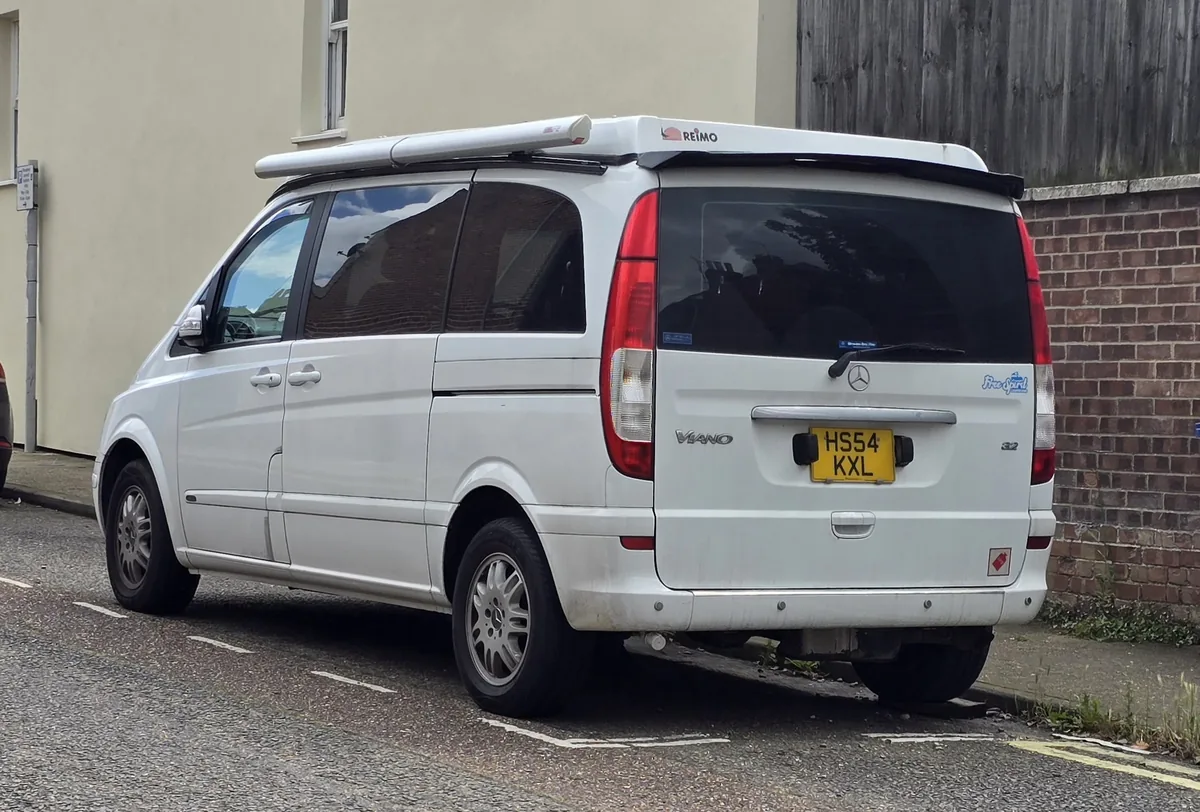
Image source: Wikimedia Commons
Why Mercedes separated Viano from Vito
Mercedes-Benz has long sold related large-van architecture in two product languages. The commercial language is Vito: hard-wearing, often panel-sided, specified for trades and fleet. The passenger language in this generation became Viano: glazed sides, comfort seats, richer flooring, and marketing aimed at private buyers and professional people-carriers. In some markets related passenger naming such as Valente appeared; certain export contexts also used V-Class language.
That split mattered. A family shopping for a large MPV did not want to feel they were buying only a van with windows. A hotel operator did not want a vehicle that looked purely industrial beside a luxury lobby. The Viano’s job was to bridge those worlds without pretending to be an S-Class on stilts.
Architecturally, the W639 generation reinforced rear-wheel drive as the defining layout for this large Mercedes people-mover. That choice improved towing composure and weight distribution when fully loaded, and it differentiated the Viano from many front-drive rivals that felt lighter at the nose but busier when seven adults and luggage were aboard. Four-wheel drive (4MATIC) later appeared on selected engines and markets for wet, snow, or unsealed approaches.
Three lengths, two wheelbases
Few private cars force such an early packaging decision. The Viano was offered in compact, long, and extra-long forms, with the longest versions riding a stretched 3,430 mm wheelbase versus about 3,200 mm on the standard/long family. Approximate overall lengths were about 4,748 mm, 4,990 mm, and 5,223 mm. In practice:
- Compact is easiest in city multi-storeys and on tight European streets, still with genuine multi-row capacity.
- Long is the compromise many private and shuttle buyers choose: better luggage behind the third row without the full parking footprint of the extra-long body.
- Extra-long maximises rear passenger space and cargo with seats removed; it is a natural airport and hotel tool, but the turning circle grows (around 12.5 m versus about 11.8 m on the shorter wheelbase) and overhangs demand care.
Choosing length is more important than choosing alloy wheel size. An extra-long Ambiente that never fills its third row is still a very large vehicle to park every day.
Design and cabin philosophy
Exterior design is upright and purposeful rather than fashion-led. Early cars wear the cleaner mid-2000s Mercedes commercial-passenger face; the circa-2010 facelift brings a broader, more passenger-car grille and lamp treatment. Either way, the silhouette is pure people-mover: short bonnet relative to overall length, tall roof, and a long glazed cabin. Dual sliding side doors are standard on passenger versions; rear access is hatch or barn-door style depending on market and body.
Inside, the Viano’s strength is modularity. Seats can be slid, removed, or reconfigured depending on exact market hardware. Common layouts run to six, seven, or eight seats. Higher trims add leather or upgraded cloth, better climate control zoning, and more refined door cards. Lower Trend cars can feel more utilitarian — which is not a fault if the mission is high-mileage shuttle work.
Noise isolation improved across the generation, especially on later diesels and better-insulated facelift cars, but physics remains honest. A tall, flat-sided body generates wind noise at motorway speed, and cheap aftermarket tyres can make a refined cabin sound ordinary. Owners who keep quality rubber and full service history usually report a calmer long-distance experience than the silhouette alone suggests.
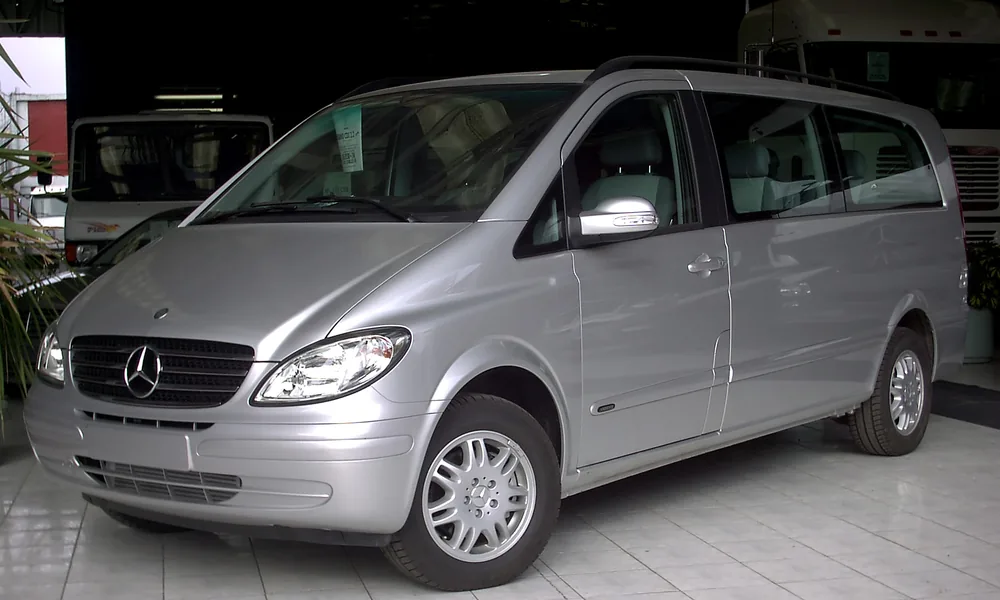
Image source: Wikimedia Commons
Engines: diesels for Europe, petrol V6 for some exports
European Vianos are diesel territory for good reason. A large frontal area and multi-passenger mass reward torque and economy. The four-cylinder CDI engines — especially the widely used 2.0/2.2-litre OM646-era family — defined daily reality for most buyers: adequate acceleration when not overloaded, strong mid-range pull for motorway on-ramps, and acceptable consumption if driven smoothly. Launch outputs for the 2.2 CDI band often sat around 80–110 kW depending on tune, with later power steps in facelift years.
Later V6 diesels, often quoted around 165 kW / 224 hp class depending on market, changed the character. They make the Viano feel more like a premium tool and less like a commercial derivative, particularly when fully loaded. The trade-off is fuel use and potentially higher service costs. Petrol V6 versions in the roughly 190–258 hp class (M112-related and similar) exist and can be smooth, especially if diesel refinement debates are unwelcome, but they are less common in many European used markets and usually cost more to feed.
Transmission choice is personal. Six-speed manuals keep complexity lower and can feel appropriate on lighter four-cylinder cars. Five-speed TouchShift automatics are the natural match for urban shuttle duty and stop-start city work. A well-maintained automatic that has seen regular fluid attention is a better buy than a neglected bargain with unknown service history. Fuel tanks typically sit around the 75-litre class; confirm handbook data for the specific vehicle.
On the road
Drive a Viano empty and you will notice the height, the wind area, and the need to place the nose carefully into corners. Drive it with passengers and luggage and the chassis starts to make sense: rear drive, independent suspension, and a long wheelbase that calms the ride. It will not handle like a C-Class estate. It will, however, cruise stably at legal motorway speeds and feel more planted than many front-drive MPVs when loaded toward the rear.
Typical 2.2 CDI acceleration to 100 km/h often sits in the low-to-mid teens of seconds depending on load, gearbox, and exact power step. Stronger V6 diesels and petrols can drop into single digits or low tens unladen — still for a large, tall vehicle first. Top speeds roughly span the 160–200+ km/h class depending on engine and market limiter strategy.
Visibility is generally good thanks to the tall seating position, though thick pillars and large mirrors still demand care in dense traffic. Parking sensors and later camera packs are worth seeking on used cars simply because the body is long and the rear corners are easy to misjudge. Steering is power-assisted rack-and-pinion: heavier when empty than a saloon, more composed when occupied. Brakes are four-wheel discs with ABS and electronic stability aids that evolved through the production run.
Market role and rivals
In its era the Viano competed with large MPVs and people-movers such as the Volkswagen Caravelle / Multivan family, various Renault Trafic / Opel Vivaro passenger variants, and later more car-like rivals as the market shifted toward SUVs. Mercedes’s advantage was brand perception and residual confidence among business buyers. Its challenge was price: many private families migrated to seven-seat SUVs that felt more fashionable even when they offered less flat-load practicality.
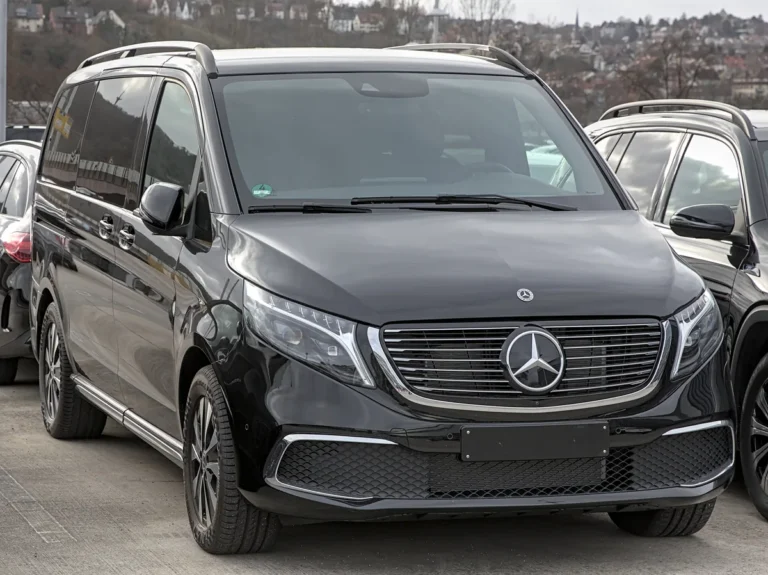
That market shift helps explain why the successor reclaimed the V-Class name and why the pure Viano badge now reads as a closed period of Mercedes product language. Related commercial Vito production continued longer in some plants; the passenger Viano exited the European line-up as the next-generation V-Class / Vito family arrived from 2014.
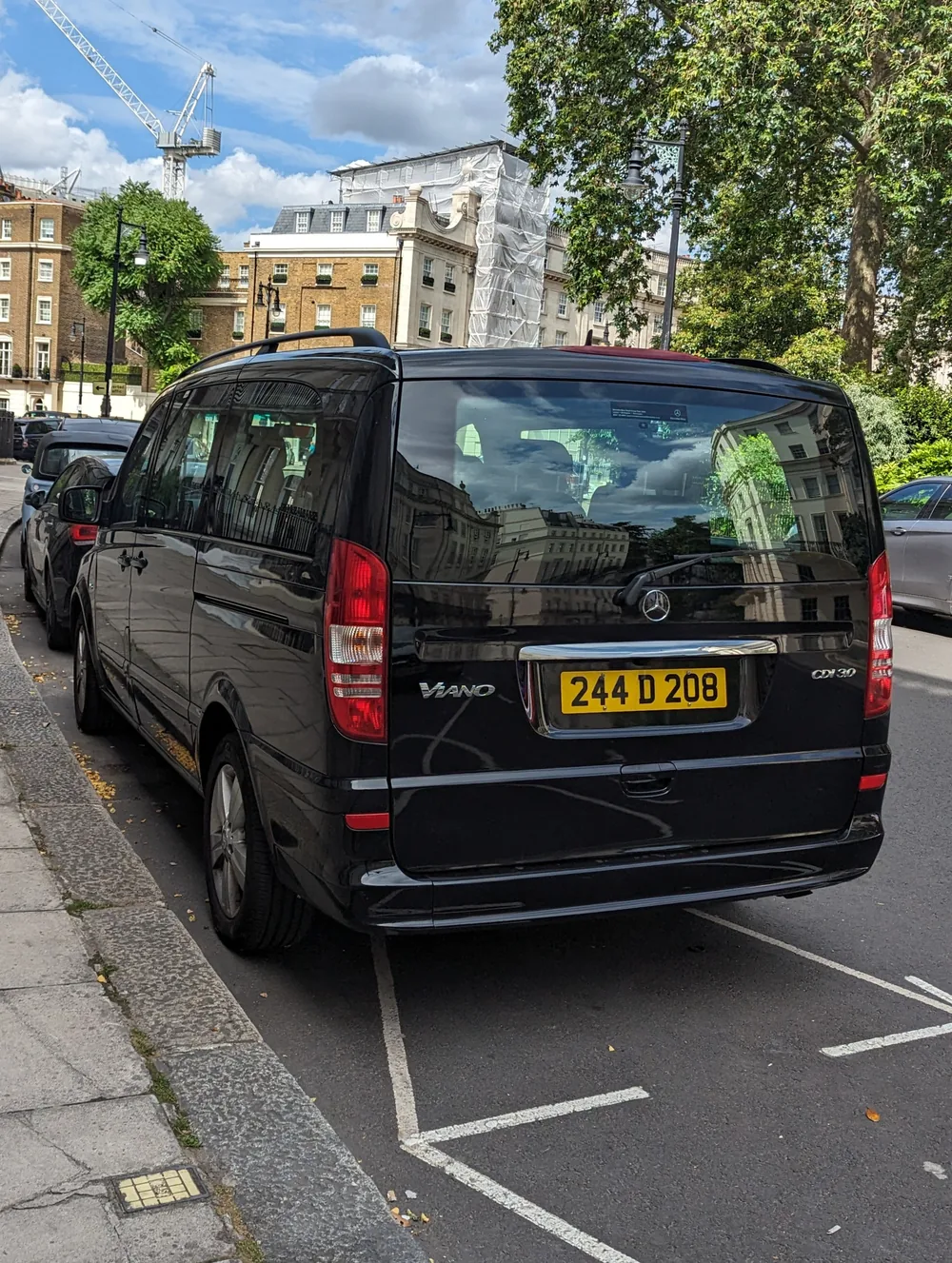
Image source: Wikimedia Commons
Trims and equipment eras
Trend was the more practical base passenger specification: solid equipment, simpler cabin finishes, suited to high-mileage private hire or large-family duty without full luxury pricing. Ambiente was the core premium trim: richer materials, more comfort options, stronger visual presentation for private owners and executive shuttle use. Length packages are not separate brands but mission choices that change rear legroom, luggage space, and turning circle. Special and Edition packages added alloys, leather or upgraded cloth, parking aids, and styling details; late facelift editions often feel closest to a true luxury people-mover.
Mid-cycle updates through the second half of the 2000s refined equipment, emissions, and powertrains. Around 2010 the major facelift revised front and rear styling, updated cabin electronics and assistance, and emphasised BlueEFFICIENCY-oriented diesel messaging in many markets. From 2010 to 2014, late-run V6 diesel and high-equipment Ambiente / Edition packages dominated lifestyle and shuttle advertising.
Ownership: strengths and things to watch
Strengths
- Space flexibility — genuine multi-row people-carrying with removable seating strategies.
- Long-distance composure — especially on later diesels and longer wheelbases when loaded correctly.
- Sliding doors — practical in car parks and for child loading.
- Brand and equipment — Ambiente and late facelift cars can feel premium without SUV fashion premiums.
- Professional usefulness — still credible for private hire, hotel transfer, and multi-drop family life.
Things to watch
- Service history — large diesels and automatics dislike neglect; verify oil changes, filters, and gearbox care.
- Sliding door mechanisms and rollers — listen and feel for roughness; repairs are not free.
- Rust and underbody — inspect sills, sliding-door tracks, and rear understructure, especially on high-mileage northern European cars.
- Seat rails and lock mechanisms — modular interiors suffer if previous owners forced seats or lost fittings.
- Electronics and parking aids — test every sensor, window, heater blower, and rear HVAC zone.
- Tyres and geometry — uneven wear on a long heavy vehicle signals alignment or bush issues.
- Accident history — people-movers often live hard commercial lives even in passenger form.
Who the Viano suits now
As a used buy, the Viano suits large families who still prefer a pure MPV to a high SUV, operators who need credible Mercedes presentation for client transfer, and owners who value flat load space when seats come out. It is less ideal if you want compact city parking every day, ultra-low fuel bills with a heavy right foot, or the softest modern ride of a recent luxury crossover.
Length choice should match real life. If you only occasionally carry six adults, a long body may beat extra-long for daily practicality. If the vehicle’s job is airport luggage and full occupancy, extra-long still has few elegant alternatives in the same badge family. Relative to the later V-Class (W447), a late facelift Viano can still offer similar mission capability at lower purchase prices, with older electronics and emissions hardware that must be assessed carefully for urban rules and service costs.
Practical buying checklist
A thorough road test should include every sliding door cycle, every seat latch, dual-carriageway merging under realistic load if possible, and a careful listen for driveline or suspension knocks over broken surfaces. Check for oil leaks, turbo whistle irregularities, glow-plug or DPF-related warning history where applicable to later diesels, and automatic gearbox behaviour when cold and hot. Inspect the load area floor and seat rail channels for corrosion and missing fasteners.
Running costs deserve honesty. Fuel for a large diesel MPV is still substantial in urban stop-start work even when long-run motorway figures look respectable. Tyres, brakes, and suspension bushes are regular high-mileage costs. Insurance groups vary by engine, value, and use class; a private family car and a high-mileage transfer vehicle are not underwritten the same way. None of this makes the Viano a poor purchase. It makes it a premium tool that should be costed like one.
Parts and specialist support remain stronger than for many low-volume Mercedes experiments because the Vito commercial network shares so much architecture. That is a practical advantage over shorter-lived products. Still, passenger-specific trim, seat modules, and sliding-door interior covers can take longer to source than pure commercial panels. Owners who keep a second set of known-good seat fittings and who maintain door track cleanliness avoid many common annoyances.
Legacy
The Viano’s legacy is practical rather than romantic. It proved Mercedes could sell a large rear-drive people-mover with genuine premium ambitions through a full product cycle. It also showed the limits of the MPV fashion curve as buyers shifted to SUVs. Today it remains a useful, distinctive choice on the used market: less common than mass-brand vans with windows, more specialised than a seven-seat soft-roader, and still very good at the job written into its proportions — carrying people, calmly, with a three-pointed star on the nose.
Judge each example on service evidence, body condition, correct length for your needs, and whether the engine-gearbox combination matches your mileage pattern. That is how the Viano earns its keep long after the badge itself left the new-car price lists. Related reading on Motor Wiki includes the successor V-Class (W447) and, for a compact contrast from the early 2000s, the Vaneo (W414).
Leave a Reply
You must be logged in to post a comment.