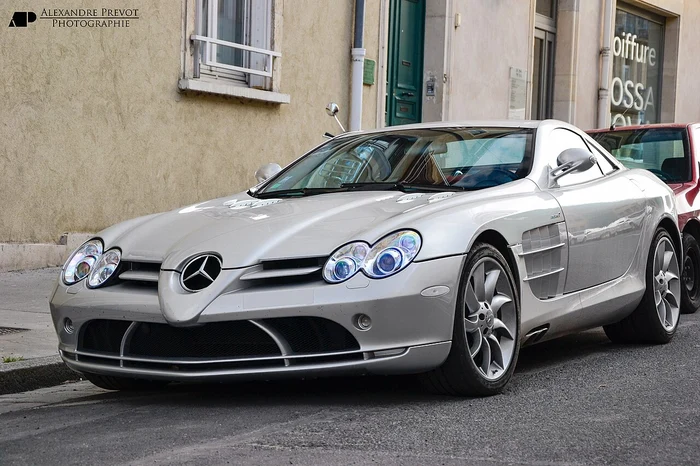
General information & model overview
| Category | Specification Details |
|---|---|
| Model name | 2003 Mercedes-Benz SLR McLaren (base coupé) |
| Internal code | C199 |
| Manufacturers | Mercedes-Benz (styling, brand, AMG engine); McLaren Technology Centre, Woking (engineering, CFRP structure, assembly, testing) |
| Production window | Series production from late 2003; family production through 2010 (about 2,157 cars of all SLR McLaren body styles combined) |
| Model years (typical markets) | Approximately 2004–2009 for the base closed car, overlapping limited editions and the later roadster |
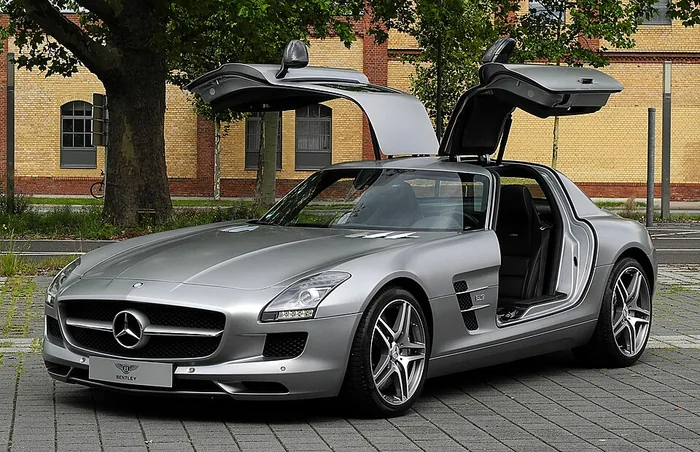
| Body style | Two-door, two-seat grand-touring coupé with butterfly doors |
| Layout | Front mid-engine, rear-wheel drive |
| Segment | High-performance grand tourer / sports car (S-segment GT class) |
| Spiritual inspiration | Mercedes-Benz 300 SLR and Silver Arrow racing heritage of the 1950s |
| Design leadership themes | Mercedes exterior design (Gordon Murray programme engineering role on the McLaren side; Gorden Wagener among period design figures associated with the project) |
| Related family entries | 722 Edition coupé; Roadster (R199); Stirling Moss (Z199); successor context SLS AMG |
Body & dimensions
| Specification | Details |
|---|---|
| Wheelbase | 2,700 mm (106.3 in) |
| Overall length | 4,656 mm (183.3 in) |
| Overall width | 1,909 mm (75.2 in) |
| Overall height | About 1,261 mm (49.6 in); later documentation sometimes lists ~1,252 mm for related years |
| Construction | Carbon-fibre reinforced plastic (CFRP) structure and body themes; extensive use of advanced composites for stiffness and crash energy management |
| Doors | Butterfly doors (upward-and-forward swing) |
| Curb weight (approximate) | Roughly 1,743–1,768 kg (3,843–3,898 lb) class for the closed base car depending on equipment and test standard |
| Exhaust routing | Side-exit exhausts ahead of the rear wheels (underbody and diffuser packaging leave no conventional rear tip path) |
| Seating | Two seats only |
Engine specifications
| Theme | Details |
|---|---|
| Engine family / code | M155 SLR — hand-built supercharged 90° V8 derived from AMG’s supercharged M113 lineage, specialised for the SLR |
| Displacement | 5,439 cc (5.4 litres) |
| Configuration | All-aluminium, SOHC, three valves per cylinder (two intake, one exhaust), dry-sump lubrication |
| Bore × stroke | 97 mm × 92 mm |
| Compression ratio | 8.8:1 |
| Induction | Lysholm-type twin-screw supercharger (up to ~23,000 rpm rotor speed; about 0.9 bar / 13 psi boost), dual intercoolers |
| Peak power (base) | 460 kW / 626 PS (617 hp) at 6,500 rpm |
| Peak torque (base) | 780 Nm (575 lb-ft) from about 3,250 to 5,000 rpm |
| Engine mass (approx.) | About 232 kg (511 lb) for the complete unit as period documentation cites |
| Build location | Hand-assembled at AMG Affalterbach (“one man, one engine” philosophy) before shipment to McLaren for vehicle installation |
Drivetrain & transmission
| Category | Details |
|---|---|
| Gearbox | AMG SPEEDSHIFT R five-speed automatic (5G-Tronic family), with manual modes and steering-wheel controls |
| Why five speeds | Mercedes selected the five-speed unit for torque durability rather than the more complex seven-speed then entering other ranges |
| Drive | Rear-wheel drive only |
| Engine placement | Front mid-engine: McLaren shifted the production engine roughly a metre rearward relative to the Vision SLR concept packaging to improve mass distribution |
Chassis, suspension & brakes
| Component | Specification |
|---|---|
| Brake system | Carbon-ceramic discs; Sensotronic Brake Control (SBC) brake-by-wire on original production cars |
| Front brakes (base) | Internally ventilated carbon-ceramic discs about 370 mm with eight-piston callipers |
| Rear brakes (base) | About 360 mm carbon-ceramic discs with four-piston callipers |
| Brake fade claim | Mercedes cited fade resistance into the 1,200 °C class under ideal thermal conditions for the ceramic rotors |
| Wet-disc strategy | Callipers can skim the discs in wet conditions to keep friction surfaces dry |
| Active aerodynamics | Rear air-brake spoiler: automatic low-angle deployment with speed; driver-selectable higher angle for more rear downforce (base car: about 10° automatic / up to about 30° selected) |
| Underbody | Flat floor and rear diffuser contribute to downforce and explain side exhaust packaging |
Performance (approximate)
| Metric | Approximate data |
|---|---|
| 0–100 km/h (manufacturer class) | About 3.8 seconds for the base coupé |
| 0–60 mph (independent tests) | Period tests recorded roughly 3.3–3.5 seconds depending on magazine and conditions |
| Top speed | About 333 km/h (207 mph) class for the base closed car |
| Quarter-mile class | Independent tests of the era often fell near 11.2–11.5 seconds at high trap speeds |
| Character note | Very strong mid-range pull from the supercharged eight; five-speed automatic prioritises durability and long-ratio cruising over dual-clutch shift theatre |
Key family timeline for the base coupé context
| Year / phase | Event |
|---|---|
| 1999 | Vision SLR concept shown at Detroit; roadster concept later the same year at Frankfurt |
| 2003 | Production SLR McLaren unveiled (17 November 2003); customer programme begins from McLaren Woking |
| 2006 | 722 Edition raises power and sharpens chassis (150 cars) |
| 2007 | Roadster (R199) on sale from September |
| 2008–2009 | Mercedes announces end of SLR programme; roadster winds down; Stirling Moss closes the Mercedes–McLaren series partnership cars |
| 2010 | Final coupés leave Woking; total family volume about 2,157 |
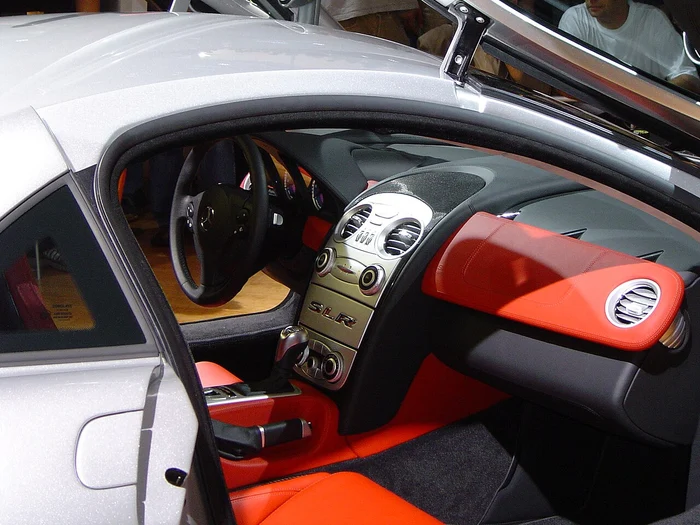
Image source: Wikimedia Commons
What the base SLR McLaren is
The 2003 Mercedes-Benz SLR McLaren is the foundational closed car of the C199 programme: a two-seat grand tourer built from carbon fibre at McLaren in Woking, powered by a hand-built supercharged 5.4-litre AMG V8, and sold under the Mercedes-Benz star while Mercedes held a substantial stake in the McLaren Group. It is not a racing prototype with number plates. It is a road car with butterfly doors, side exhausts, ceramic brakes, and an active air brake, aimed at buyers who wanted Formula One–adjacent engineering prestige wrapped in a long-bonnet grand-touring shape.
The name “SLR” continues Mercedes’ Sport Leicht Rennsport language and deliberately recalls the 1955 300 SLR. The production car is not a replica of that racer. It is a modern interpretation that combines Mercedes exterior design themes with McLaren’s responsibility for structure, dynamics engineering, and manufacture. Understanding the base coupé is necessary before reading the higher-output 722 Edition, the open Roadster, or the speedster Stirling Moss.
Development: from Vision SLR to Woking production
Mercedes showed the Vision SLR concept at the 1999 North American International Auto Show, then a roadster concept at Frankfurt. Public reception encouraged a production programme. At that time Mercedes was deepening its Formula One partnership with McLaren and owned a large minority of the McLaren Group. The production brief therefore split naturally: Mercedes owned brand, design direction, and the AMG power unit; McLaren owned the car as an engineered product — chassis, composite body, integration, and assembly at the McLaren Technology Centre.
1. Packaging changes from concept to production
McLaren did not simply “build the show car.” Engineering accounts describe moving the engine about a metre rearward relative to the concept layout, improving mass distribution, and redesigning cooling and firewall packaging. Side vents became more complex. The production nose carries the three-pointed star prominently. Rear lamps took a warmer red tint than the pure concept graphics. The result still looks like the show car from ten metres away, but the hard points underneath are production-grade.
2. Carbon structure and mass reality
CFRP construction was central to the programme’s technical identity. Even so, the finished base coupé sits near 1.75 tonnes. Luxury equipment, large dimensions, crash structures, and a heavy supercharged V8 keep the car in grand-touring mass territory rather than ultra-light sports-car territory. That mass figure is one of the reasons later road testers often described the SLR as a high-speed GT more than a pure circuit scalpel — a theme AMG would later reverse with the lighter SLS AMG.
3. Production volume and commercial ambition
Early programme language suggested a multi-thousand-unit run and roughly 500 cars a year. Actual annual sales fell well short of that pace in several years. The family closed at about 2,157 cars of all variants. The base coupé accounts for the majority of that volume; limited editions and the roadster form smaller slices. For encyclopedia purposes, treat the ~2,157 figure as the family total, not as base-coupé-only production.
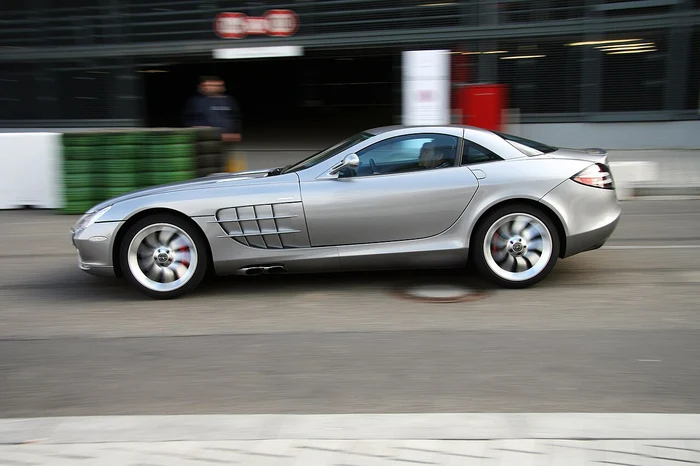
Image source: Wikimedia Commons
Design: long nose, butterfly doors, side exhausts
The exterior is defined by a very long front mid-engine bonnet, a low cabin, and a wide rear. Butterfly doors open upward and forward; they are a signature of the car and a practical constraint in low garages. The side exhausts are not pure styling. Flat underbody and diffuser packaging push the tailpipes out ahead of the rear wheels. That choice also shapes the acoustic character: exhaust note is close to the cabin and very present at large throttle openings.
1. Active rear aero
The rear spoiler doubles as an air brake. At speed it deploys to a moderate angle for stability. The driver can request a steeper angle for more rear downforce when wanted, accepting more drag. Under heavy braking the flap assists deceleration and stability. The system is one of the clearest “Formula One–adjacent” features that survived into a road Mercedes of this era.
2. Interior priorities
The cabin is a two-seat luxury sports environment with extensive leather, aluminium or carbon themes, and Mercedes control logic of the mid-2000s. Luggage space is secondary. Occupants sit low behind a long bonnet; forward vision requires familiarisation. Noise isolation is better than a pure supercar of the same power, worse than a contemporary SL grand tourer — consistent with the dual GT/sports brief.
3. Distinction from contemporary SL models
Period SL roadsters remained comfort-first open Mercedes grand tourers with folding hardtops and multi-seat utility. The SLR is a two-seat statement car with McLaren composite structure and AMG supercharged power far above contemporary SL outputs. Buyers cross-shopping within Mercedes were choosing different missions, not merely different trims.
M155 SLR: the supercharged 5.4-litre eight
At the centre of the base car is the M155 SLR: a 5,439 cc all-aluminium V8 with a Lysholm twin-screw supercharger, dual intercoolers, dry sump, and three valves per cylinder. Peak figures for the base tune are 626 PS at 6,500 rpm and 780 Nm available across a broad mid-range plateau. Each engine was hand-built at AMG before installation at McLaren.
The supercharger eliminates turbo lag and gives immediate, linear boost. Compression is modest at 8.8:1, appropriate for forced induction. Dry-sump lubrication supports sustained cornering loads and a lower engine installation. Power delivery is more about continuous shove than a high-rpm naturally aspirated crescendo — a character later inverted by the dry-sump but unblown M159 in the SLS.
1. SPEEDSHIFT R five-speed automatic
Mercedes paired the engine with the AMG SPEEDSHIFT R five-speed automatic rather than a dual-clutch or a manual. The decision prioritised the ability to handle large torque and heat over the last millisecond of shift speed. Drivers can use automatic programmes or manual modes with steering-wheel controls. In period reviews, shift quality was sometimes criticised relative to emerging dual-clutch rivals, but the box proved the durable choice for a 780 Nm road car of this mass.
2. Measured performance of the base car
Manufacturer 0–100 km/h times sit near 3.8 seconds. Independent tests of well-driven cars recorded low- to mid-3-second 0–60 mph runs and quarter-miles in the low-11-second class. Top speed is about 333 km/h. Those numbers place the base SLR among the fastest grand tourers of the mid-2000s, if not always the lightest or the most agile on a tight circuit.
3. Brakes and stop-go character
Carbon-ceramic discs and the Sensotronic Brake Control system give strong fade resistance when hot and a pedal feel that is electronic rather than purely hydraulic. Owners and testers note that ceramics need temperature to feel their best; cold wet road use can feel less intuitive until the system and discs are up to working temperature. Wet-disc skimming logic tries to keep surfaces dry. Any SLR inspection should treat the braking system as a specialist item, not a conventional steel-disc service.
Driving character of the base coupé
On the road the base SLR behaves as a very fast, long-geared grand tourer with supercharged mid-range force and high-speed stability. Steering and ride are more Mercedes GT than pure sports car. The car’s width, length, and mass demand space. On open motorways and fast A-roads it is in its element. On narrow alpine secondaries it remains capable but less playful than a lighter mid-engine rival.
Period instrumented testing recorded strong skidpad grip for a car of this size, yet later SLS programme messaging and independent comparisons often framed the SLS as the sharper track tool. That comparison is useful context, not a dismissal: the SLR’s brief was different — prestige GT performance with F1-partner manufacturing theatre, not Affalterbach’s later “first pure sports car” statement.
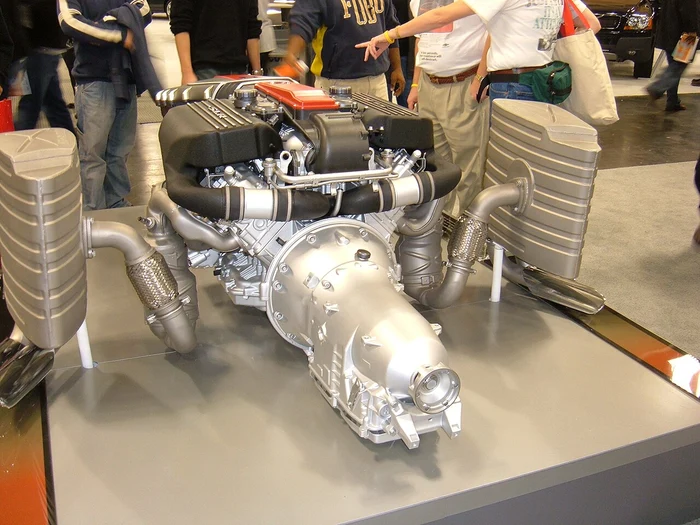
Image source: Wikimedia Commons
How the base coupé relates to other SLR variants
- Versus the 722 Edition — same closed body family, but 650 PS / 820 Nm, firmer/lower suspension, larger front ceramics, revised aero, 19-inch wheels, and a 150-unit cap.
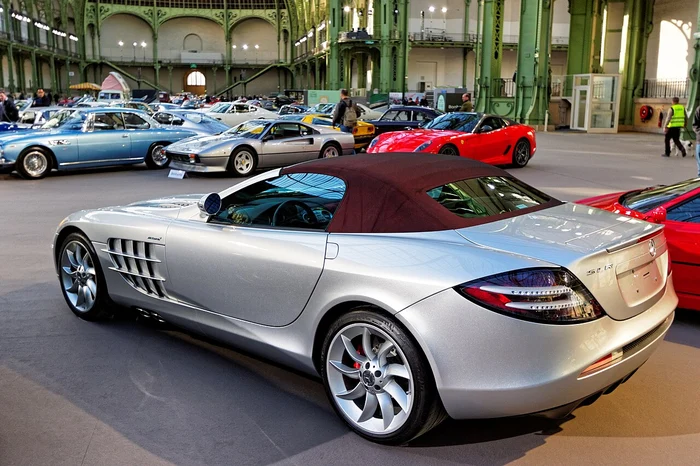
- Versus the Roadster — open fabric roof, more mass, same 626 PS base engine tune, slightly different top-speed documentation.
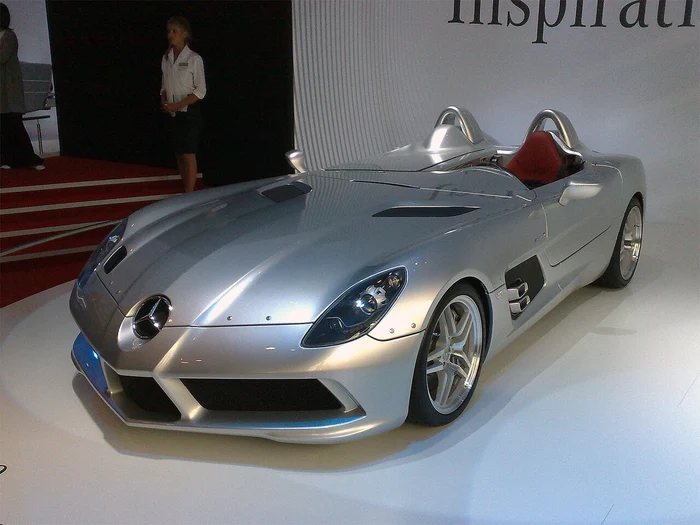
- Versus the Stirling Moss — open speedster without roof or windscreen, 650 PS, major mass reduction, 75 units, existing-owner allocation.
Later McLaren Special Operations programmes (McLaren Edition, SLR by MSO, HDK) are post-series upgrades on existing cars and are outside the four factory body/edition entries treated here.
Ownership notes for the base C199
Documented service history at specialists familiar with SLR systems is more important than cosmetic perfection alone. Key technical themes for inspectors:
1. Braking and SBC
Sensotronic Brake Control and carbon-ceramic hardware need correct diagnosis tools and parts support. Pedal feel, warning lights, and disc condition should be verified with specialists, not assumed from a short cold test drive.
2. Supercharged V8 health
Look for consistent boost behaviour, clean intercooler and charge-air plumbing, correct oil specification and change intervals for dry-sump hardware, and no neglected supercharger or accessory noise. The engine is robust when maintained; deferred maintenance on any forced-induction high-output V8 is expensive.
3. Composite body and doors
CFRP repair after impact requires qualified composite work. Butterfly door alignment, seals, and struts affect both usability and water ingress. Side-exit exhaust heat shielding and nearby bodywork should be checked for heat damage.
4. Transmission and electronics
The five-speed unit needs correct fluid services. As with any mid-2000s Mercedes high-end car, electronics modules, sensors, and battery health matter to stability and brake systems.
Values for clean, low-mileage base coupés have risen with collector interest in the Mercedes–McLaren era. Limited editions generally trade higher; condition and history still dominate.
Legacy
The base Mercedes-Benz SLR McLaren is the car that made the Mercedes–McLaren road partnership real: carbon structure from Woking, supercharged AMG power from Affalterbach, and a public image that linked the three-pointed star to contemporary Formula One engineering credibility. It is also a car of compromise — heavy for a composite sports car, automatic-only, more GT than track scalpel — and those compromises explain why AMG later wrote a different brief for the SLS AMG.
Historically the durable facts are stable: C199 coupé, M155 SLR 5.4-litre supercharged V8 at 626 PS and 780 Nm, five-speed AMG SPEEDSHIFT R, butterfly doors, side exhausts, ceramic brakes with SBC, active air brake, roughly 3.8 seconds to 100 km/h in manufacturer language, about 333 km/h top speed, and a place inside a family of about 2,157 cars built through 2010. Everything else in the SLR line is a controlled variation of this foundation.
Leave a Reply
You must be logged in to post a comment.