General information & model overview
| Category | Specification Details |
|---|---|
| Model name | 2000 Mercedes-Benz SLK (R170 facelift) |
| Internal code | R170 (post-facelift) |
| Manufacturer | DaimlerChrysler / Mercedes-Benz; Bremen (and other plants for some markets) |
| Facelift production | From about February 2000 through April 2004 end of R170 |
| Body style | Two-door retractable hardtop roadster |
| Layout | Front-engine, rear-wheel drive on shortened C-Class (W202) related platform |
| Pre-facelift | 1996 R170 launch |
| Successor | 2004 R171 |
Body & dimensions
| Category | Specification Details |
|---|---|
| Wheelbase | 2,400 mm (94.5 in) — same as 190 SL / early SL heritage hard point |
| Length | About 3,995–4,010 mm |
| Width / height | About 1,715 mm / 1,269–1,284 mm |
| Roof | Electro-hydraulic metal Vario roof; about 25 seconds |
| Fuel tank (facelift) | Increased to about 53 litres (from ~45 litres pre-facelift) |
Engine specifications (facelift years)
| Theme | Details |
|---|---|
| SLK 200 Kompressor (worldwide after facelift) | 2.0 supercharged M111 — about 163 PS / 230 Nm (2000–2004) |
| SLK 230 Kompressor (facelift) | 2.3 supercharged M111 — about 197 PS / 280 Nm |
| SLK 320 (new) | 3.2 V6 M112 — about 218 PS / 310 Nm (first six-cylinder SLK) |
| SLK 32 AMG (from 2001) | 3.2 supercharged V6 M112 — about 354 PS / 450 Nm; automatic only |
| Discontinued at facelift | Naturally aspirated SLK 200 (136 PS) dropped |
Drivetrain & transmission
| Category | Specification Details |
|---|---|
| Manual | 5-speed then 6-speed manual (6-speed from ~2001) |
| Automatic | 5G-Tronic five-speed; SpeedShift on SLK 32 AMG |
| Drive | Rear-wheel drive |
Facelift visual & equipment changes
| Area | Details |
|---|---|
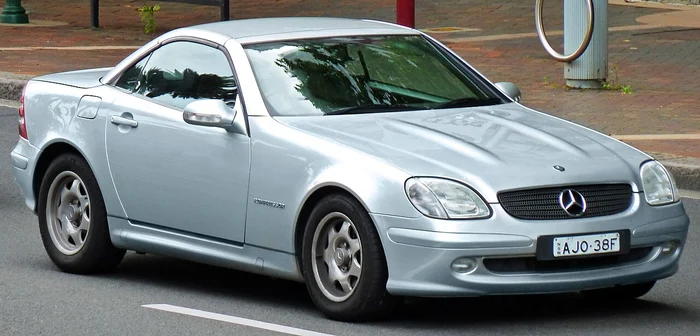
| Exterior | New bumpers, grille, taillights; body-colour skirts and door handles; mirror indicators; stainless exhaust trim |
| Interior | Restyled wheel and shifter; more supportive seats |
| Electronics | Upgraded ESP; broader standard safety equipment evolution |
Performance & volume (approximate)
| Metric | Approximate data |
|---|---|
| SLK 230 K facelift | About 7.2–7.3 s to 100 km/h |
| SLK 320 | About 6.9 s to 100 km/h |
| SLK 32 AMG | About 5.2 s class to 100 km/h |
| Family production | R170 total about 311,222 cars 1996–2004 |
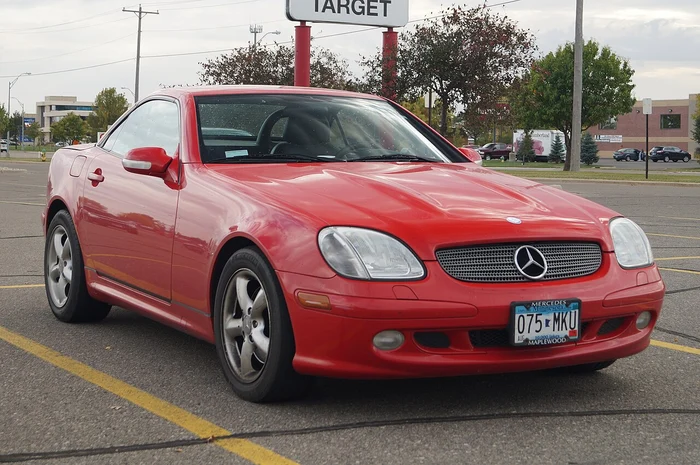
Image source: Wikimedia Commons
What the 2000 SLK facelift is
The 2000 Mercedes-Benz SLK is the mid-cycle update of the first-generation R170. Production of facelift cars began after February 2000. Visually it is cleaner and more integrated than the 1996 launch car; mechanically it introduces the first six-cylinder SLK (320), updates the Kompressor fours, brings the 200 Kompressor to worldwide markets, and from 2001 adds the supercharged SLK 32 AMG.
For the original 1996–1999 specification set, see the 1996 R170 entry.
Facelift substance
1. First SLK six-cylinder
The SLK 320’s 3.2-litre M112 V6 at about 218 PS changed the car’s character for buyers who wanted smoothness over supercharger whine. It is the key powertrain reason many shoppers prefer post-2000 cars.
2. Updated fours and global 200 K
Supercharged 2.0 and 2.3 engines were recalibrated. The SLK 200 Kompressor, previously limited to selected markets, became a worldwide model as the naturally aspirated 200 left the range.
3. SLK 32 AMG
From 2001 the 32 AMG used a helical twin-screw supercharged 3.2 V6 at about 354 PS, SpeedShift automatic only, larger brakes, and AMG bodywork. About 4,333 were built — a small but important performance chapter of R170.
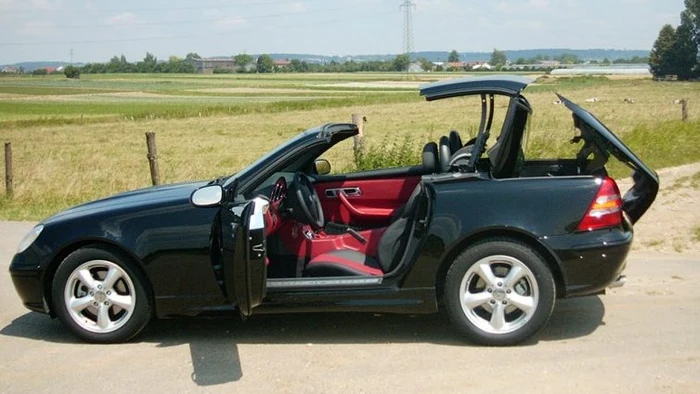
Image source: Wikimedia Commons
Driving and market role
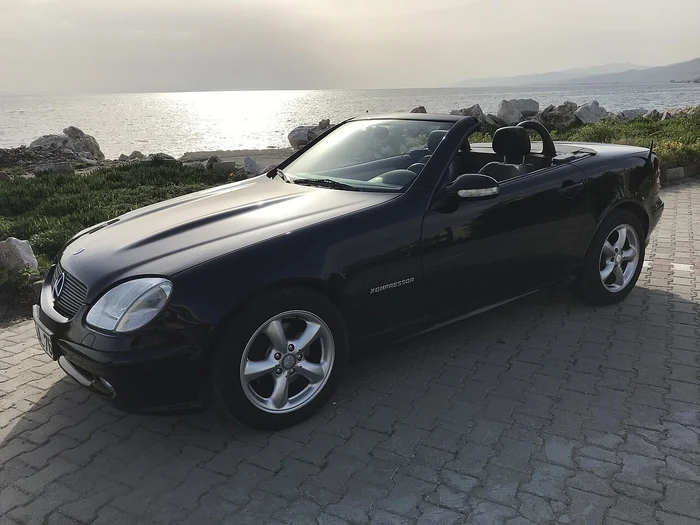
Facelift R170 cars remain compact, relatively light by modern standards, and defined by the folding hardtop that made the original SLK famous. Ride is comfort-biased. The 32 AMG is the outlier for pace; the 320 is the refined daily roadster; the 230 Kompressor remains the volume enthusiast four.
Ownership notes
1. Facelift identification
Bumpers, lights, body-colour handles, and six-cylinder or 32 AMG badging separate these cars from 1996–1999 examples.
2. Known themes
Vario roof seals and hydraulics, M111 supercharger systems, M112 V6 maintenance, and early ESP/electronics age items are the usual inspection list. Rust is less dramatic than 1980s Mercedes but sills, wheel arches, and underbody still need checking.
3. End of line
R170 production ended in April 2004 as the R171 took over. Facelift cars are the most complete first-generation SLKs.
Six-cylinder smoothness versus Kompressor character
The SLK 320 changed who bought the facelift. Buyers who found the supercharged four busy or noisy could step into a smoother M112 V6 without leaving the hardtop roadster format. Acceleration improved modestly versus the 230 Kompressor, but refinement improved more. The later 32 AMG inverted that calm with a supercharged V6 and AMG gearing aimed at BMW’s M Roadster and Porsche’s Boxster S.
Visual facelift cues for identification
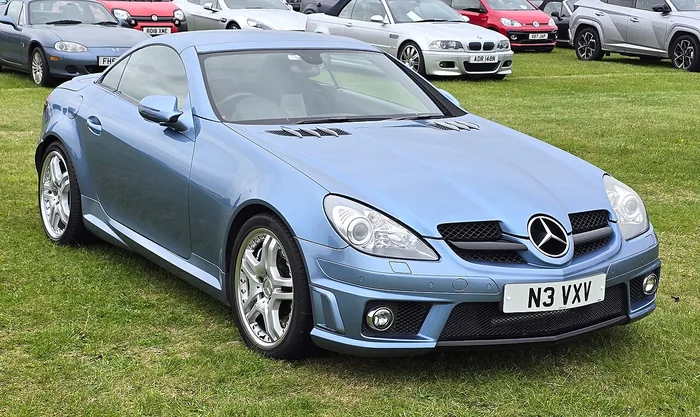
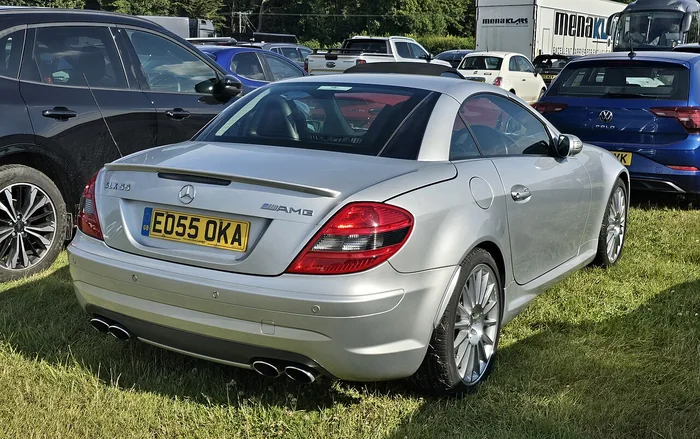
Body-colour door handles and side skirts, revised taillights, a cleaner grille, and integrated mirror indicators are the quick street-side tells. Combined with a larger fuel tank, the facelift is the more complete daily R170. Pre-facelift cars retain a slightly more “first edition” look that some collectors prefer; facelift cars are usually the better drivers’ choice for six-cylinder power.
Production context
R170 volume was dominated by the 230 Kompressor across both eras. Six-cylinder and AMG cars are minorities. When the generation closed in 2004 at about 311,000 units, Mercedes had proven the folding-hardtop roadster as a durable global product, not a fashion one-off.
Legacy
The 2000 facelift completed the first SLK generation: six-cylinder smoothness, worldwide Kompressor fours, and a genuine AMG supercharged V6 flagship. Durable facts: R170 facelift from 2000, 2,400 mm wheelbase, Vario roof, engines up to 354 PS AMG, family total ~311,000 through 2004.
Leave a Reply
You must be logged in to post a comment.