You can’t talk about Volvo without talking about safety. For nearly a century, the two concepts have been practically synonymous. While other manufacturers sell cars based on 0-60 times or aggressive styling, the Swedish automaker has always doubled down on a different metric: keeping the people inside alive.
9 safest features in Volvo cars
When people ask, “What is the single safest feature in a Volvo?” they’re usually looking for a specific gadget or sensor.
But the real answer isn’t that simple: it requires looking at how the car acts as a cohesive bodyguard—a “safety cage”—rather than just a collection of parts.
1. The Three-Point Seatbelt: The Gift That Changed Everything
If we have to pick a “Greatest Hit,” this is it. Back in 1959, a Volvo engineer named Nils Bohlin invented the V-shaped three-point seatbelt.
Before this, seatbelts were essentially lap straps that did more harm than good in high-speed crashes.
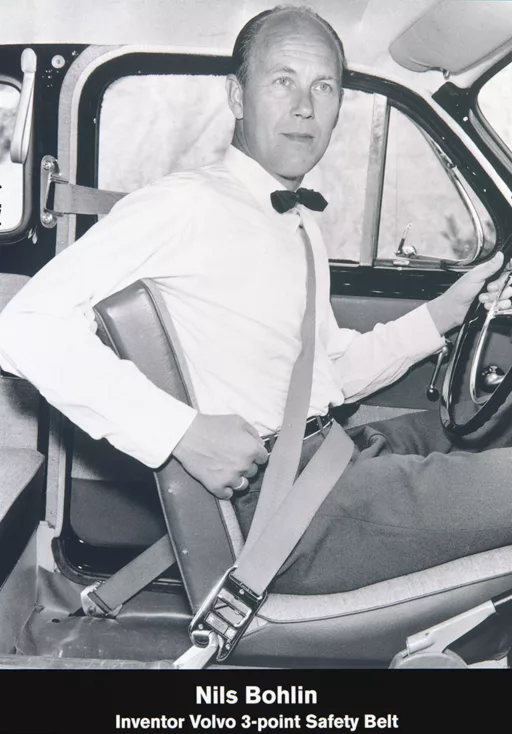
Bohlin’s invention changed the world. But the most remarkable part of the story isn’t the engineering; it’s the corporate ethics.
Volvo held the patent, which was worth a fortune. Instead of hoarding it, they gave it away to every other car manufacturer for free. They decided that saving lives was more important than profit margins. Since then, that decision is estimated to have saved over a million lives globally.
Even today, with all our lasers and radars, the seatbelt is still the MVP of car safety. It reduces the risk of fatal injury by nearly half for front-seat drivers. Modern versions are even smarter—they have “pretensioners” that tighten instantly if the car senses a crash, removing slack before you even move forward.
2. The “Safety Cage” Concept
Think of a modern Volvo like a walnut. The outside is designed to crack, but the inside needs to stay perfectly intact.
Volvo engineers use ultra-high-strength boron steel to build a rigid cell around the passengers. They call this the Safety Cage. The idea is that the front and back of the car (the crumple zones) should sacrifice themselves, folding up like an accordion to absorb the energy of a crash. This slows down the impact forces before they reach you.
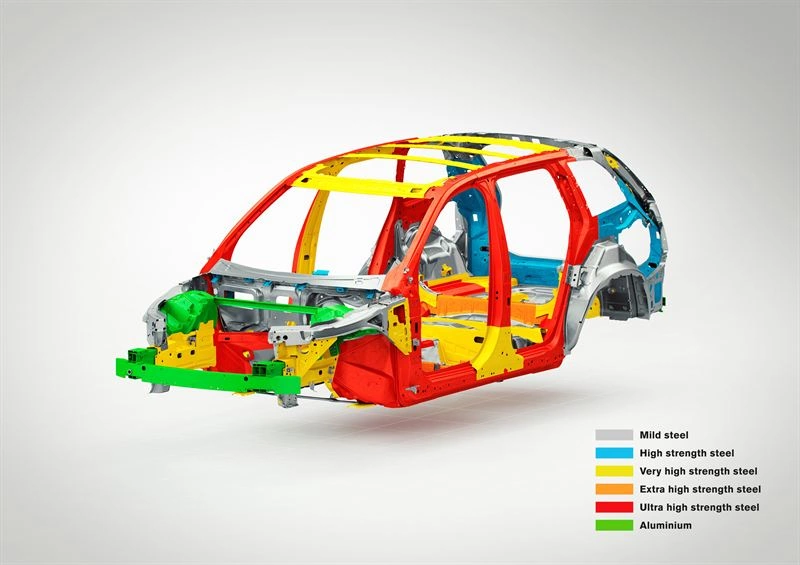
Meanwhile, the cabin itself is reinforced to refuse that energy. The pillars supporting the roof are incredibly strong—often capable of holding up four times the car’s own weight—to prevent the roof from crushing you in a rollover. It’s a mix of sacrificial metal on the outside and stubborn, unyielding steel on the inside.
3. Solving the Side-Impact Problem (SIPS)
Getting T-boned is one of the scariest scenarios on the road because there isn’t much car between you and the other vehicle.
To fix this, Volvo introduced the Side Impact Protection System (SIPS) in the 90s.
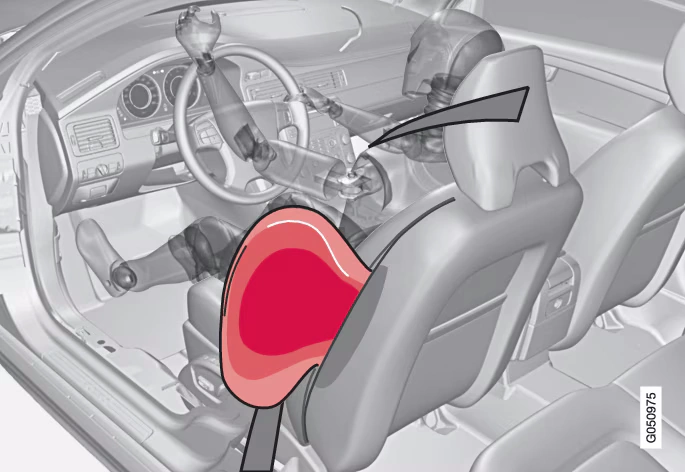
It works by turning the car into a support network. If you get hit on the driver’s door, the force doesn’t just stay there. Reinforced beams in the floor and roof transfer that energy across the car to the other side. Ideally, the whole chassis absorbs the blow, not just the door next to your hip.
This is paired with a clever airbag system. Volvo doesn’t just put airbags in the steering wheel; they have curtain airbags that drop from the ceiling to cover the windows, protecting your head from glass and hard pillars.
4. Preventing Whiplash (WHIPS)
Whiplash is one of those injuries people joke about, but it causes lifelong chronic pain. It happens when you get rear-ended and your head snaps back while your body shoots forward.
Volvo’s solution is purely mechanical—no fancy computers required. It’s called WHIPS. If you get hit from behind, the front seats are designed to physically collapse backward in a controlled motion. At the same time, the headrest moves forward to catch your head.
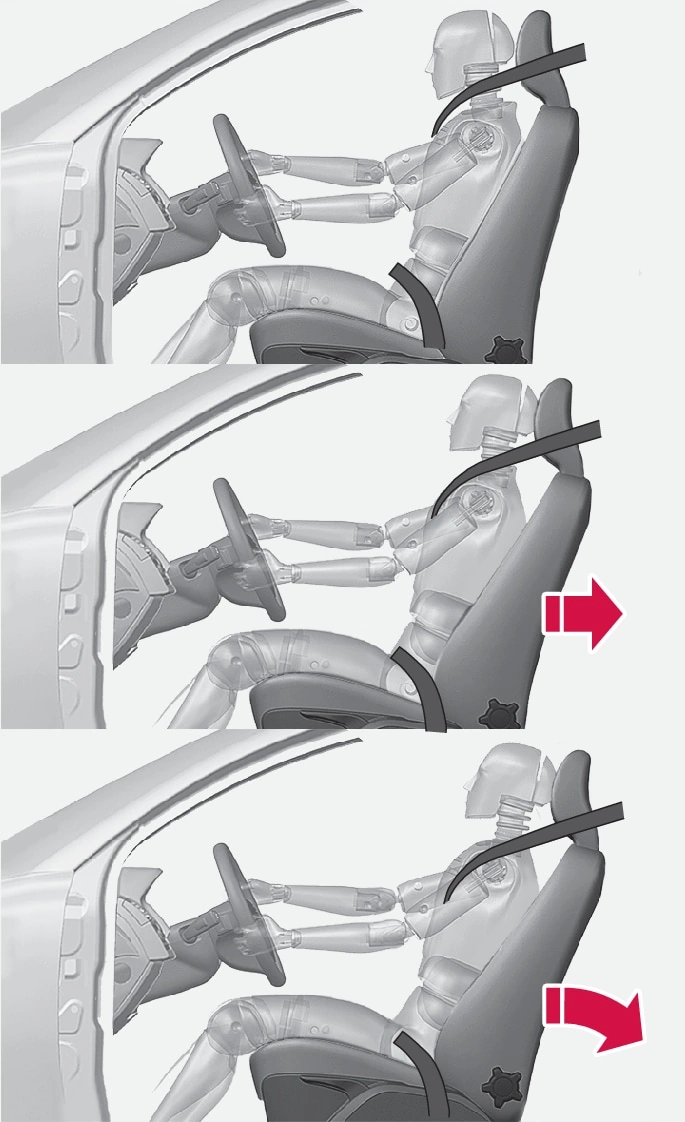
Think of it like catching a baseball: you don’t keep your hand stiff; you move it backward with the ball to soften the impact. The seat creates that same “cushioning” effect for your spine.
5. The Co-Pilot: City Safety and Collision Avoidance
While the steel cage is great if you crash, the best-case scenario is not crashing at all. This is where “City Safety” comes in. Since 2014, Volvo has made automatic braking standard on every car they sell.
The car uses a mix of cameras and radar to watch the road. It can spot other cars, pedestrians, cyclists, and even large animals (a very Swedish problem involving moose).
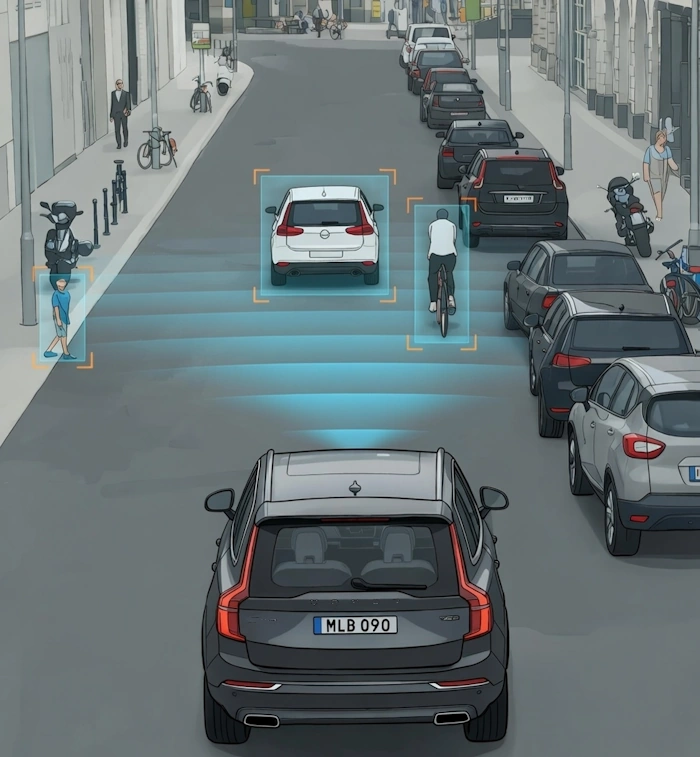
If you’re distracted and about to rear-end someone, the car will scream at you. If you don’t react, it slams on the brakes for you.
Newer versions are eerily smart. They can see in the dark, and they can even stop you from turning left into oncoming traffic—a classic intersection mistake that causes thousands of accidents a year.
6. Keeping You on the Road
A huge number of fatal accidents happen when a driver simply drifts off the road due to fatigue or distraction. Volvo tackles this with “Run-off Road Protection.”
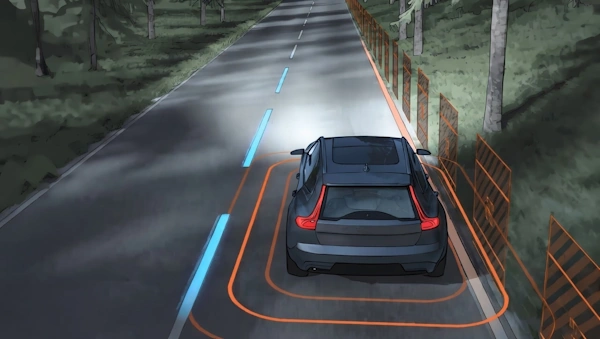
First, the steering wheel will gently fight you if you try to drift out of your lane without a blinker.
But if the car actually leaves the pavement and goes airborne or hits a ditch, the seats have a hidden trick. A crushable piece of metal in the seat frame collapses to absorb the vertical spine-crushing impact of a hard landing. It’s like having a shock absorber built directly into your chair.
7. Watching the Blind Spots
We’ve all had that moment of panic where we almost merge into a car we didn’t see. Volvo’s Blind Spot Information System (BLIS) acts as a second set of eyes.
Using radar in the rear bumper, it watches the lanes next to you. If a car is hiding there, a light glows in your mirror. If you try to turn anyway, the light flashes frantically and the steering wheel resists your movement.
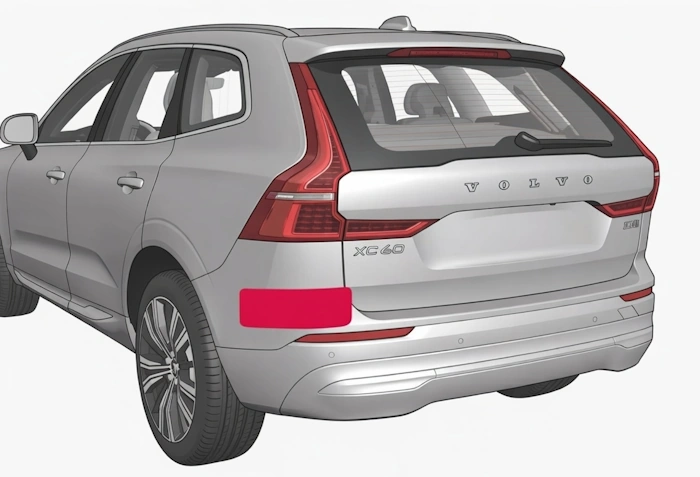
It also watches for cross-traffic when you’re backing out of a parking spot, peering around the giant SUV parked next to you to let you know a car is coming.
The Human Factor
What makes Volvo unique isn’t just the parts list; it’s the philosophy. They don’t view safety as a luxury add-on.
They maintain a massive database of real-world crashes. Since 1970, their accident investigation team has gone to the scene of over 40,000 actual accidents involving Volvos to see how the cars held up. They don’t just rely on lab tests; they look at what happens on messy, chaotic, real highways.
Which Volvo’s Feature is The Best? The Verdict
So, what is the safest feature?
Statistically, it’s still the three-point seatbelt. It’s the simplest device, but it saves the most lives. However, pointing to one feature misses the point. The “safest feature” is actually the integration of everything.
It’s the way the radar tells the brakes to fire, which triggers the seatbelt to tighten, which pulls you into the perfect position for the airbags, while the steel cage directs the energy away from your body.
In a Volvo, these systems don’t work alone—they work as a team. That holistic approach is why, after all these years, the brand is still the benchmark for keeping us safe.
Leave a Reply
You must be logged in to post a comment.