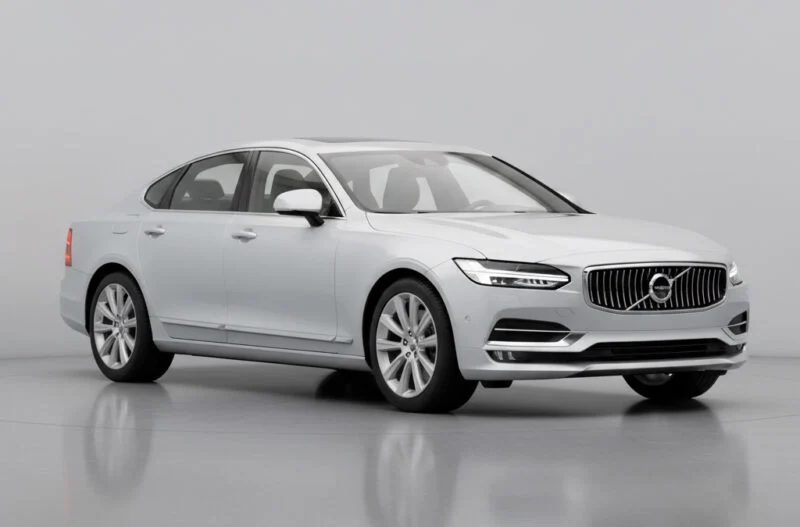
The second-generation Volvo S90 (2016-2019) marked Volvo’s return to the flagship sedan segment after a hiatus, built on the Scalable Product Architecture (SPA) platform. It was introduced in 2016 for the European market (as a 2017 model year in the US) and featured advanced safety tech, efficient engines, and premium luxury.
Key changes:
- Short wheelbase (SWB) standard initially;
- long wheelbase (LWB) became optional/standard in some markets from 2018 (e.g., US switched to LWB exclusively).
Trims included Momentum, Inscription, and R-Design (introduced 2017).
Engines varied by market: Petrol (T4/T5/T6/T8 hybrid) dominant in US; diesels (D3/D4/D5) in Europe/Asia. Plug-in hybrid T8 added in 2017.
Below is a comprehensive table aggregating specs from reliable sources. Variations by year, trim, engine, or market (e.g., US vs. Europe) are noted where applicable. Data is cross-referenced for accuracy.
| Category | Subcategory | Details |
|---|---|---|
| General Information | Model Years | 2016-2019 (Europe/Asia from 2016; US/Canada from 2017 MY); facelift/minor updates in 2019 (e.g., infotainment tweaks) |
| Body Style | 4-door executive sedan (E-segment) | |
| Platform | Scalable Product Architecture (SPA) | |
| Assembly Locations | Sweden (Torslanda, until mid-2017); China (Daqing, primary from mid-2017); Malaysia (Shah Alam, CKD); India (Bengaluru, CKD for local market) | |
| Drivetrain | Front-Wheel Drive (FWD) standard; All-Wheel Drive (AWD) on T6, T8, D5, some D4/D3 | |
| Seating Capacity | 5 seats | |
| Door Count | 4 doors | |
| Trim Levels | Momentum (base), Inscription (luxury), R-Design (sporty, from 2017); Excellence (top-tier LWB, select markets from 2017) | |
| Market Variations | US: Petrol/hybrid focus, LWB from 2018; Europe/Asia: Diesel options, SWB/LWB mix; Emission norms: Euro 6 (Europe), BS VI (India from 2019) | |
| Engine Details | Petrol Engines | T4: 2.0L I4 turbo (190 hp @ 5000 rpm, 221 lb-ft @ 1600-4000 rpm; B4204T31/T44); T5: 2.0L I4 turbo (250-254 hp @ 5500 rpm, 258 lb-ft @ 1500-4800 rpm; B4204T20/T23/T26); T6: 2.0L I4 turbo+super (310-320 hp @ 5700 rpm, 295 lb-ft @ 2200-5400 rpm; B4204T27/T29) |
| Diesel Engines | D3: 2.0L I4 turbo (150 hp @ 3750 rpm, 236 lb-ft @ 1750-3000 rpm; D4204T9/T16); D4: 2.0L I4 twin-turbo (190 hp @ 4250 rpm, 295 lb-ft @ 1750-2500 rpm; D4204T4/T14); D5: 2.0L I4 twin-turbo (235 hp @ 4000 rpm, 354 lb-ft @ 1750-2500 rpm; D4204T23, with PowerPulse) | |
| Hybrid Engines | T8 Twin Engine/Recharge: 2.0L I4 turbo+super petrol (303-320 hp @ 6000 rpm, 295 lb-ft @ 2200-5400 rpm) + electric motor (87 hp, 177 lb-ft); Combined: 390-400 hp, 472 lb-ft; Battery: 10.4 kWh Li-ion (up to 21-28 mi electric range); B4204T28/T34/T35 | |
| Common Engine Specs | All: Inline-4, 1969 cc displacement, DOHC 16-valve; Bore x Stroke: 82 x 93.2 mm; Compression: 10.3-16.0:1 (varies by type); Fuel Injection: Direct (petrol), Common Rail (diesel) | |
| Year/Market Notes | T4/T5 FWD-focused in US; Diesels Europe/Asia only; T8 from 2017; Mild hybrids post-2019 (not in range) | |
| Transmission | Type | 8-speed automatic (Geartronic, standard on most); 6-speed manual (optional on D3/D4 in Europe) |
| Performance | Acceleration (0-60 mph) | T4: ~8.0 sec; T5: 6.5-6.9 sec; T6: 5.6-5.9 sec; T8: 4.5-4.8 sec; D3: ~9.9 sec; D4: ~8.2 sec; D5: ~7.0 sec |
| Top Speed | 130-155 mph (electronically limited; e.g., D5: 149 mph) | |
| Towing Capacity | Up to 4,000-5,500 lbs (braked, varies by engine/AWD) | |
| Fuel Economy | US EPA (City/Highway/Combined MPG) | T5 FWD: 23/35/27; T6 AWD: 21/31/25; T8: 26/33/29 (71 MPGe combined) |
| Europe WLTP/ARAI (Combined) | Diesels: 49-58 mpg (D5: 49 mpg); Petrol: 27-35 mpg; Hybrid: Up to 100+ mpg equivalent | |
| Fuel Tank Capacity | 14.5-15.9 gal (55-60 L; larger on AWD/hybrid) | |
| Dimensions | Length | 195.4-200.1 in (4963-5083 mm; LWB longer) |
| Width | 74.0-79.5 in (1879-2019 mm, incl. mirrors) | |
| Height | 56.8-57.1 in (1443-1450 mm) | |
| Wheelbase | SWB: 115.8 in (2941 mm); LWB: 120.5 in (3061 mm; standard US from 2018) | |
| Ground Clearance | 5.9-6.0 in (150-152 mm) | |
| Turning Diameter | 37.4-38.7 ft (11.4-11.8 m) | |
| Interior Dimensions | Front Head/Leg/Shoulder: 37.8/42.2/57.5 in; Rear: 37.8/35.9-40.4/55.4 in (LWB adds rear legroom) | |
| Weights and Capacities | Curb Weight | 3,870-4,222 lbs (1,755-1,915 kg; heavier on AWD/hybrid) |
| Gross Vehicle Weight | ~5,000-5,300 lbs (varies) | |
| Cargo Volume | 13.5-15.4 cu ft (382-500 L; fold-flat seats expand to ~53 cu ft) | |
| Chassis and Suspension | Suspension | Front: Double wishbone; Rear: Integral link multi-link; Optional air suspension (Four-C adaptive) |
| Brakes | Ventilated discs front/rear; ABS, EBD, Brake Assist | |
| Steering | Electric power-assisted rack-and-pinion | |
| Wheels/Tires | 17-20 in alloys; Tires: 235/55R17 to 255/35R20 (e.g., 245/45R18 standard) | |
| Safety Features | Standard | 6-8 airbags (front, side, curtain, knee); ABS, ESC, Traction Control, TPMS, Lane Keeping Aid, Pilot Assist (semi-autonomous up to 80 mph), City Safety (auto brake for pedestrians/cyclists/animals), Run-off Road Mitigation |
| Optional/Advanced | 360° camera, Blind Spot Monitor, Cross-Traffic Alert, Adaptive Cruise, Heads-Up Display, Auto Park Assist, IntelliSafe Surround | |
| Ratings | Euro NCAP: 5 stars (2017); IIHS: Top Safety Pick+ (2017-2019 US models) | |
| Interior Features | Seating/Comfort | Leather/Nubuck options, power-adjustable front seats (8-10 way), heated/ventilated seats (opt), massage seats (Inscription), rear heated seats (opt), 4-zone climate control |
| Infotainment | 9-12.3 in touchscreen (Sensus), Apple CarPlay/Android Auto (from 2017), Navigation, Bluetooth, WiFi hotspot, Bowers & Wilkins audio (opt, 19 speakers) | |
| Convenience | Keyless entry/start, power trunk, adaptive LED headlights, panoramic sunroof (standard on most) | |
| Exterior Features | Design | Thor’s Hammer LED headlights, vertical taillights, chrome accents (Inscription), sporty bumpers (R-Design) |
| Options | Power-folding mirrors, rain-sensing wipers, 360° lighting | |
| Additional Notes | Year Changes | 2016-2017: Intro with SWB, base engines; 2018: LWB standard in US, R-Design expanded; 2019: Minor tech/safety updates, no major redesign |
| Reliability/Warranty | Common issues: Early infotainment glitches (fixed via updates), brake wear; Warranty: 4 yr/50,000 mi basic |
The Volvo S90 (2016-2019): modern Scandinavian luxury in the executive sedan segment
The Volvo S90 from 2016 to 2019 represents a bold revival of Volvo’s flagship sedan nameplate, blending cutting-edge technology, Scandinavian design, and unparalleled safety in a package that challenged rivals like the Mercedes-Benz E-Class, BMW 5-Series, and Audi A6. Launched as part of Volvo’s ambitious renewal under Geely ownership, this second-generation S90 (built on the Scalable Product Architecture or SPA platform) emphasized efficiency, semi-autonomous driving, and premium comfort.
With production shifting from Sweden to China mid-run, it sold well globally, appealing to buyers seeking understated elegance over ostentatious performance.
History and development
The Volvo S90’s second generation debuted in December 2015 at the North American International Auto Show in Detroit as a 2016 model for Europe and Asia, arriving in North America as a 2017 model year vehicle. It marked Volvo’s return to the executive sedan market after the original S90 (1997-1998) and succeeded the S80, introducing the brand’s new design language inspired by the Concept Coupe from 2013. Built on the modular SPA platform shared with the XC90 SUV, the S90 was part of Volvo’s “90-series” lineup, which prioritized electrification, safety, and connectivity.
Production began in Torslanda, Sweden, but shifted to Daqing, China, in mid-2017 to meet global demand, with CKD assembly in Malaysia and India for local markets. Key milestones include the introduction of the T8 Twin Engine plug-in hybrid in 2017, the R-Design sporty trim, and a switch to long-wheelbase (LWB) as standard in the US for 2018 models to enhance rear passenger space.
By 2019, minor updates focused on infotainment refinements, such as a standard 12.3-inch digital cluster on base trims and shuffled option packages.
Volvo’s 2016 sales hit a record, boosted by the S90 and V90 estate, reflecting the brand’s strategy to produce top-range models in China while maintaining quality standards. The model evolved into a facelifted version in 2020 with mild-hybrid tech, but the 2016-2019 era remains prized for its pure SPA debut, balancing diesel (Europe/Asia), petrol, and hybrid powertrains. This period solidified Volvo’s shift toward sustainable luxury, with the S90 embodying the brand’s “Swedish luxury” ethos—minimalist, human-centric, and forward-thinking.
Design and features
The S90’s exterior design is a masterclass in Scandinavian restraint: sleek lines, Thor’s Hammer LED headlights, and a concave grille create an elegant, aerodynamic profile (Cd of 0.28). Measuring 195-200 inches long (LWB adds rear space), it features vertical taillights and optional 17-20-inch alloys, with R-Design adding sporty bumpers and Inscription offering chrome accents. Colors ranged from Mussel Blue to Crystal White, emphasizing timeless appeal over flashiness.
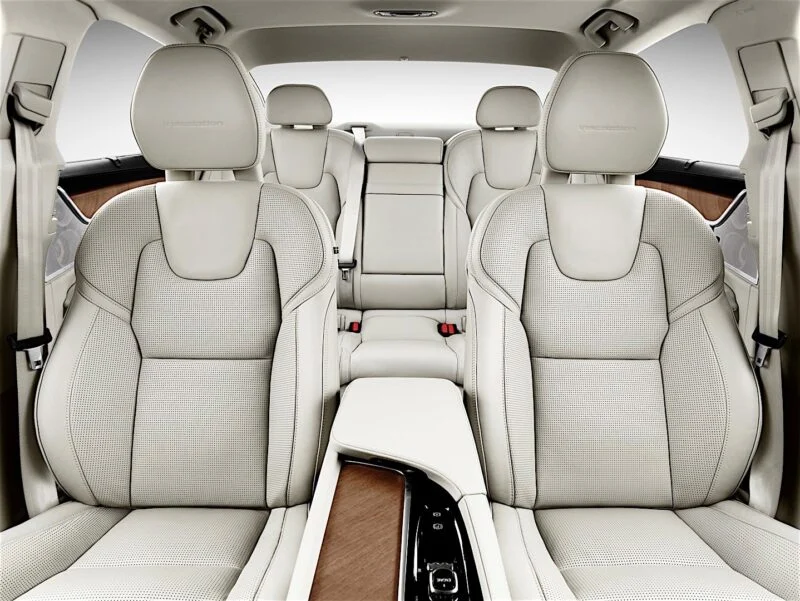
Inside, the S90 shines with premium materials like open-pore wood, Nappa leather, and brushed metal, creating a serene, spacious cabin for five. Front seats offer 8-10-way power adjustment, heating/ventilation, and optional massage functions, while rear legroom in LWB models rivals limousines (up to 40.4 inches). The panoramic sunroof floods the interior with light, and 4-zone climate control ensures comfort.
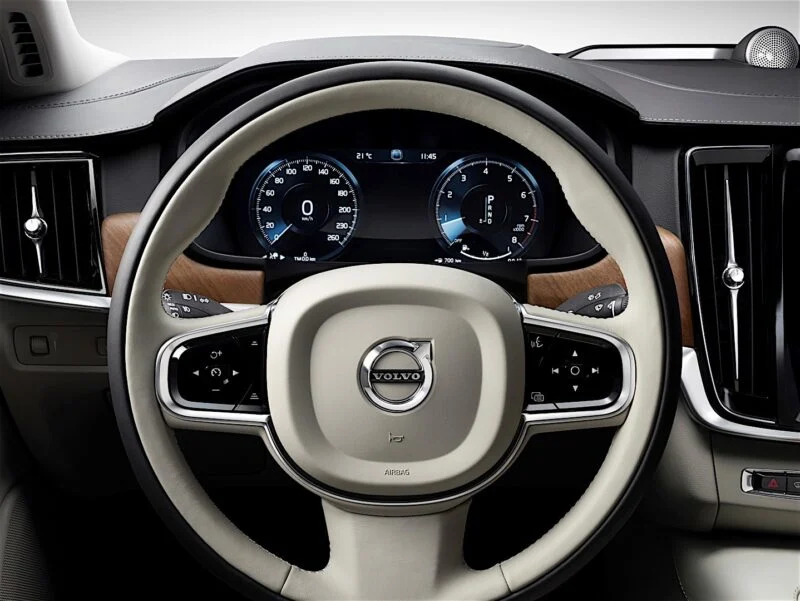
Tech highlights include the 9-inch Sensus touchscreen (upgraded to 12.3-inch in later models), supporting Apple CarPlay/Android Auto from 2017, navigation, and a Bowers & Wilkins 19-speaker audio system. Owners praise the minimalist dashboard but note the touchscreen’s learning curve for controls like climate. Cargo space is 13.5-15.4 cubic feet, expandable to 53 with folding seats—practical for families or executives.
Performance and driving experience
Powered by 2.0-liter inline-four engines (no V6 or V8s), the S90 offered petrol (T4: 190 hp, T5: 250 hp, T6: 310-320 hp), diesel (D3: 150 hp, D4: 190 hp, D5: 235 hp), and T8 hybrid (up to 400 hp combined). An 8-speed automatic was standard (6-speed manual on some Euro diesels), with FWD or AWD. Acceleration varies: T8 hits 0-60 mph in 4.5 seconds, while base models take 7-9 seconds.
Reviews describe a composed, comfortable ride thanks to double-wishbone front and integral-link rear suspension (optional air suspension adds adaptability). It’s quiet and smooth on highways, with Pilot Assist providing semi-autonomous steering up to 80 mph.
However, some owners note it’s not “fun” like sportier rivals—steering feels heavy, and the car’s weight (3,870-4,222 lbs) is evident in corners. Fuel economy impresses: T8 at 29 mpg combined/71 MPGe, diesels up to 58 mpg (WLTP). User feedback highlights effortless cruising but occasional road noise on larger wheels.
Safety innovations
Volvo’s safety legacy is front and center: Standard features include City Safety (auto-braking for pedestrians, cyclists, animals), Lane Keeping Aid, Run-off Road Mitigation, and adaptive cruise. Options add Blind Spot Monitoring, Cross-Traffic Alert, 360° cameras, and Pilot Assist. Ratings are stellar: 5 stars from Euro NCAP (95% adult protection), ANCAP (91% adult), and IIHS Top Safety Pick+.
Owners rave about the confidence-inspiring tech, with one noting it “prevented a potential accident.” The S90’s AEB Pedestrian system earned top marks, underscoring Volvo’s innovation.
Ownership experience: reliability, maintenance, and common issues
With an average owner rating of 3.9-4.5/5, the S90 scores well for comfort and safety but mixed on reliability (86.1% in surveys). Many exceed 100,000 miles reliably, but issues include infotainment glitches (slow boot-ups, fixed via OTA updates), brake vibrations (warped rotors, $300-500 fix), and AC leaks/evaporator failures. Hybrid models may face battery drain or start/stop malfunctions; air suspension can get “bouncy” over time.
Maintenance tips: Follow Volvo’s schedule—oil changes every 10,000 miles, diagnostics annually. Use OEM parts; forums like SwedeSpeed offer DIY guides. Annual costs average $800-1,200, lower than German rivals. Owners report “amazing seats” and “smooth rides” but warn of electronics quirks.
Pros and cons
Pros:
- Exceptional interior comfort and space.
- Advanced safety and semi-autonomous features.
- Efficient powertrains, especially hybrids.
- Elegant design that ages well.
- Good value in used market.
Cons:
- Infotainment can be glitchy or slow.
- Not as engaging to drive as sportier competitors.
- Potential for costly repairs like suspension or AC.
- Smaller trunk than some rivals.
- Road noise on certain setups.
Buying guide for today
In 2025, used 2016-2019 S90s offer excellent value, with prices ranging from $15,000 for high-mileage base models to $25,000 for low-mileage T8 Inscriptions (average savings 35% off MSRP). Prioritize CPO examples with remaining warranty (original 4-year/50,000-mile).
Check for service history, test infotainment/boot times, inspect brakes/suspension, and scan for codes. Hybrids suit eco-conscious buyers; avoid early 2016 models for potential teething issues.
Compare to used E-Class (more dynamic but pricier repairs) or A6 (tech-heavy but less spacious).
Sites like Autotrader, Edmunds, or forums are ideal for sourcing. For mods, upgrade tires for quieter ride or add aftermarket Android Auto if missing.
Leave a Reply
You must be logged in to post a comment.